

As food prices rise and local assistance programs feel the strain, stakeholders in the New North food system are exploring an innovative approach to increase healthy food access through an urban food forest movement.
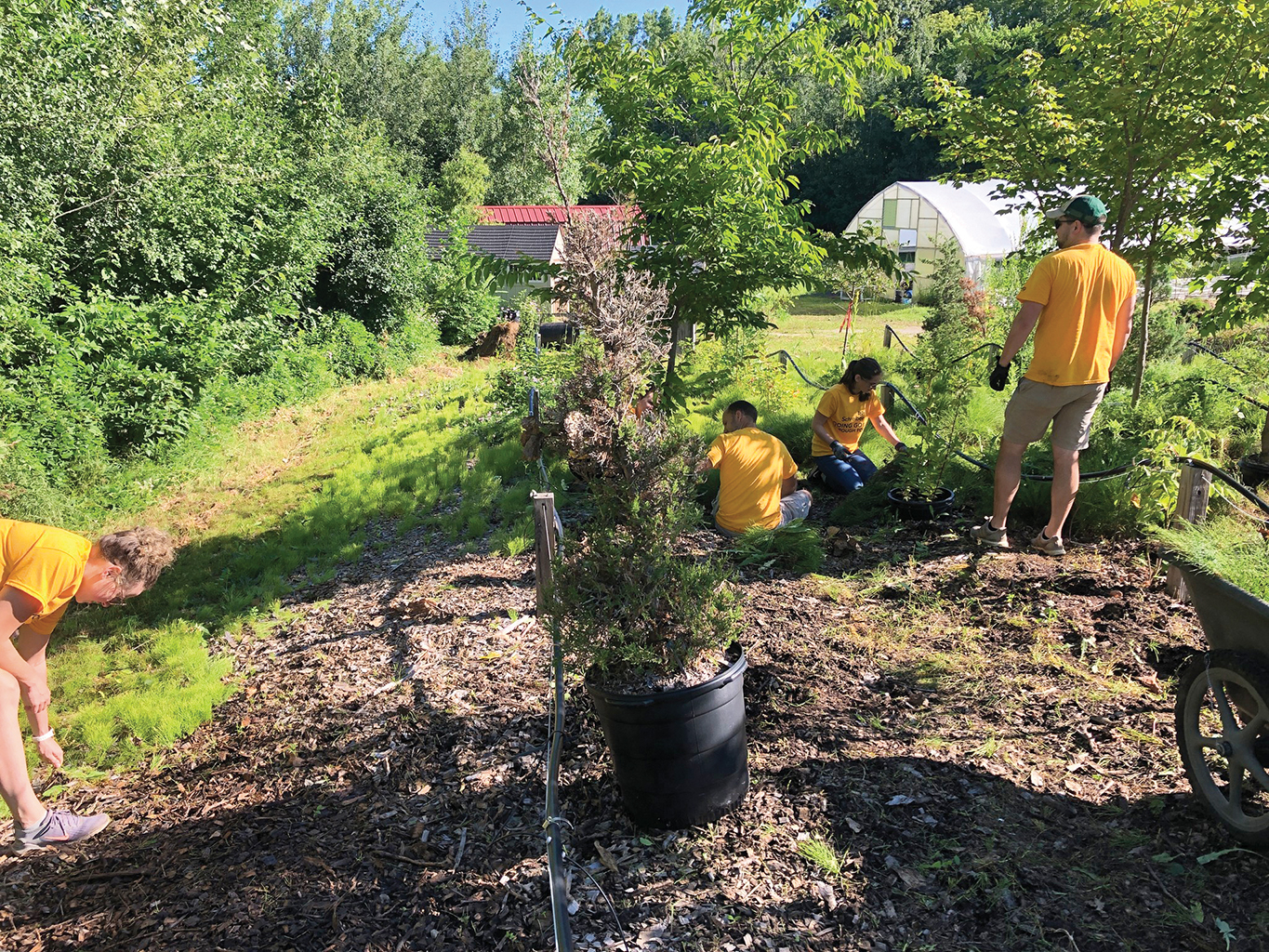
An urban food forest is a self-sustaining ecosystem of edible plants that can be harvested by city residents at no cost. These edible gardens mimic the balanced, diverse ecosystem of a natural forest to provide a low-maintenance, organic food source for urban populations.
This fall, NEW Food Forum — an initiative of New Leaf Foods — hosted several community visioning sessions to outline the scope of a proposed urban food forest initiative in the Green Bay area. The initiative is a collaborative effort with the University of Wisconsin Brown County Extension, Green Bay Botanical Gardens and Northeast Wisconsin Technical College.
Urban food forests provide a host of benefits for a community’s food system, says Amanda Chu, urban farm consultant for NWTC and lead coordinator for NEW Food Forum.
“I think primarily there’s an incredible social benefit,” she says. “It encourages community connectivity, and it offers locations for different educational programming as it relates to community health. These are whole foods grown for folks to identify and harvest themselves for free, so it localizes food security and self-sufficiency.”
The urban food forest project was launched during New Leaf Foods’ annual Garden Blitz event in May. The organization sold fruit trees and bushes to gauge residents’ appetites for residential planting.
“They completely sold out. It was so popular, it was like, OK, let’s take this to the next level and pull together community members to see where we can grow this more intentionally,” Chu says.
Increasing access to healthy foods was identified as a top priority in NEW Food Forum’s regional food action plan, which was published in January. According to Wisconsin Food Security Project data, in 2020 over 8% of the population, and 13% of children, in Brown County qualified as food insecure — meaning they lacked consistent access to enough healthy food to feed each member of the household.
In October, New Leaf Foods received a $1,000 Cellcom Green Gifts grant to support the urban food forest initiative.
While the food forest concept would be new to the area, similar initiatives already exist in communities within the New North. Chu points to the City of De Pere’s urban orchard program that was established in 2016.
Don Melichar, park superintendent and forester for the City of De Pere, says the city has planted more than 80 fruit trees in seven locations for community use throughout De Pere since the program’s launch. The orchards — which consist of apple, pear and plum trees — are located on public property, including at schools and parks.
“Students help with the maintenance of those on school property. They also harvest from them to utilize within their cafeteria,” Melichar says, referencing the orchards’ educational benefits. “The community center harvests fruit, too, and they give it to the food bank.”
Josh Kufahl, a member of the Seymour Park Neighborhood Association, is helping lead the food forest initiative in the park, which is already home to community garden beds and an “edible walkway” — a quarter-acre path lined with more than 20 edible plants including asparagus, raspberries, blackberries, currants, elderberries, almond trees, cherry bushes and more.
In its location near the developing Shipyard District, Kufahl believes a Seymour Park food forest would help extend the downtown momentum into the residential area.
“We are acquiring the people right now so we can devise a comprehensive plan,” he says. “If we can get a group of six to 10 of us to sit down once a month and check the boxes, I think we can make some movement on it.”
In addition to financial benefits like decreased food costs and ecological benefits like decreased rainwater runoff, Kufahl says food forests have the power to unite by serving as a center for shared community activity.
“Food is that thing that transcends all races, creeds and colors. Everybody eats,” he says. “Food is so important to culture. If we can start bringing some of that together in the central space, maybe we can start building bridges again.”