

Some special initiatives in Northeast Wisconsin are aimed at enhancing, protecting and promoting one of the region’s most important assets — fresh water.
The shipping industry through the Port of Green Bay, business and industry along the lakeshore, science and research through colleges and universities, and recreation and tourism are all tied to the water and its amenities. A recent University of Wisconsin-Whitewater study showed the economic impact of recreational fishing alone on Green Bay was about $264 million annually, says Brown County Executive Troy Streckenbach.
“People travel from all over the world to come fish our waters because of the walleye and the trophy fishing that takes place in the bay and in the Fox River,” Streckenbach says. “If we want to retain that, we have to protect it.”
Multiple partnered efforts like the new National Oceanic and Atmospheric Administration shipwreck designation and the establishment of a National Estuarine Research Reserve in Northeast Wisconsin will help ensure these resources benefit the region — economically, environmentally and culturally — for generations to come.
NERR designation
UW-Green Bay is leading the multiyear process to establish the NERR in the region surrounding Green Bay.
The non-regulatory NERR designation would bring in at least $1 million in federal funding annually for estuary, wetland, shoreline and freshwater research, education and training, allowing for long-term studies, says Emily Tyner, director of freshwater strategy at UW-Green Bay. The NERR designation would not limit development or restrict land use or activities or add any federal regulation limiting land management or public access.
“Hunting, fishing, commercial boat traffic, shipping — all those things remain the same and continue on as they were in the region,” Tyner says. “It’s really about celebrating fresh water and all the ways that water touches our lives. We’re trying to take a real holistic approach with thinking about the NERR.”
Green Bay is considered the world’s largest freshwater estuary — an area where rivers meet a lake, which creates a special habitat for fish and wildlife. The NERR would raise the region’s profile and create employment, tourism and educational opportunities, including through a visitor’s center and hiking areas. The Green Bay NERR would be the third on the Great Lakes and the second in Wisconsin, with another NERR along Lake Superior.
Committees of local partners are working on the process, including site selection, which may be complete by early fall with a final designation goal of 2024. Green Bay, Sturgeon Bay, Marinette or other sites are all possible locations.
“We’re looking at a model that’s called multi-component, non-contiguous, where it’s very likely that we’ll identify a few different areas around the Green Bay estuary that have significant wetland and shoreline functions,” Tyner says.
The regional NERR would be part of a national network of 30 NERR sites that are strongly focused on science. “For our region in particular, we also want to be thinking about all the ways that water is just so valuable to how we live and the identity of the region,” Tyner says. “So that means thinking about the economic impacts of water and First Nations histories around water.”
For example, the UW System is already starting to create a soundscape, recording the sounds of water in the bay along with the stories of people who have worked there. The soundscape will be housed at UW-Green Bay until it can be relocated to a permanent exhibition at the NERR.
Tyner is also partnering with tech companies like TitletownTech, Microsoft and Cellcom on projects such as gathering data and developing sensors that can help track birds and monitor water quality.
Protecting resources upstream
The Oneida Nation is one partner working with the university on the NERR process.
“It’s an opportunity for further research on the freshwater estuary itself, being one of the largest in the world,” says Oneida Nation Chairman Tehassi Hill. “And so of course that goes along great with our nation’s goals and values of maintaining and restoring the environment.”
The Oneida Nation has been working on several ongoing water quality initiatives that all contribute to the health of the estuary, including the decades-long restoration of Trout Creek.
“That was a severely degraded stream that some of the elders had had trout in at one time,” Hill says. “But during the ’70s, ’80s and ’90s, it just smelled of manure.”
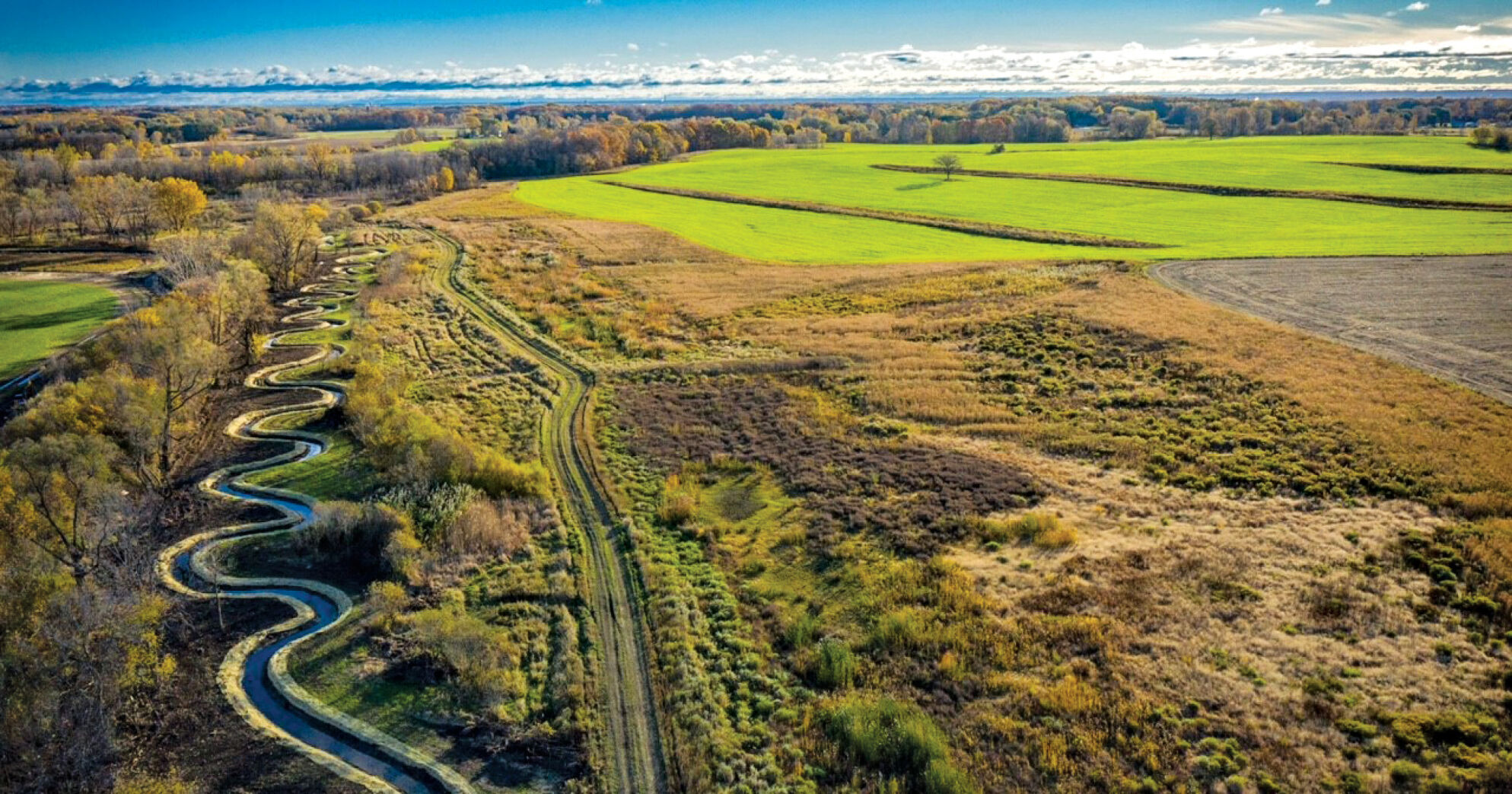
In that project, the Oneida Nation worked with the state prison system, which had an agricultural component, to install a safer manure pit, add buffers and meanders to slow runoff, and allow the land to capture more nutrients, thus improving the water quality and allowing the reintroduction of trout.
Another project has been restoring the headwaters of the south branch of the Suamico River, which originates on the northwest part of the Oneida reservation.
Working from upstream to downstream allows for the water to be cleaned as quickly as possible, flowing out toward the bay. The health of freshwater resources has a wide-reaching impact on both the environmental and economic health of the region, Hill says.
“Anytime we can assure the safety and quality of the fish for families to be able to sustain themselves, I think that’s something that we should all strive for,” he says. “And then there is always the recreation part of it — canoeing and kayaking, tubing, boating; these are all things that are fun for families to do. I think it’s important that we try to provide the best quality of that water that we can.”
Improving bay health
Along with Fond du Lac, Winnebago and Outagamie counties and the Oneida Nation, Brown County signed a Northeast Water Quality Pact in 2019 to collectively work on long-term strategies to protect the water that affects the health of Lake Winnebago and Green Bay.
“Water plays such an important role in the lives of our community,” Streckenbach says. “When we think about solutions and protecting this great resource, we have to have all hands on deck.”
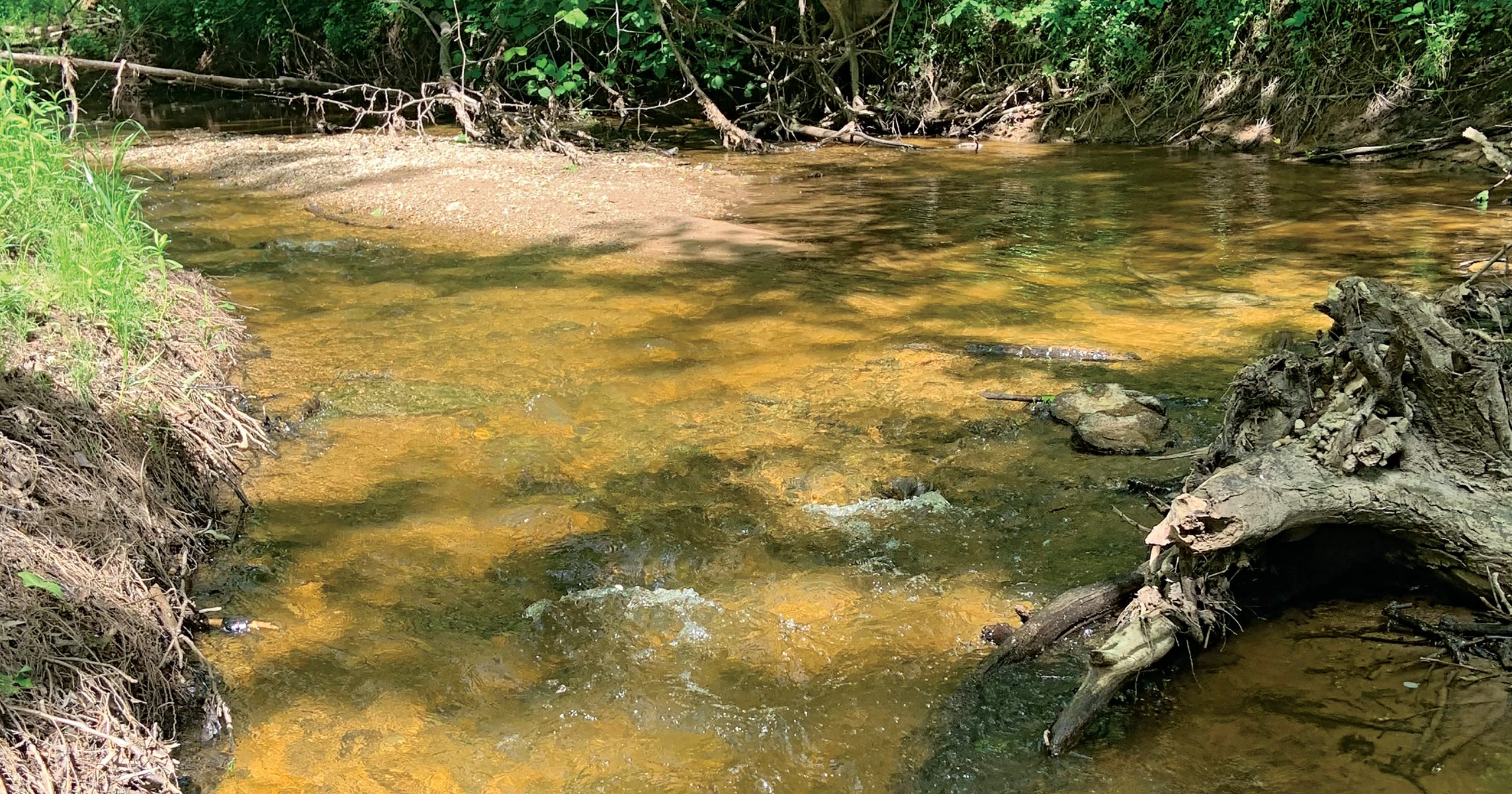
The pact addresses collective problems like phosphorous runoff, which can lead to algae blooms that affect water quality by depleting oxygen levels. Through its partnerships the county now has 25,000 acres of farmland in cover crop, Streckenbach says.
Earlier efforts included the Silver Creek watershed project that developed an adaptive management program, adding significant amounts of cover crop and other steps to reduce phosphorous. Community partners including the Oneida Nation, area farmers, UW-Green Bay, wildlife organizations, land management agencies and NEW Water collaborated on the work.
The effort, among others, helped NEW Water, the brand of the Green Bay Metropolitan Sewerage District, avoid an infrastructure upgrade in 2014 that was estimated to cost about $100 million, according to NEW Water. Initially, the cost of those upgrades had been estimated at about double that rate, Streckenbach says.
“Everybody felt that that was a complete waste of money,” Streckenbach says. “And there had to be a better way for us to address this both from a business case and at the same time create a positive environmental impact on the watershed.”
NOAA shipwreck designation
NOAA designated a region along Lake Michigan as a U.S. National Marine Sanctuary, with the state making the announcement in October at the Wisconsin Maritime Museum in Manitowoc.
“We’ve been working on this for many, many years,” Manitowoc Mayor Justin Nickels says. “It’s basically a national park right in our backyard, which brings many benefits.”
Tourism and educational programming are among those benefits, but it also “puts this area of the Great Lakes on the map, to protect and preserve not just the shipwrecks but also the fresh water that comes with it,” Nickels says.
The area includes 962 square miles of coastline from Two Rivers to Port Washington. It’s only the second such designation on the Great Lakes, with the other on Lake Huron. The newly designated area protects at least 36 shipwrecks with many more to be discovered.
The region’s fresh water is “without a doubt our greatest asset as a community,” Nickels says, adding that settlers historically founded communities on the lake because of the waterways and what they could provide for the economy.
“Clean water is also a precious resource worldwide,” he says. “To be able to provide fresh, clean water to all of our citizens is a huge benefit that we have.”
When Manitowoc developed its downtown master plan several years ago, the community recognized the potential the water held. “We never had a restaurant on the river. We never had housing on the river. We never had public trails really on the river proper. So, we’re putting a lot of money and effort into all that,” Nickels says.
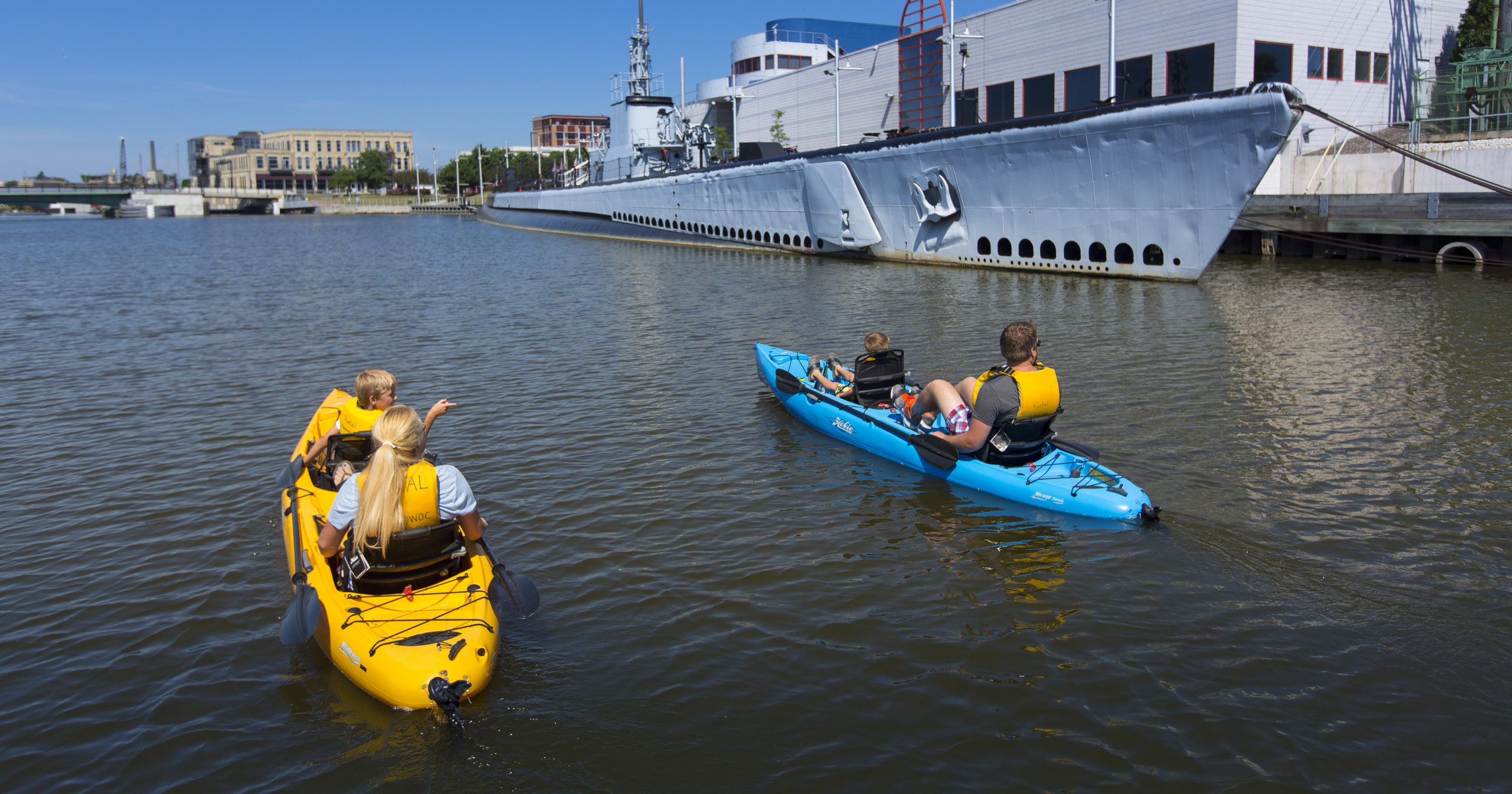
The community is also adding kayak launches along the riverfront, as well as boat docks. Room tax revenue shows the efforts are paying off. It increased from $570,000 in 2018 to $710,000 in 2021 (bouncing back from a dip to $400,000 in the pandemic year 2020).
Manitowoc officials are also working with partners on area water quality projects to manage erosion, including in the Silver Creek Park and Mariners Trail areas.
“That’s always forefront on our mind anytime we’re doing projects: how it impacts the river and the lake,” Nickels says. “That’s just ingrained in us [from] being on these waters for so long.”
sanctuaries.noaa.gov/wisconsin
coast.noaa.gov/nerrs