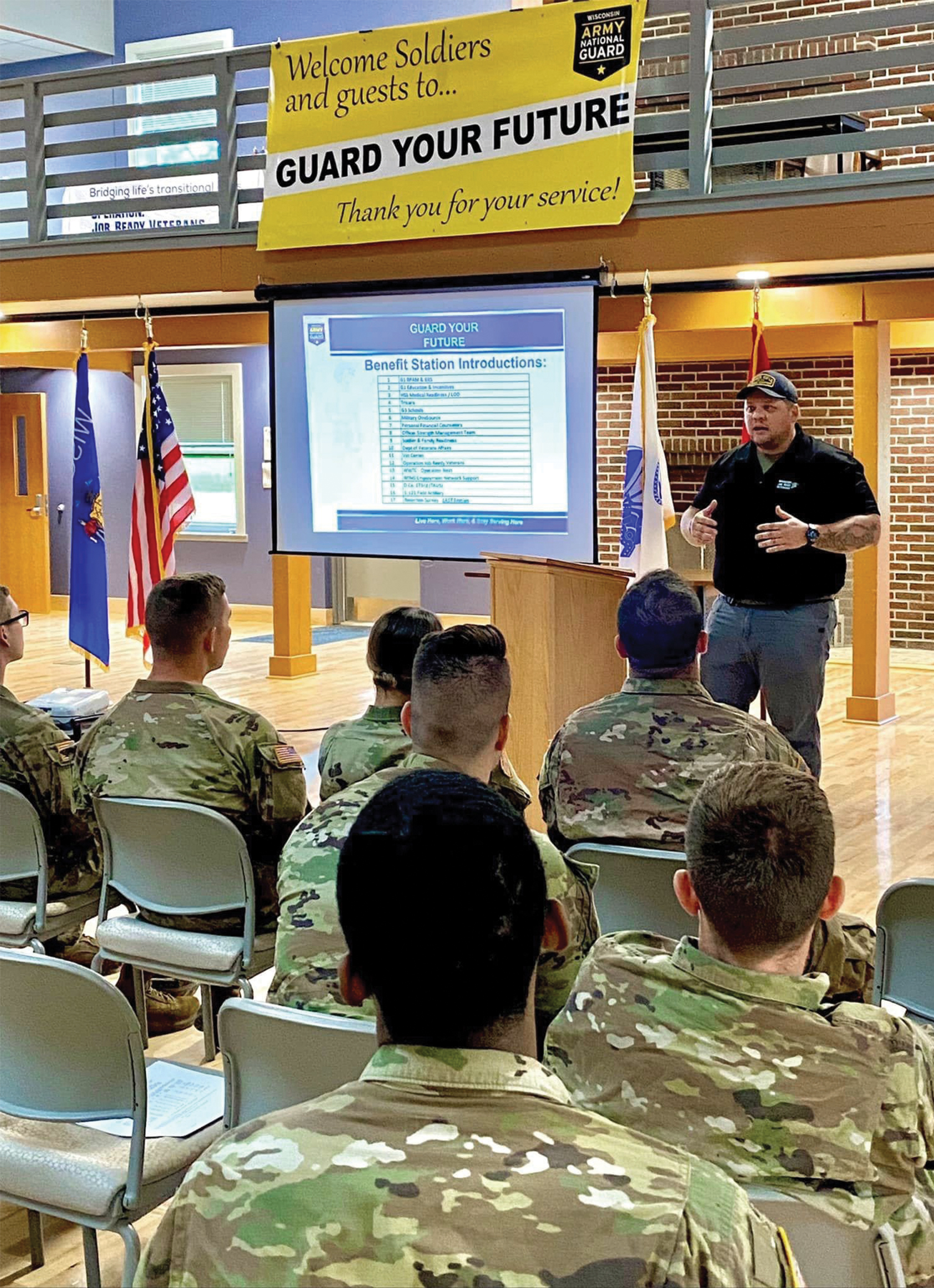

Companies in the New North region already know the potential Wisconsin’s military veteran population holds as a source of talent for filling their open positions — and state, regional and local agencies are working to connect those companies with veterans looking for new careers.
Experts say that making (and keeping) those connections is often about companies creating internal cultures that not only attract veterans, but also help them build a sense of community so they want to stay.
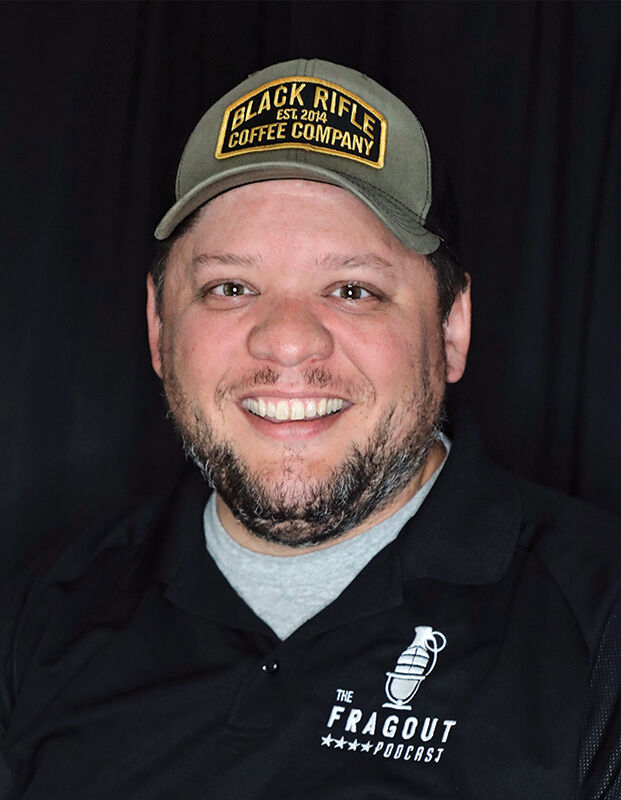
That means going beyond being “veteran-friendly” and into being “veteran-ready,” says Ryan Lonergan, an Army National Guard veteran and owner of Wisconsin Veteran, which works with companies looking to attract and retain talent from the military community.
Being veteran-ready means companies must go beyond marketing themselves as welcoming to veterans by creating an environment that truly understands veterans and their needs.
Lonergan says a veteran-supportive culture can start with seemingly simple gestures, such as wearing red on Fridays (“RED” stands for Remember Everyone Deployed). A step further might be providing everyone with company-branded red T-shirts.
“Veterans inside the company would be like, ‘Wow, this company legitimately cares,’” Lonergan says. “Even just giving them the option makes them feel super welcomed and understood.”
An added bonus: If a veteran arrives for an interview on Friday and everyone is wearing red, he says, it would demonstrate the value of veterans within the company culture.
Companies also could consider offering veteran-made products such as coffee in the breakroom, as well as displaying military branch flags and the American flag if they’re not already. Furthermore, he says, companies need to understand the importance of a service member not missing VA appointments and understanding Uniformed Services Employment and Re-employment Rights Act (USERRA) laws that protect service members who are required to attend drill weekends and other military obligations.
But it’s also about developing internal resources such as veterans’ groups, community volunteer days and efforts to hire spouses.
“If you think about it, someone goes on deployment, spouses are left home, so they’re kind of a jack of all trades,” Lonergan says. “They are the project manager of the house; they are the babysitter; they are the general contractor if work needs to get done. They’re the CPA of the house. So their skills are so robust, and they’re used to working on their own.”
Starting with one focus area for shifting a company culture can help, says Steve Janke, a former U.S. Marine who founded the company Mission Wisconsin.
“Once you get some wins, it’s easier to build that momentum to continue hiring,” Janke says.
Growing a valuable talent pool
The state Department of Workforce Development Division of Employment and Training manages the Vets Ready Employer Initiative, which encourages employers to build veteran support systems in their workplace, says Michele Carter, administrator of the division.
“We’re looking for employers to hire and retain veterans, but also to really understand the unique experience of a veteran,” she says. “Each year we recognize businesses who go above and beyond and really demonstrate that they have specific resources to support veterans.”
In December, DWD’s Vets Ready Employer Initiative recognized state employers that have created strong support systems within their workplaces. The 2022 Vets Ready winners included a high proportion of companies in the New North: 4IMPRINT, Kingsbury and Oshkosh Corporation in Oshkosh; Children’s Products and Kimberly-Clark in Neenah; MCC Inc. in Appleton; and Precision Iceblast Corp. in Peshtigo.
Veterans provide an excellent talent resource, but do have some barriers to employment, says Carter, who served more than two decades in the Army Reserve and the Army National Guard. One of the challenges is translating a military occupational specialty to experience for a civilian employer. Carter took the experience from her role as a nuclear, biological and chemical officer and emphasized her skills in leadership, analytics, strategic planning and logistics.
Sometimes overlooked is the level of commitment it takes to be a member of the active military, which translates into a loyal and dependable workforce, she says.
Additionally, active service members work with men and women from around the country as well as with people in different nations, giving them added perspective and communication skills, Lonergan says.
“We are trainable; we are adaptable,” he says. “We understand diversity. The military is one of the most diverse … professions you can serve in. Our interpersonal communication is probably some of the best.”
Veterans themselves can strengthen resumes by eliminating military jargon, breaking down skills into straightforward bullet points, and emphasizing their experience working in a team — which, ironically, sometimes makes it hard for them to talk about their skills as individuals.
Partnerships build connections
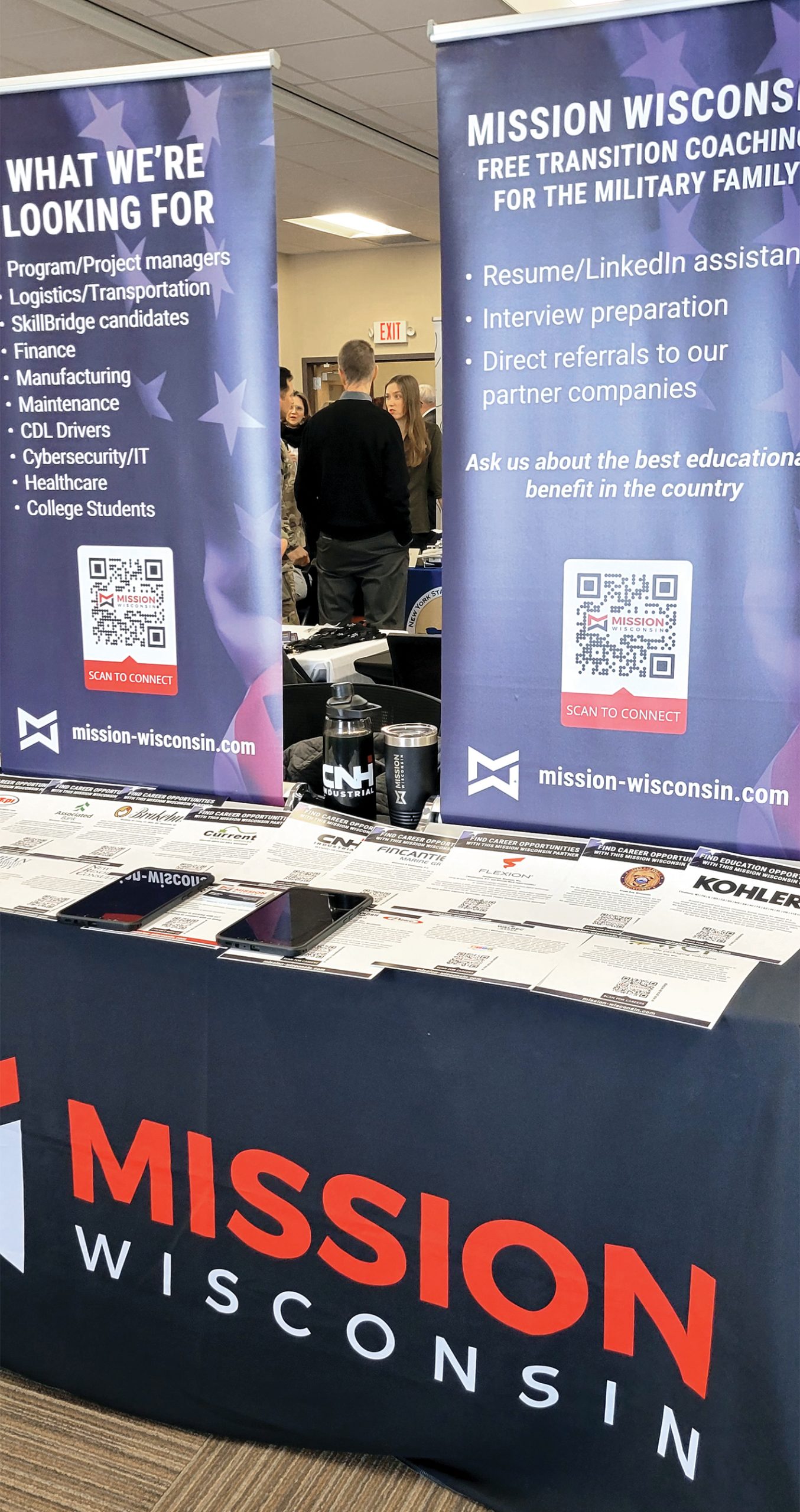
Mission Wisconsin, which helps transitioning military families through one-on-one coaching and talent pipeline-building services for small- to medium-sized companies, partners with New North, Inc. as a part of the latter organization’s Hires Heroes program, which is part of a broader campaign to attract talent to the 18-county region.
The partnership not only helps connect veterans with jobs at New North companies, but also builds community ties so veterans can connect to the benefits and resources, thus improving retention, Janke says.
“It’s that interconnected web of support that makes it so much more valuable, because you’re definitely helping a service member transition out, but you’re also helping that family find its roots,” Janke says.
Mission Wisconsin visits transition assistance programs on military installations, putting the state in the spotlight as a top relocation site for veterans, Janke says.
Last year, Mission Wisconsin attended 50 in-person hiring events outside of Wisconsin, talking with 14,000 candidates and adding 1,400 new leads, or people interested in opportunities in the state. About 100 new residents ended up moving to the New North region through the agency’s efforts, Janke says. That includes spouses and families.
Department of Defense statistics show 60% of the active-duty military is married with an average of 3.1 children. Families mean kids in schools as well as parents bringing federal VA dollars, he says.
“By going to these events, we’re truly impacting generational change in the great state of Wisconsin,” Janke says. “We’re not just bringing a worker back; we’re bringing the family to the state.”
Janke says another strong resource for the transitioning military community is the Department of Defense’s SkillBridge program, which pays for a service member to work for a civilian company, or for a municipality or county. Transitioning service members have found opportunities in law enforcement and forestry, for example.
“The military community is not just one block of people,” Janke says. “Much like when they went in, when they’re getting out they are their own person. And there is no correct answer on what they want to be when they grow up. Because much like all of us, they don’t know either.”
State funding will boost programs
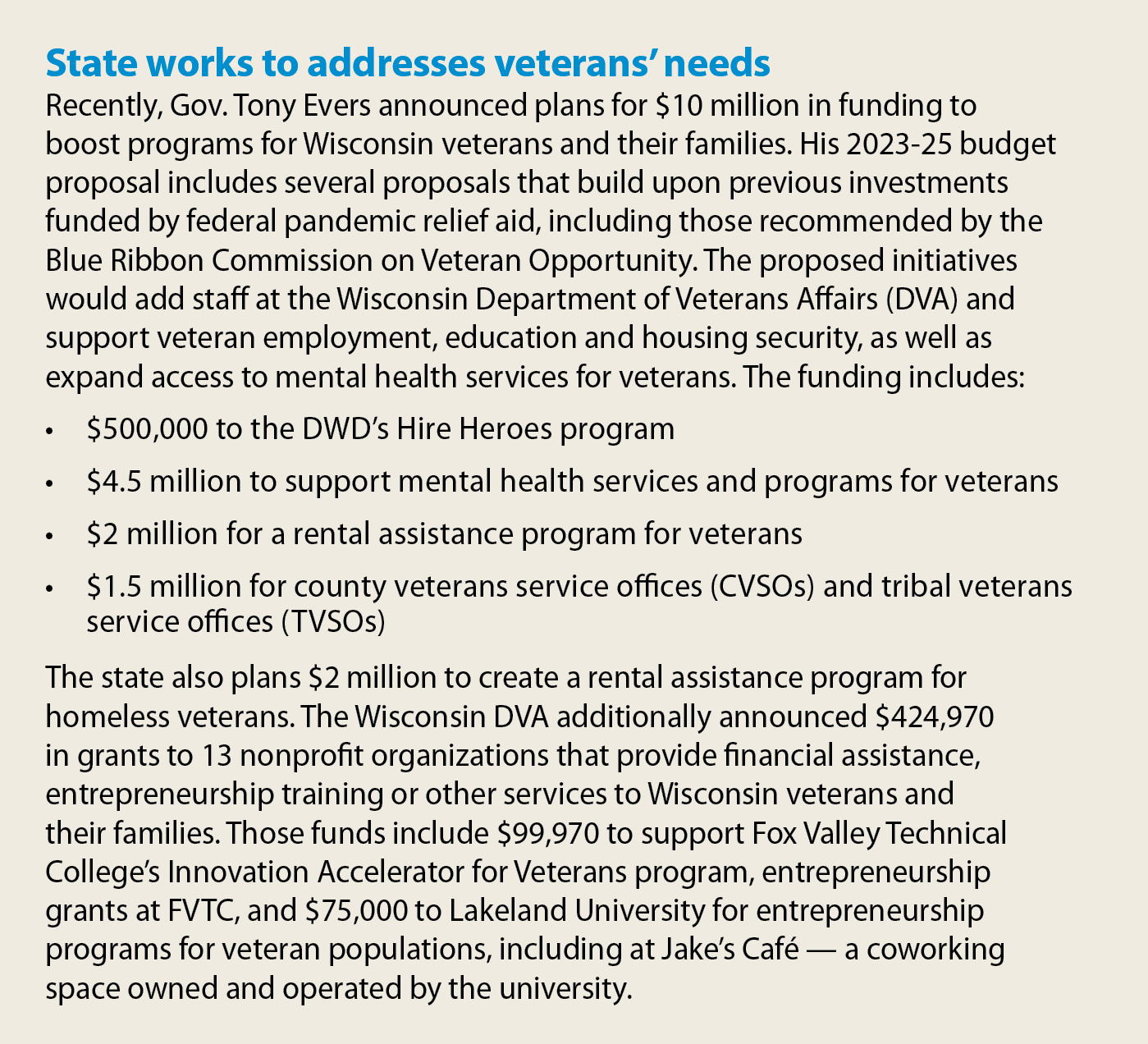
In February, the state announced it was directing more resources to veterans and their families, including a new $10 million investment from American Rescue Plan Act funds announced by Gov. Tony Evers.
The funding aims to address gaps in services identified by the governor’s Blue Ribbon Commission on Veteran Opportunity for Wisconsin’s 300,000-plus veterans, including higher education and job training. Included in the proposal is $500,000 for the DWD’s Hire Heroes program.
Hire Heroes is a public-private jobs program allowing employers to be reimbursed for $7.25 per hour for up to 1,040 hours to employ and train veterans who are transitioning into the workforce, Carter says.
“If we have a veteran that has lots of barriers and they need to gain some job skills, and it’s going to take a moment for them to transition, we will subsidize their employment for up to 1,040 hours,” Carter says. “We will reimburse that employer for that $7.25 an hour for up to 1,040 hours to really address the time it might take for the veteran to get comfortable, time committed to training, time committed to getting them acclimated.”
The new funding from the state will allow the DWD to expand this program as well as apprenticeship opportunities for veterans, Carter says. Typical apprenticeships have been in construction and manufacturing but have expanded into IT and health care, and the agency is working toward apprenticeships in teaching and education. The program also allows for employer reimbursement to incentivize apprenticeships for veterans.
“We want to expand a model we’ve been using, again, to incentivize employers to work with our veterans and implement the kind of flexibility that the veterans might need,” Carter says.
The DWD’s Office of Veteran Employment Services serves at least 1,100 veterans who are looking for employment in Wisconsin. Specialists work with disabled veterans through the Disabled Veterans Outreach Program, providing comprehensive assessments and career guidance.
The DWD also offers Local Veterans Employment Representatives in each of the workforce development areas throughout Wisconsin. “They work directly with employers to build up those employment opportunities for veterans,” Carter says. That includes career fairs and one-on-one resume matching.
The DWD works closely with other state and federal agencies to strengthen the network of resources available to veterans, whether it’s the VA Hospital, the Health Resources & Services Administration or other agencies.
“It’s a very tight network that is committed to serving veterans and finding the employers who will support those veterans, because we think it’s all win-win,” Carter says.