
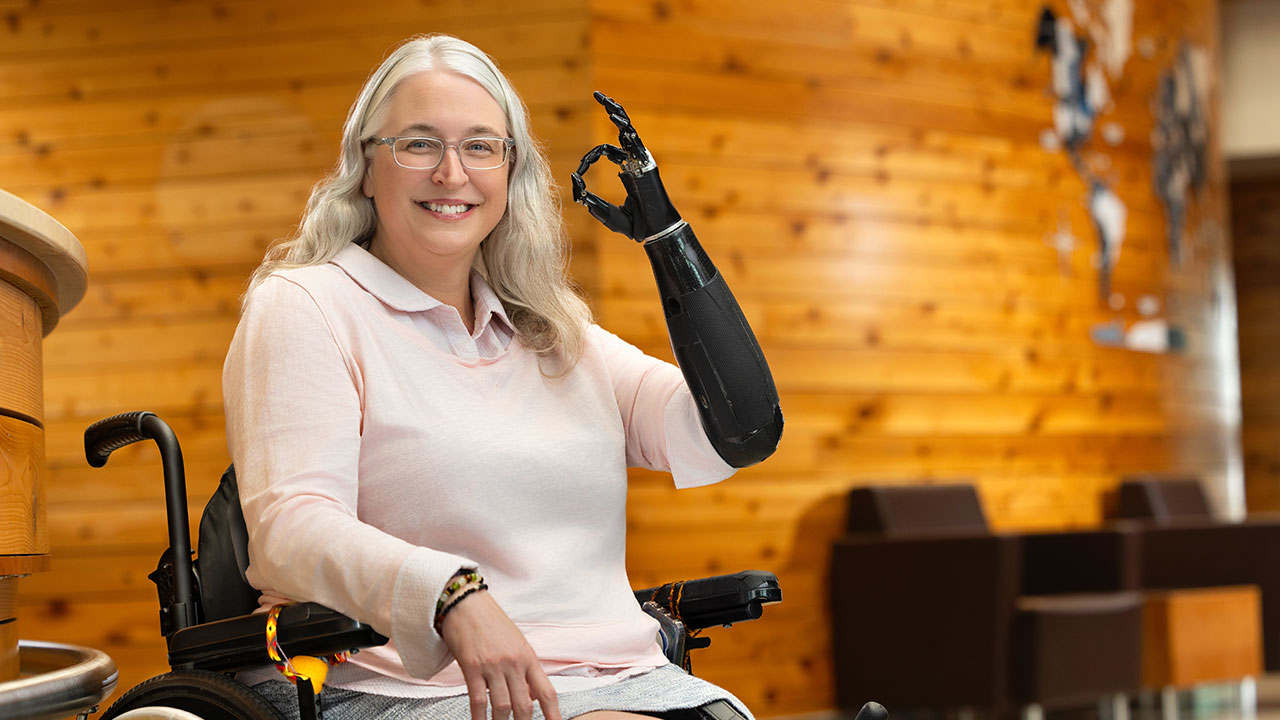

Like just about every other ’80s kid growing up in Manitowoc, Tina Prigge couldn’t wait to get out.
After college, she headed for Asia and spent three years in Japan teaching English and another year backpacking in India and Nepal. It was an incredible experience, she says, immersing herself in other cultures and traditions. Until, that was, she realized she was homesick. She returned to the lakeshore and never left again. In fact, she spent a full decade working as assistant to the mayor.
The years since have only strengthened Prigge’s passion for her hometown. And when the 2015 Netflix documentary series “Making a Murderer” put the community on the map globally for all the wrong reasons, she and her husband Jason resolved to help shift people’s perspectives.
As a pair of creatives who met through theater, the couple created Vagabond Creative Studio and began working to rebrand Manitowoc as the “Coolest Coast” through film and creative storytelling.
Coolest Coast “is really just our passion project to raise the esprit de corps, and it really has made a difference,” Prigge says. “At least three people have let us know that they’ve chosen to move to the area because they saw our content. We’re like, ‘Oh, my God. We didn’t even expect that sort of impact.’”
Of all the things Prigge loves about Manitowoc, it’s the beautiful sense of community she admires most. In some ways, it ended up saving her life.
On July 6, 2024, a beautiful sunny Saturday, the Prigges took a ride on their cherished Wisconsin‑made Harleys and Tina tasted her first shrimp po’boy sandwich. Two days later, she woke from a coma. Only Jason remembered enough to describe the metal crunch of the near‑fatal accident that had left his wife without the left side of her body.
Prigge says she processed a lot of anger in the early days after her accident. She said consciously choosing to go down a path of positivity helped her beat the odds: a 30% chance of survival.
“A couple of months into my recovery, several of my medical professionals said to me, I think your positive attitude is having a positive impact on your recovery,” Prigge recalls. “And that kind of blew me away, because it’s kind of this esoteric, fluffy concept. But to have medical professionals affirm that, I’m like ‘this is good; I’ve got to keep going.’”
Today, as a double amputee, Prigge likes to say she’s “Livin’ All Right,” because she only has use of her right arm and leg. It’s also the name of her website, on which she documents her new life living with disabilities and advocates for others in the disability community. In addition, the Prigges are co‑authoring a memoir, scheduled for release next February.
Prigge has good days and bad days. Sometimes she gets hit with “grief bombs,” she says, and she applies what she calls the “smidge theory” of incremental progress to rebuilding her strength. Grabbing the book “A Woman of No Importance” from a free library was also a small, happy accident that changed her trajectory. Prigge didn’t know when she picked it up that it documents a World War II heroine who walked the Pyrenees Mountains with a prosthetic leg.
“It was one of the first books I read when I could read again. I think about that so often, that grit and determination, and wow, that gives me hope,” says Prigge.
Today, Prigge continues to show up for her community, and she’s grateful to the community — especially her husband — showing up in turn for her. She has learned to play Mario Kart with one hand, can swim a mile, and is researching the prospect of traveling back to Japan.
A sense of humor and choosing positivity has already taken Prigge farther than she imagined.
“I don’t want to live in fear. I don’t want to make my life smaller,” she says. “Something that seems like ‘this is my life now’ doesn’t mean it has to be that way tomorrow. That’s my biggest message to people, right? It’s not the end of your story. Never give up.”
* Photograph by Shane Van Boxtel / Image Studios