

As the pandemic paved the way for a “work from anywhere” world, remote workers eyed moves to idyllic Door County.
But “logistically, it’s nearly impossible,” says Kelsey Fox, director of communications and workforce development for the Door County Economic Development Corp. While few Wisconsin communities are immune from issues like affordable housing, child care and broadband, they can be larger and more complex on the peninsula.
The median home price in Door County is $350,000; the community of 30,000 has only three accredited child care centers; and Sturgeon Bay and Sister Bay are the only cities with access to reliable broadband, Fox says. As a haven for tourists that has only become more popular in the last two years, the county is in dire need of solutions that make it a great place to live as well as to visit, she says.
“From a long-term perspective, if we don’t address some of these issues — the big three, if you will, of broadband, child care and housing — we are going to be in some trouble. And the pandemic has only magnified these issues,” Fox says.
But with magnification comes action, and solutions are in the works on all three fronts. DCEDC completed a broadband study last fall and has now hired a broadband community coordinator to lead the FiberNet Door County initiative and seek out grant and funding opportunities to get residents and businesses wired. Construction of the 40-unit Sawyer School Lofts housing development in Sturgeon Bay began last fall, and a recently announced grant will help address the county’s child care deficit.
Child care innovation
When the Wisconsin Economic Development Corp. announced its Workforce Innovation Grant program last September, Door County was ready to jump at the unexpected opportunity. Since 2020, a group has been hard at work analyzing the county’s critical child care worker shortage and seeking solutions and funding opportunities, says United Way of Door County Community Impact Coordinator Christina Studebaker.
The rise of 4K classrooms in schools has upended the traditional child care business model, Studebaker says, because older children are less expensive to care for due to caregiver ratio requirements. Therefore, fewer 4-year-olds in a center means the facility loses revenue. This was a four-alarm problem in Door County well before 2020, and despite the pandemic shutdown officials remained focused on problem-solving knowing waiting lists for child care would begin to climb again in COVID’s aftermath. That included holding biweekly community meetings on the topic. Door County is home to around 1,000 children under the age of 5, and there are only about 225 spaces in licensed care centers, Studebaker says.
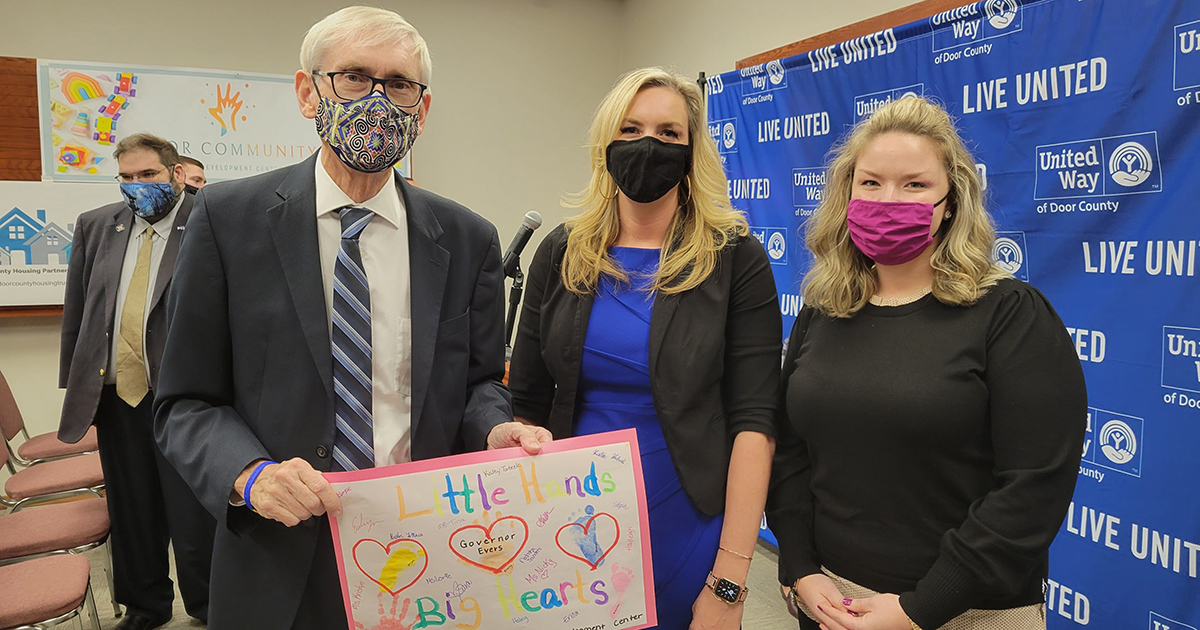
The $3.5 million Workforce Innovation Grant, which was announced in December, will allow the county to try new care models — including options like Head Start, evening and weekend care programs, and a concierge care model in which summer tourists can help subsidize the centers by booking licensed temporary care for their babysitting needs. In addition, grant funds will be dedicated to address one of the key factors behind the county’s child care deficit: lack of affordable housing for workers.
Studebaker says Door County child care workers are compensated at an hourly rate that is $5 to $6 above the state average, which is necessary because of the high cost of living, but they still struggle to find housing.Through the grant, rental cabins that were slated for demolition after a resort sale are being moved and repurposed. In addition, support will continue for the Door County Community Housing Partnership, which helps create and maintain affordable homes and ensures they will remain so in perpetuity.
“If a property in Door County is sold and goes to something like an Airbnb, it’s just gone,” Studebaker says. “We want to make sure we can achieve the goal of affordable housing for this workforce that’s just so essential.”
Kewaunee County collaborates
Kewaunee County Economic Development Corp. Executive Director Ben Nelson shares Fox’s concerns about broadband, housing and child care and says since taking the job in February 2021 he has focused on partnership opportunities — including with Door County, Brown County and New North, Inc.
“We’re shifting to a more regional perspective,” Nelson says. “One of our biggest goals right now is improving capacity by reengaging with local businesses and getting more involved regionally.”
In the small, rural county, workforce remains a top issue. Nelson says Kewaunee County has long had the second-lowest unemployment rate in the state, exacerbating the challenge of filling roles in the community’s thriving businesses. The good news, he adds, is that the business community is indeed thriving. During a recent series of business retention and expansion visits, he learned that most Kewaunee County proprietors say the business climate is good or excellent.
While the closure of the county’s nuclear power plant in 2013 cost the community more than 600 full-time jobs, Nelson says the recent purchase of the property by Salt Lake City-based EnergySolutions has sped up the timeline for decommissioning the site. Work is expected to begin this year and will bring 200 to 250 jobs back to the county throughout the decommissioning process. The original plan called for the site to sit dormant for as long as 75 years before work could begin.
“Now we’re trying to be proactive with, once the decommissioning is over, what opportunities for development does that property provide?” Nelson says. “We’re now looking at an accelerated timeline of eight to 10 years.”