
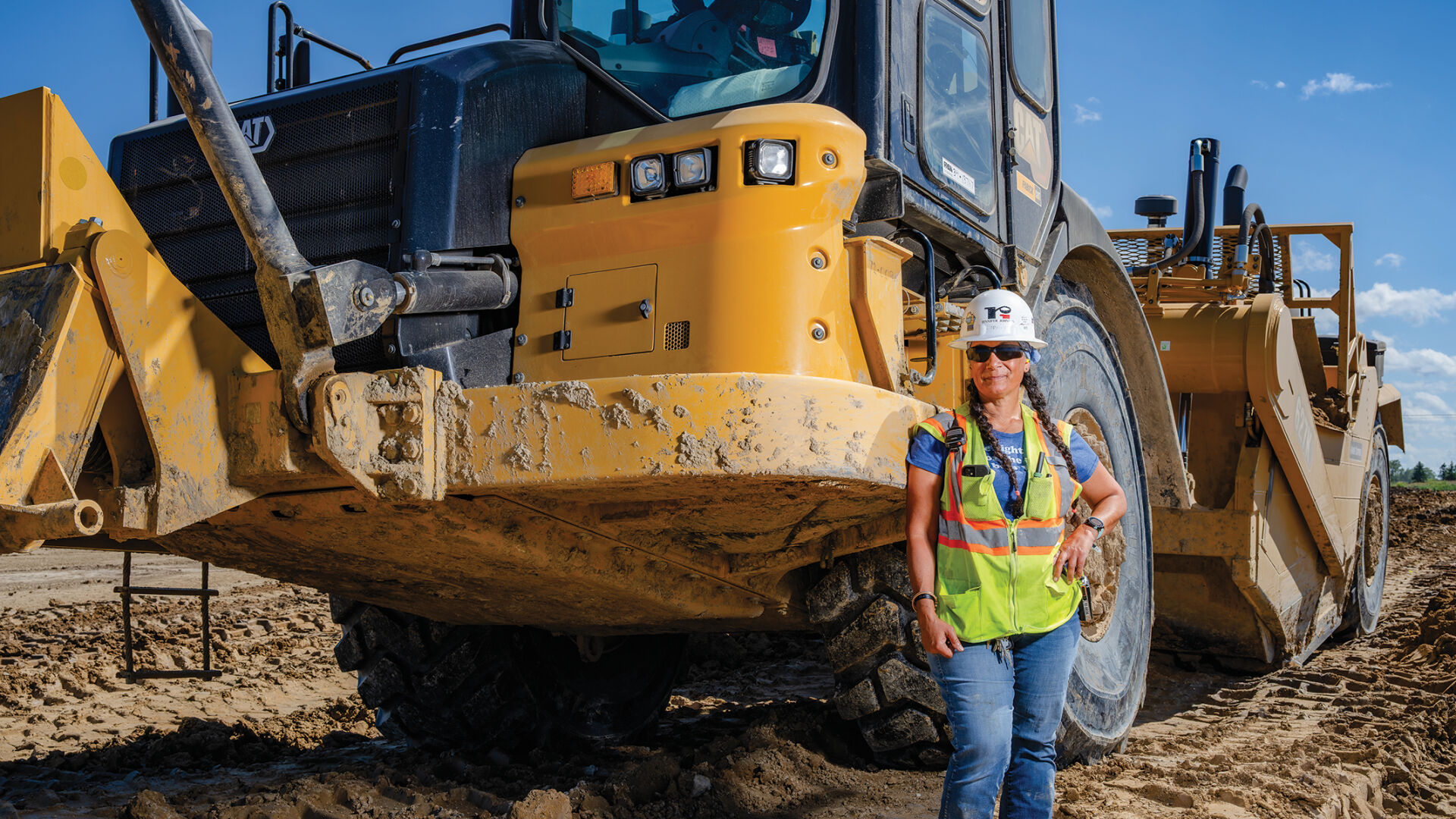

Jennifer Johnson is an operating engineer with Ryan Central and a part-time heavy equipment instructor with IUOE Local 139.
Photography by Graham Washatka/Graham Images
As a professional photographer, Graham Washatka’s work has taken him to countless construction sites. About five years ago, the owner of Graham Images was inspired by a frequent job site observation.
“I couldn’t help but [say] ‘Oh, wow; there’s a woman laborer on the site,’” he says. “It would just catch my eye.”
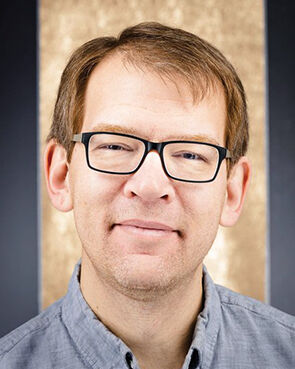
There was almost always just one, and Washatka says he couldn’t help but ask himself, “I wonder what their day is like.”
According to the latest data from the Bureau of Labor Statistics, women make up just 1.25% of construction field workers, meaning it’s more likely than not that a given woman will indeed be the only one on the job — and that her day will be colored by that unique point of view.
Roz Kruse, associate dean of construction management at Fox Valley Technical College, feels the weight of this statistic every day. When Washatka came to her with the idea for his “Women at Work” photo project, which debuted March 7 at a showcase event hosted in Appleton with the nonprofit organization empowHER, she was quick to say yes.
The project is designed to bring visibility to Northeast Wisconsin women in architecture, engineering and construction. It does so through powerful images, captured by Washatka with marketing and design support from Morgan Kirchenwitz of Morgan E Creative Services and storytelling assistance from Holly Bolton of 3chord Marketing.
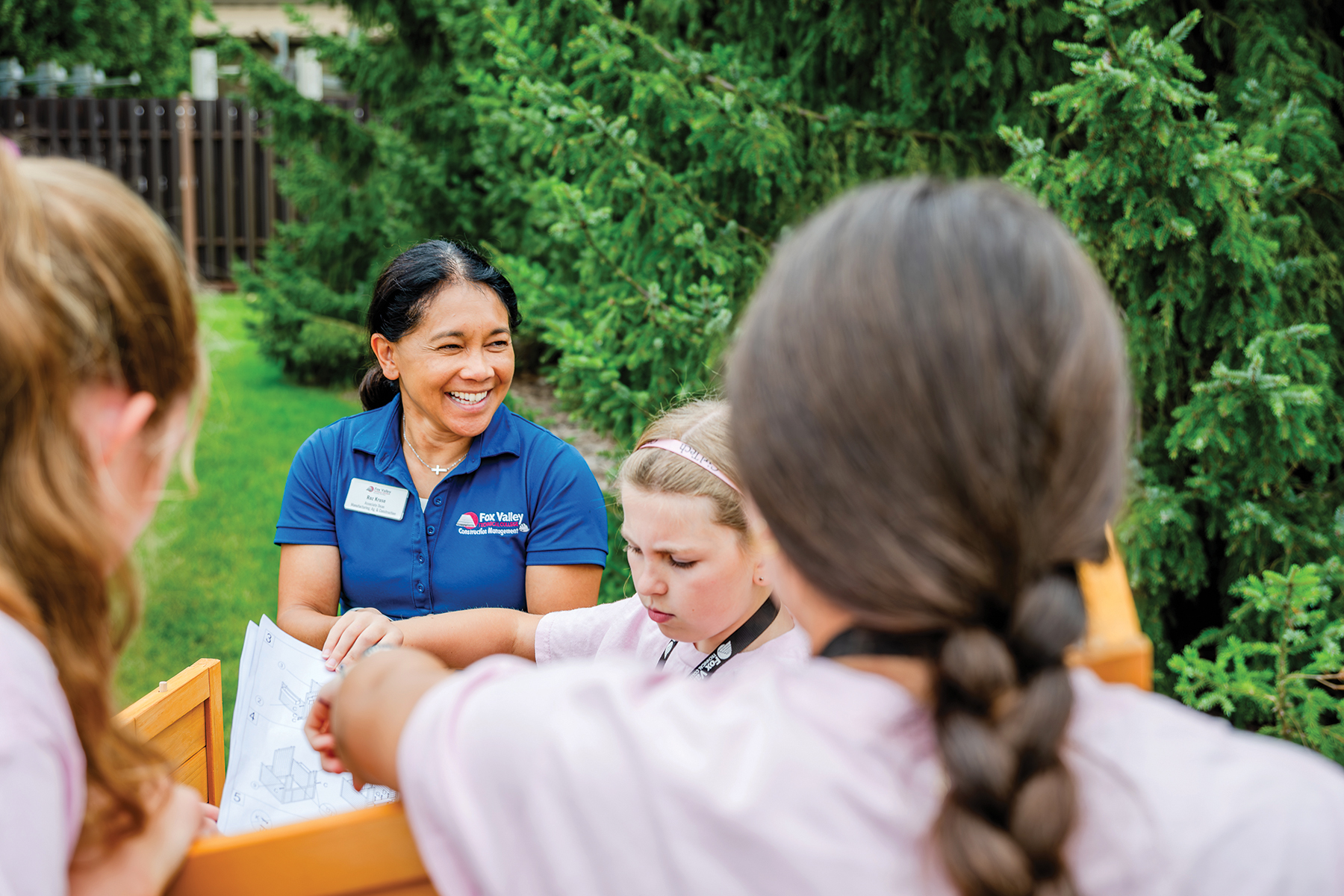
Kruse says Women at Work serves a simple but powerful purpose: allowing women and girls to see themselves in nontraditional roles. A former mechanical engineer who pivoted to construction, Kruse is a petite woman who has always been drawn to such fields without a lot of encouragement. But putting herself out there as “someone a young girl could emulate” is something she sees as a responsibility in her career.
“I want to be able to be that vision for these young girls to see that, yeah, you can get into construction,” Kruse says.
It’s “not scary,” Kruse says, but it’s also not without its challenges, including decades of both misogyny and unintentional bias that can show up in the field. That bias can be seen in simple things like lack of PPE and hard hats designed for women’s head sizes and hairstyles, lack of separate women’s bathrooms on job sites, or the slow or stalled adoption of maternity benefits for union employees.
“We need to make those investments,” Kruse says. “Your actions are what’s going to indicate how you’re supporting that population.”
And Washatka says that, if he can use photography as a platform for advocacy, reform and awareness, he’s all for it.
“It’s a message I believe in,” Washatka says. “It’s the story you want to get out. My main motivating factor is my curiosity of these stories that are out there to be told, and my ability to have my own creative freedom on a job.”
‘I honestly love it’
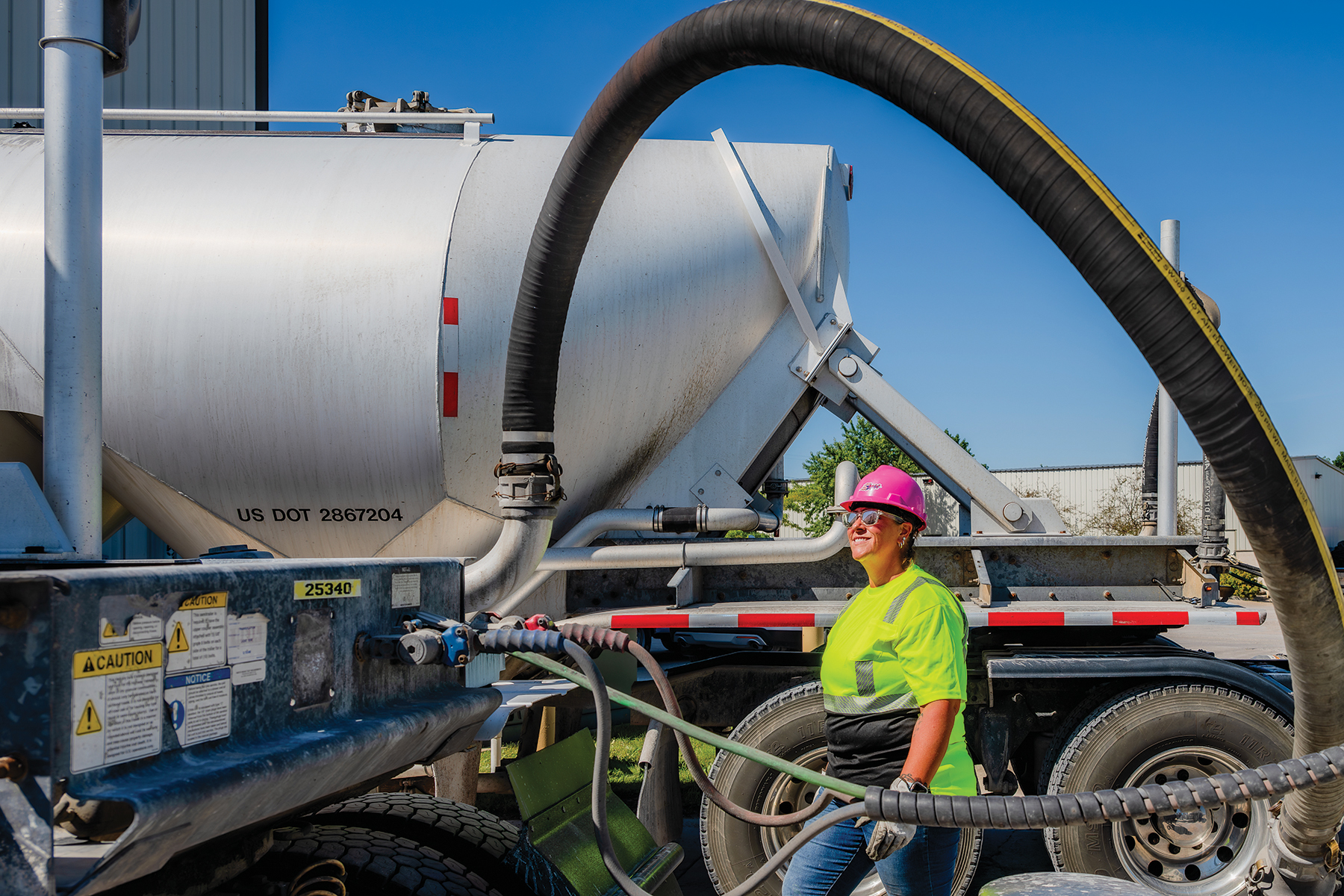
After a divorce left her as a single mother, Stara Gleash was working long, low-paying hours as a restaurant server, cleaning houses and caring for lawns on the side as she struggled to make ends meet. Were it not for the help of her parents, she admits, she and her son would have been homeless. Gleash knew she had to make a change, so she harnessed her longtime love of driving and went to school to earn her commercial drivers license, adding the educational commitment on top of her three exhausting jobs for a backbreaking period.
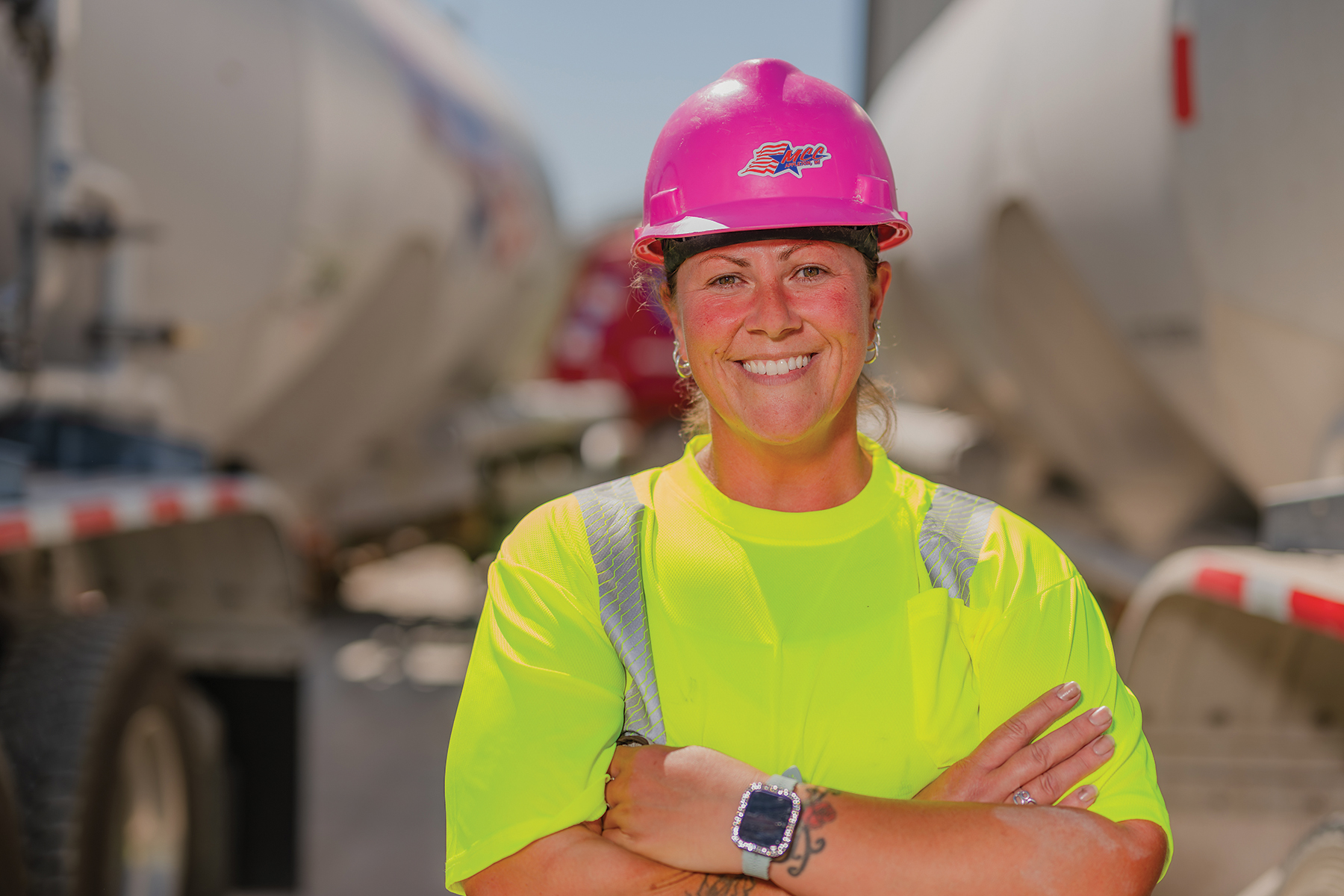
After obtaining her CDL, Gleash went over the road for about nine months, but she wanted more. Five years ago, she joined Appleton’s Murphy Concrete and Construction as a bulker — operating the tank-style trucks that transport raw materials such as cement, lime and sand for concrete construction. At least in the last three years, Gleash believes, she has been the only female bulker working in Northeast Wisconsin.
“It’s been an amazing career,” she says. “I train for the company; I drive mixer as a fill-in; I do pretty much anything they throw me in, and I honestly love it.”
Compared to her over-the-road job that required her to spend long hours in the truck, Gleash says working for MCC allows her to spend just about an hour at a time behind the wheel; the rest of the time she’s busy unloading and helping, jumping on a forklift or grabbing a shovel.
“I’ve had a couple men say that it’s not a woman’s job. I’m the type to prove them wrong,” says Gleash, who admits her job does involve heavy lifting and physical labor. “There are days when, yes, I do run to the guys and ask for help, but I help them, too. I’ve had a lot of men encouraging me also.”
In her “Women at Work” portrait, Gleash beams broadly under a hot pink hard hat, sparkling earrings encasing her lobes and arms folded to show off her pink bejeweled smartwatch. She asked MCC for a pink truck, she says, and she “has fun” when the guys on the job site give her a hard time about her love of the color.
“Just because I have a man’s job doesn’t mean I want to be manly,” Gleash says. “I love my Carhartt sweatshirts, but at the end of the day I still want to look cute and feel cute.”
She says she didn’t hesitate to participate in Washatka’s photo project because she knows the representation can help attract other women to the industry. If you don’t see women doing the job, she says, you might not believe you can do it — that was the very boat she found herself in when she started, she says.
“I would love to see another woman bulker just because I know how rewarding it is for myself,” Gleash says. “Seeing other women driving is definitely like a Wonder Woman feeling, like ‘Yay; you go! Other women are doing it!’”
‘I can do that’
Like Gleash, Jennifer Johnson found herself re-evaluating her career following a divorce and single motherhood. She lived at the time in the state of Wyoming, where she signed on to be a concrete cement mason apprentice. But the first day on the job, she says, “They threw me in equipment.” And the rest is 27 years of history. Today Johnson is an operating engineer with Ryan Central and a part‑time heavy equipment instructor with IUOE Local 139.
Johnson says she grew up watching her mother struggle in a low-paying job and was motivated in many ways by her story: “I don’t want any woman to end up like my mom did,” she says. “You know, struggling to get by.”
In construction, Kruse says, the average starting salary is $65,000 a year. Johnson says earning a strong wage in construction has been pivotal for her, and she is even on the cusp of owning her home outright thanks to a long-loved and dedicated career. Last year Johnson was inducted into Red Wing Shoes’ Wall of Honor, making her just the 10th-ever woman to receive the distinction for Red Wing-wearers who have been in the trades for at least 25 years.
Washatka says Johnson was one of the first subjects he photographed for “Women at Work.” He drove to the south side of Milwaukee to capture her on a route. In 10 minutes, Johnson and her Red Wings, as well as her graceful cascade of signature braids, made photo magic.
Johnson looks forward to the day her hairstyle isn’t unique, when other women are earning labor accolades and when the feeling of being the lone woman on the job site isn’t all-too-familiar. Johnson had her own moment of inspiration when she started working with some large companies on the multi‑year, multi‑phase “Zoo” interchange project near Milwaukee.
“These bigger companies wanted that diversity. I had never seen so many women on a job, and I was so happy,” she recalls. “And I mean not just women, women in leadership positions, superintendents, they were running the job. That made me swell up with pride seeing that. I was in awe of it.”
Today Johnson is active with advocacy for women and minorities in construction, helping manage a Facebook group for Local 139 and frequently volunteering at career fairs and career exploration events aimed at youth. She has a special affinity for activities targeted specifically toward girls.
Representation matters, Johnson says. Girls will come up to her at career fairs and ask questions — something they are less likely to do if only male representatives are behind the table. Working in the field is a great stepping stone, she adds, to positions as project managers or executives that many women desire.
“I think they don’t realize what they can do or what’s out there for them,” Johnson says. “One thing that I’ve always told myself is no one can tell me I can’t — only me,” Johnson says. “Because they have this preconceived idea that it’s a man’s world or a man’s job, they tell themselves the same thing. But once they see other women in those roles, then it opens their eyes up and makes them think, ‘I can do that.’”
Sharing the story
Washatka is excited to grow “Women at Work,” with plans to add additional portraits and stories to the project this summer in anticipation of showcasing the work at events and conferences this fall. The region’s construction employers have also been supportive of the message and project, Washatka adds, saying that it not only showcases their work but helps tremendously with recruiting in an industry that is hit hard by talent shortages.
While he is proud of the effort, Washatka says there was a certain degree of trepidation in being a male photographer at the helm of the project. It was Johnson, he says, who affirmed him.
“It was Jennifer who brought it up: that we need dudes to be supportive,” he says.
It takes strong dudes, and strong women, to advocate for industry diversity. Johnson, Gleash and Kruse all say “Women at Work” has inspired them to get more involved with groups like empowHER and to continue the mentorship and volunteerism they’re already doing.
“I encourage women to stand up for each other, lean on each other,” Kruse says. “Women have to be able to see themselves, and that’s why projects like this are so important.”
On the web