

Work ethic, teamwork, loyalty and experience make military veterans a hot commodity in today’s hiring landscape. But a veteran friendly workplace doesn’t always mean a veteran ready workplace.
“Everybody wants to hire a veteran,” says Derek Jablonicky, a U.S. Marine Corps veteran who serves as the local veterans employment representative (LVER) for Wisconsin’s 5th and 6th workforce development areas. “You hear it everywhere: Thank you for your service. And everybody wants to jump on that bandwagon. But to me, the proof is in the pudding.”
In Northeast Wisconsin, resources are at the ready for companies that want to become employers of choice for the 200,000 veterans who transition out of military service each year. But standing out from the crowd requires more than waving an American flag.
Hire a vet
Jablonicky says the U.S. government created the LVER position in 1944, when 1 in 4 Americans was a veteran and men returned en masse to the workforce after World War II. In the wake of the Vietnam War, the position became more important than ever, as veterans were only 12% of the workforce and faced unprecedented hatred and discrimination as a result of the war’s unpopularity.
It’s a stain on U.S. history and has powerfully affected the baby boom generation, Jablonicky says. Veteran suicide today is 22 a day; what many don’t realize, he says, is that two-thirds of those we lose, to this day, are Vietnam War-era veterans. Their plight led to the creation of even more government services for veterans, including the disabled veteran outreach program, and today resources to help transitioning service members are bountiful. In Wisconsin, every county has a veterans service office with a wide variety of resources, including career planning. “The 21st century hasn’t been very good to anybody, but it’s been very kind to veterans overall,” Jablonicky says. “Selling a veteran [to an employer] has never been easier.”
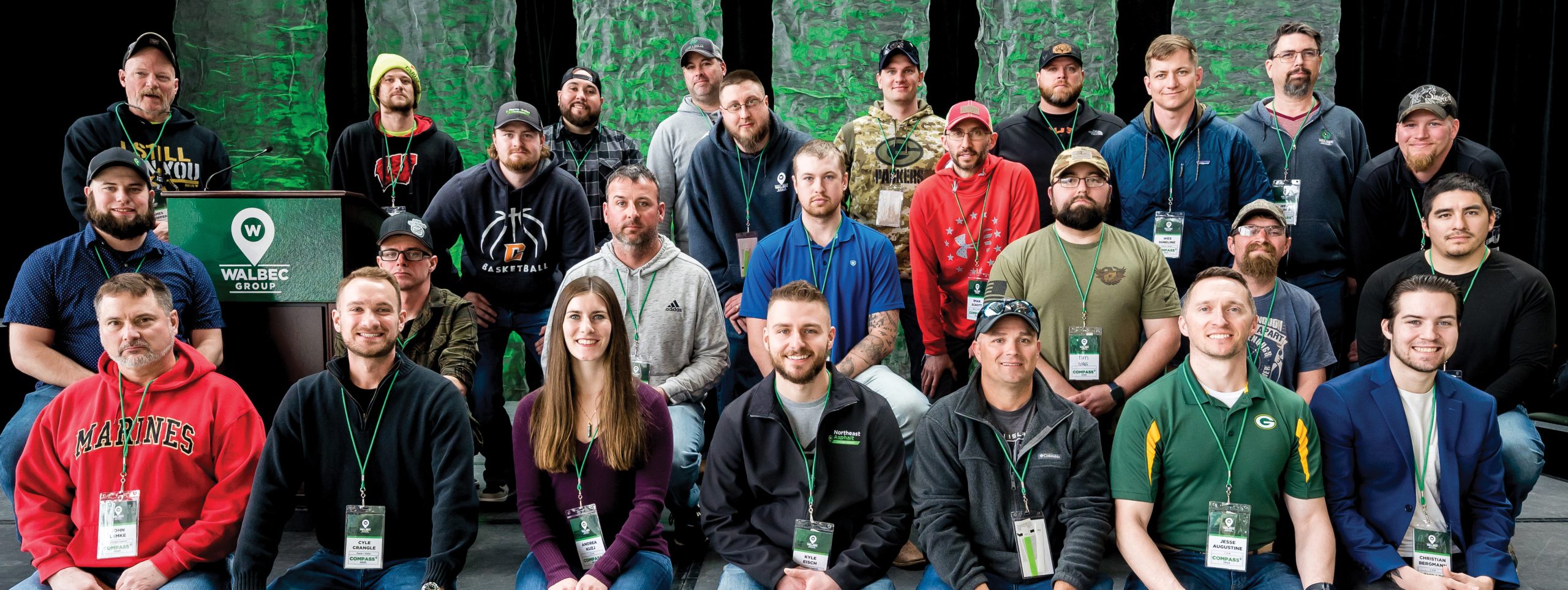
Jodi Heim, a corporate recruiter at the Greenville-based civil engineering firm Walbec Group, says her company has made it a priority to recruit military veterans, especially as the industry faces talent shortages.
“There’s some positions within our industry that are really hard to find,” Heim says. “There’s not a lot of people out there going to school for surveying, for example, so we had to think outside of the box.”
At Walbec, that meant hiring a military veteran Heim knew had a lot of the skills the company was looking for and then providing the specific surveying training after he came on board.
Heim and her colleague, Craig Hintz, both say Walbec’s commitment to diversity and intentional recruitment of military veterans have opened their minds to new ways of interviewing, hiring and training and transformed Walbec’s workforce in positive ways.
“Different minds, different ideas, different concepts coming together … has really helped us in our teams and our company,” Hintz says. “It’s getting a better understanding of, OK, regardless of what’s on this resume, regardless of what you did in the military and whether you liked it or not, what do you want to do now and how can we help you get there? Because you have a whole bag full of skills, qualities and traits you possess that you don’t even [appreciate]. It has helped us be successful, not only with our military but others.”
Steve Janke, founder of the business Mission Wisconsin/Semper Forward, which works with Wisconsin companies and the military to bring veterans to Wisconsin after military service, says he spends much more time selling Wisconsin companies to veterans than he has to spend selling veterans to Wisconsin companies.
“Their lived experience is probably the most valuable thing that they bring to every workplace, because they’ve seen all of those different things and they’ve experienced a whole melting pot of culture and found a way to come together and work toward a mission or goal, regardless of differences,” Janke says.
A new world
Ryan Lonergan — a Wisconsin Army National Guard veteran, owner of the Fox Cities-based consulting business Wisconsin Veteran and host of the Fragout Podcast covering veterans’ issues — says it can be hard for veterans to talk about themselves in job interviews because their military experience is so team-focused. He remembers working with a young man who was having a hard time interviewing. A resume review by Lonergan revealed the interviewee was a chemical biological radiological and nuclear specialist, or CBRN.
“I was like, ‘Wait a second: To get that certification you’ve got to go into the VX poison gas chamber. It’s the deadliest thing in the arsenal, right?’” Lonergan recalls. “I’m like, ‘So you’re telling me you can go into a room with the deadliest gasses in the world, but you can’t go into a room and talk about yourself for 30 minutes?’”
Ultimately, it wasn’t a matter of “can’t do,” Lonergan says. The CBRN got the job. It’s just that, for some veterans who joined the military right out of high school, their world looks very foreign when they leave.
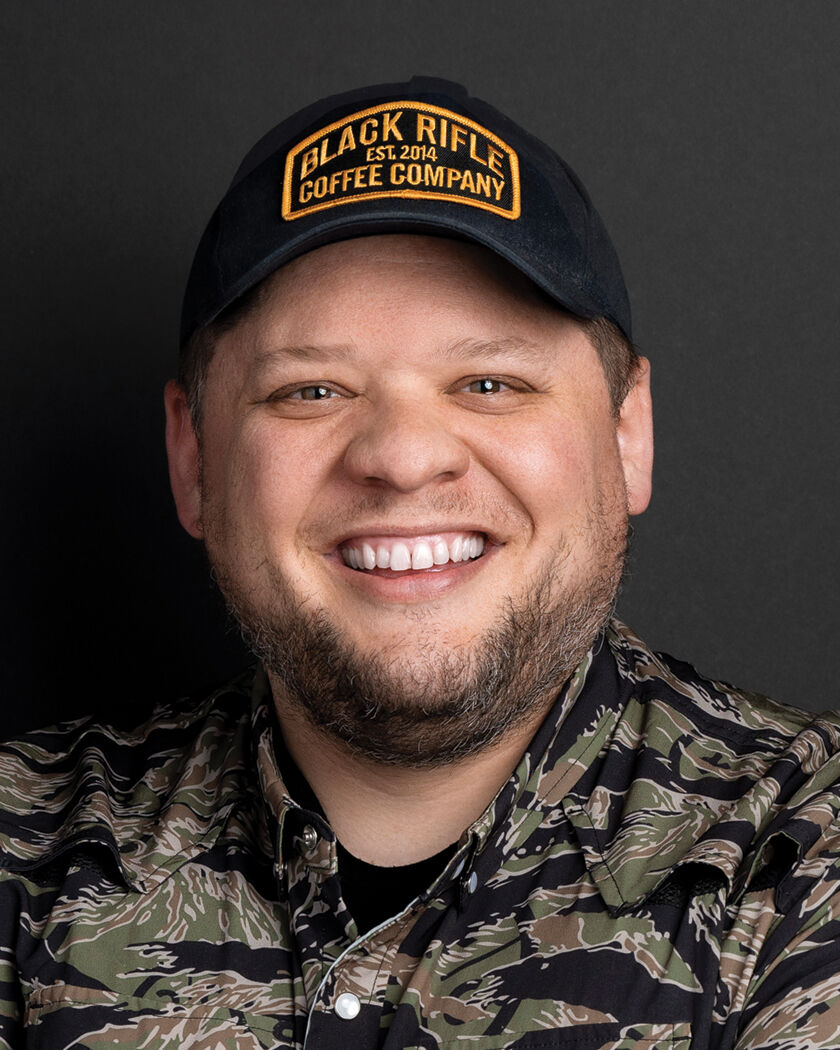
“You’re asking them to transition,” Lonergan says. “But how can we transition into a society that we’ve never been part of in the first place?”
Lonergan says behavior-based interviewing is a trend that does a disservice to many veterans, and he always recommends having a veteran in the room, if not a member of the company’s hiring team, for interviews with transitioning service members. Ask them about their tattoos or about specific deployments on their resume. Ease into the conversation about how their skills and experiences transfer to the job; they may not know. And “let’s be real; we have our own vocabulary,” Lonergan says.
Furthermore, some veterans struggle with the transition from a strict structure and hierarchy of the military to today’s modern workplace and can feel confused or even disrespected through the transition.
“You don’t start meetings late in the military. You don’t talk back to your supervisors. Little things like that start to get under the skin of military members when they come back,” says Lt. Col. Scott Lieburn, the dean of students at Moraine Park Technical College who has worked with student veterans and staff to shape policy and procedures at the college.
New and better ways
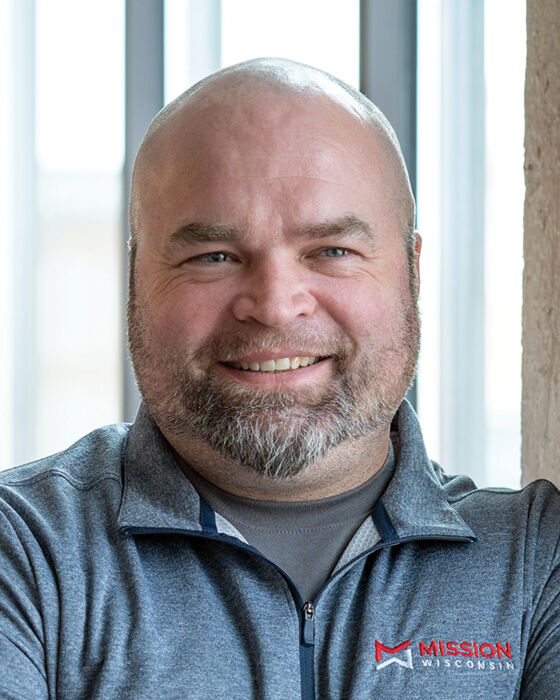
“We joke in my community that every service member transitioning out of the military should be sent to every job interview with an interpreter,” Janke says. And while, yes, it’s kind of a joke, it isn’t entirely. U.S. Venture is a regional example of an employer, Janke says, that has integrated a military occupational specialty (MOS) translator into its hiring website to provide exactly that kind of “military-to-civilian” translation that’s so often needed: “You can put in your MOS and it’ll show the jobs that are relevant with U.S. Venture.”
Even if you don’t have an MOS or a deep understanding of how military experience translates — and most civilians don’t — be open to asking the questions and willing to embrace all types of leadership credentials, Timothy La Sage, military affairs manager for Madison-based WPS Health Solutions, shared last month at New North Inc.’s “New North Hires Heroes” event. After all, says La Sage: “Leadership is the basis” of any job.
“I would implore HR: Look at your hiring practices. Look at your job descriptions, and if it says you must have a bachelor’s degree, you must have a master’s degree, you must have X amount of years in this technical field, the words ‘and/or’ can go a long way,” La Sage says.
Lead with empathy and think creatively, adds Jablonicky, recounting his work with a CNC machinist who required the assistance of a service dog, Rocky, to cope with post-traumatic stress from his time serving in Afghanistan. The veteran’s employer considered Rocky a liability, and he was fired. That’s when Jablonicky connected him with Pierce Manufacturing.
“They said, ‘Well, we’re going to interview the dog,’” Jablonicky recalls. “And that’s exactly what they did. They brought them both in; they talked to him, and they also hired the dog. They provided [Rocky] with booties and little face masks so he could stay on the floor. That company went the extra mile. It’s a beautiful story.”
The U.S. government protects against discrimination for military service through USERRA laws, which guarantee an employee returning from military service or training the right to be reemployed at his or her former job (or as nearly comparable a job as possible) with the same benefits.
This spring Lieburn successfully nominated MPTC for the state Employer Support of the Guard and Reserve (ESGR) Pro Patria Award from the U.S. Secretary of Defense for its policies that go above and beyond the call of duty to serve military veterans and reserves. Lieburn has been serving on a recall to active duty order for the last five years, culminating next month. Lieburn says he expects to “have butterflies” when he returns to campus, where his position will be waiting for him thanks to USERRA and the college’s policies.
Lieburn, who has helped develop both the Student Veterans Club and a Veterans Advisory Council at MPTC, says those organizations proved integral in MPTC’s development of a “Cadillac plan” for military leave. “You know, I had no idea what the crystal ball had in store for me, and that I’d be one of the first beneficiaries,” Lieburn says.
“MPTC has been amazing in supporting me and the other service members and veterans who are employees. This is not always the norm, but it should be,” he says.
Transitioning from the military to the civilian world is very difficult. It’s probably one of the most difficult things service members go through. ‘Who am I again? Where do I fit in?’
– Brittney Maehl, rally champion, Oshkosh Corporation Military Network
Great state
The good news is, great can often be the norm in Wisconsin. Janke doesn’t mind if you call him cheesy for consistently referring to “the Great State of Wisconsin.” For veterans, in many ways, it’s an outstanding place to call home.
The state currently offers 23 of 26 federal veterans benefits and boasts nearly 2,000 veteran service organizations. Prior to COVID, Jablonicky says, Wisconsin ranked second nationally for retention of veterans in the workplace; the state is currently ranked fourth, but Jablonicky expects it will get back up to second again soon.
“Wisconsin has always been at the forefront of innovative new strategies,” he says, citing the Wisconsin G.I. Bill that provides four years of college education on top of the four years already afforded by the federal G.I. Bill, as well as the state’s innovative health care solution during COVID, which allowed veterans to receive private medical care and be reimbursed instead of requiring travel to one of the state’s VA locations.
And while Wisconsin is consistently poised near the top of the list of veteran destinations, Janke says “other states are closing the gap.” So it’s important for Wisconsin’s advocates to keep their collective feet on the gas, including recent successful lobbying efforts that made active duty military income tax-free in the state.
Janke, who recently calculated the economic impact of each veteran in Wisconsin at $63,000 per year, says veteran friendliness and veteran readiness are two major elements of a successful workforce strategy, but there’s also a third important piece that affects the work he does: thriving communities.
“Is your community truly thriving? Fortunately for us, the great state of Wisconsin does not have this problem,” Janke says. “We have excellent county veterans service officers. We have amazing resources, especially in the New North.”
A workplace that works
To create a workplace that resonates with veterans, says Lonergan, thank your vets for their service. Recognize Memorial Day and Veterans Day. Partner with and support veteran-owned small businesses and make veteran-owned businesses a priority in your supplier diversity efforts.
Veterans are not a monolith, caution Lieburn and Jablonicky. Beware of stereotypes. Don’t assume a veteran is suffering from post-traumatic stress — service connected disabilities are common, but they’re not all PTS. For every soldier on the ground, Jablonicky says, there are 20 people in the rear that never see combat. Furthermore, PTS is more common in non-veterans than veterans, he says.
And ultimately, Janke says, a good company culture for all is generally a good company culture for veterans.
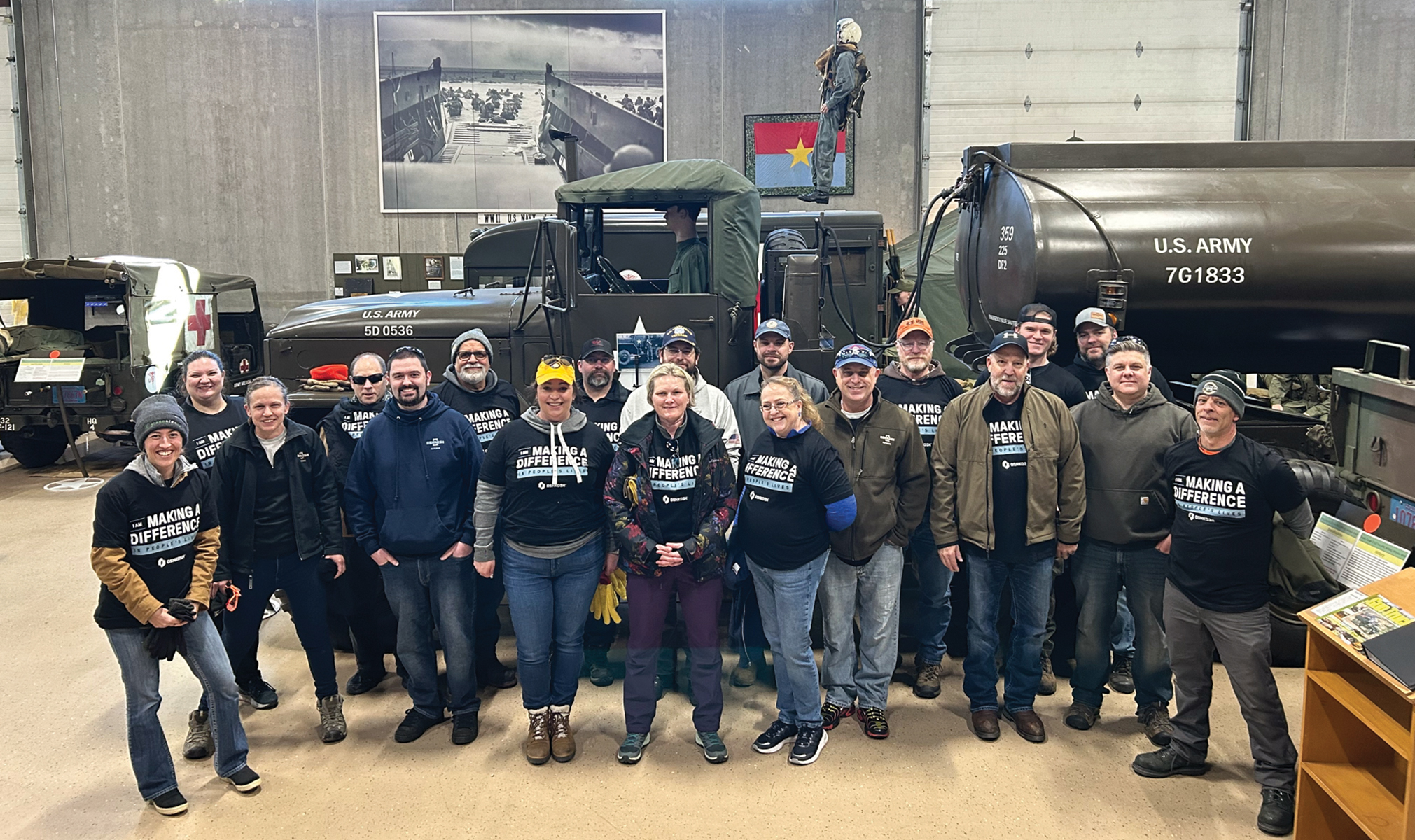
At Oshkosh Corp., organizational culture has been shaped by the development of employee business resource groups, or EBRGs. Among the seven EBRGs currently active at the company is the Oshkosh Corporation Military Network, or OCMN. Creating affinity groups like OCMN is among the top employee retention strategies recommended by experts including Lonergan, who says the impact can be as much as a 69% increase in retention.
Brittney Maehl, a U.S. Navy veteran who works as a program manager for risk management at Oshkosh Corp., is OCMN’s “rally” champion — referring to one of the Rs in the group’s three-pronged mission: recruit, retain and rally. She plans events and trainings, including a recent successful suicide prevention seminar with the Wisconsin Department of Veterans Affairs, and helps ensure the company is engaging in philanthropic and volunteer endeavors that speak to the military community.
Connecting veterans with benefits and resources is another major function of OCMN, adds co-chair Bryan Waters, a U.S. Army and National Guard vet who serves as quality assurance manager with Pierce Manufacturing.
“Sometimes you don’t know about [services] or if you qualify for them. Maybe you’re not aware of some of the new programs that are out there,” Waters says. “So we get that information out to them as well; for us, it’s an opportunity to give back and be able to impact others that went through those same struggles.”
It creates an important sense of community for those with shared struggles, and general shared experiences, positive or negative, Maehl says.
“Transitioning from the military to the civilian world is very difficult. It’s probably one of the most difficult things service members go through. ‘Who am I again? Where do I fit in?’” Maehl says. “We’ve got to figure out friendships; we’ve got to figure out corporate culture. So having a network you can feel part of … we love sharing our stories, hearing and connecting with people.”
Maehl says Oshkosh Corp. has seen tremendous engagement with OCMN, and the group is currently working on ways to welcome and include non-veteran allies and even veterans of some foreign militaries.
As a federal defense contractor, Oshkosh Corp. is required by law to employ a stipulated percentage of veterans, and because it’s a large company this means the OCMN is massive. But you don’t have to have a large number of employees who are veterans to start a group, Maehl says.
“We [veterans] thrive on connection, so getting us together is important,” she says. “Even if you only have five veterans in your organization, there are 500 ways you can connect them.”

