


ESG, an acronym for Environmental, Social, Governance, may be the latest business buzzword, but the standards and goals it encompasses have been around for decades.
Barb LaMue, president and CEO of New North, Inc., explains that ESG is an approach to evaluate the extent to which an organization works on behalf of social goals, as well as its impact on employees, suppliers, customers and the communities where it operates.
Programs that fall within the three pillars of ESG — environmental, social and governance — can include everything from transitioning to renewable energy sources to engaging employees in leadership development courses.
“It is about putting people first and building an economy that challenges how we design and develop products and services with sustainability in mind,” LaMue says. “In our experience in the New North, some [businesses] have been executing on ESG goals for a long time, but more recently they are looking at how to measure and report to stakeholders.”
The increasing importance of ESG reporting and corporate social responsibility over the last several years has been largely consumer-driven, says Mark Van Pay, vice president of marketing at Great Northern Corporation, a packaging and retail display manufacturer in Appleton.

Great Northern works with retailers and consumer product companies throughout the United States, and Van Pay says it’s their customers’ customers who are influencing many of Great Northern’s ESG programs.
“Consumers are asking retailers and consumer product companies what they are doing for the environment and social aspects of ESG programs, so in turn these companies are asking their suppliers what they are doing,” Van Pay says. “Consumers are demanding more detail behind the story.”
Whether in physical retail environments or when shopping online, consumers are making smart decisions related not only to products they are buying, but the packaging and displays in which they are contained and how they are shipped.
“Concerns about the environment [are] driving lots of folks to ask questions about their own carbon footprint,” Van Pay says. “Consumers want to do business with companies that are asking the same type of questions.”
But it’s not just consumers driving the growth of corporate ESG programs. Increasingly, prospective employees are also initiating the conversation with employers.
“I have companies tell me that when candidates come in for interviews, frequently the conversation will come from the candidates asking what the company’s carbon footprint is and what they are doing to reduce it,” LaMue says. “That’s becoming more a part of what candidates are seeking in companies, so companies are looking at ways to showcase [their efforts].”
As a result, reports and ratings that outline a company’s ESG programs and its effectiveness are becoming more important. Governance reports often include data on a variety of focus areas, from reducing carbon footprint emissions and prioritizing recyclable materials to implementing strong employee development programs and diversity, equity and inclusion initiatives.
LaMue says because of its wide range of initiatives and the coordination required to execute them, ESG can be difficult to manage and even more challenging to measure. This is why companies like Great Northern contract with third-party auditing organizations to evaluate programs annually and share performance metrics with customer members.
“We really thought it was important to have outside validation,” Van Pay says. “There’s a difference between a company saying they have a program and outside validation that the program is working.”
EcoVadis, a provider of supplier sustainability ratings for global supply chains, awarded Great Northern a bronze certification, which puts the company in the 60th percentile when compared with businesses of similar size, industries and geography.
Ratings like those from EcoVadis provide a framework that helps standardize ESG performance. Another example is ISS ESG, an independent rating agency that rated Voith Group’s 2021 sustainability performance with a B-. This helped the manufacturer achieve prime status for the fifth time and places Voith among the three best companies worldwide in terms of sustainability, compared to 176 other plant and mechanical engineering companies.
ISS ESG evaluates the sustainability performance of about 5,000 companies around the world and analyzes their performance in the areas of environment, social issues and corporate management.
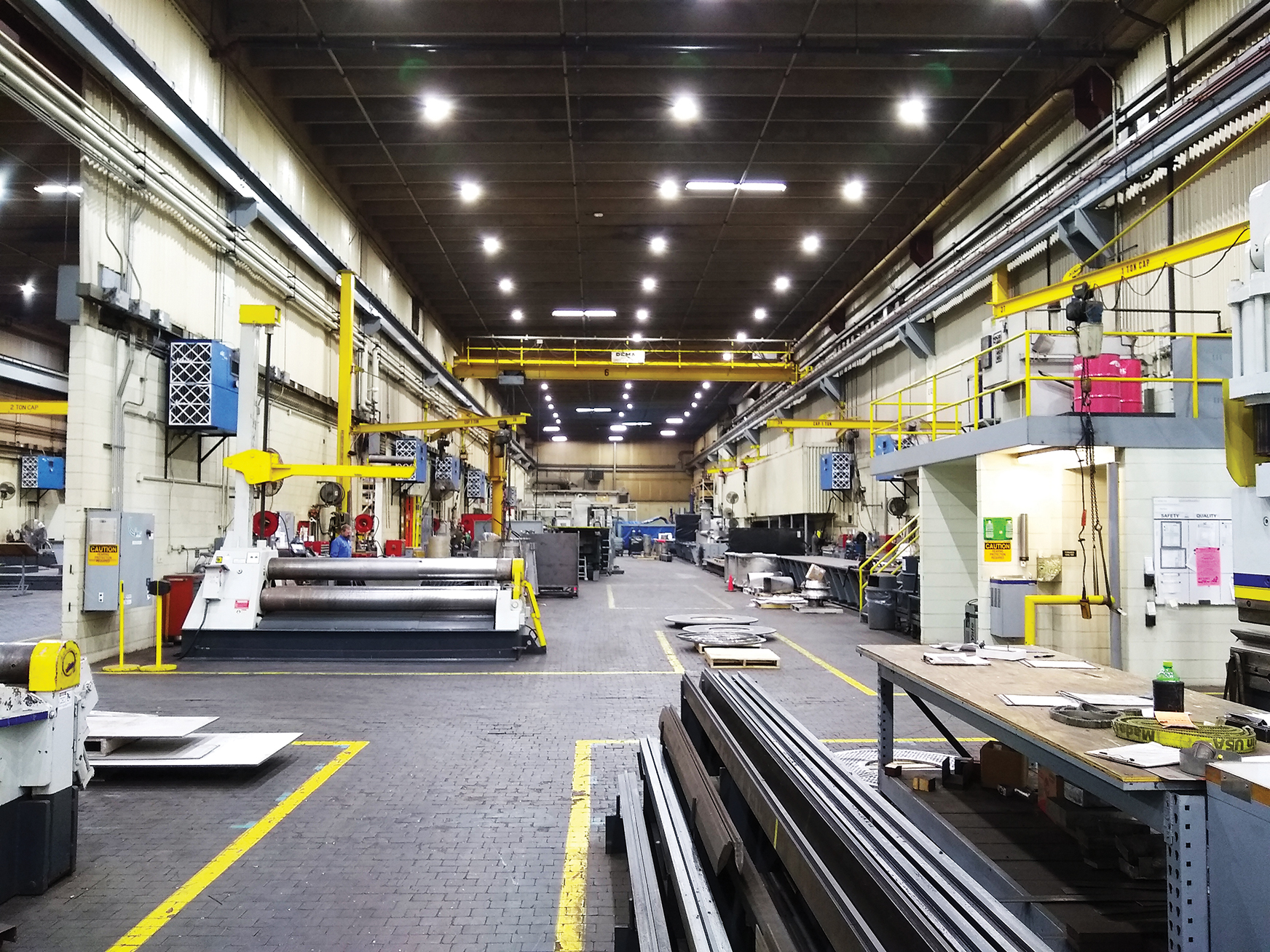
Florian Schüßler, ecological business manager at Voith Paper, says all of the company’s sites worldwide have been operating CO2 neutrally since January, including its two locations in Appleton and one in Neenah.
“From simple changes such as replacing fluorescent lighting with LED lights on the shop floor … at our two Voith Paper sites in Appleton, to more complex solutions like optimized compressed air systems at our Neenah location or installing solar panels at some of Voith’s sites globally to produce green electricity, sustainability is a Voith company value and we’re focused on continuously improving,” Schüßler says.
Globally, across Voith’s three group divisions — Voith Paper, Voith Hydro and Voith Turbo — the company has reduced its energy consumption in relation to sales by 30% since 2011-12, generates 7.6 gigawatt hours per year of electricity out of renewable energy sources directly at its sites, and purchases 90% of its electricity through renewable energy sources.
Voith is investing more than $5 million per year on measures to increase energy efficiency and expand renewable energy sources at its sites globally. Even with sizable investments, Schüßler says devoting resources to ESG goals has great financial benefits.
“The rating is not only an important indicator of the effectiveness of sustainability measures, [but] now banks also increasingly use it as a criterion for granting credit,” he says. “Therefore, the result enables us to further reduce our financing costs, as sustainable companies are also increasingly sought after on the financial markets.”
LaMue says she is excited by the recent discovery of ESG programs within local companies because it ties in with the sustainability work already taking place throughout the region, from an increasing awareness of electric vehicles to the advancement of solar energy.
“We are encouraged by the companies who are working diligently to reduce our environmental footprint through a global lens,” she says. “Not only does this increase our resiliency, but it is also important to attracting talent and new investment to Northeast Wisconsin.”