


The health tech revolution isn’t exclusive to the coasts. It’s taking shape in Neenah labs and Fox Cities and Green Bay co-working spaces, where founders are tackling issues like maternal mental health, chronic wound care and care-coordination inefficiencies. Together, these startups are demonstrating how data-driven and AI‑powered innovation is advancing precision medicine in Wisconsin.
Auvia Health: Elevating maternal mental health through voice biomarkers
For many founders, innovation begins with a product idea. For Nicole Hurd, Appleton‑based CEO and founder of Auvia Health, it began with a personal experience that hit very close to home.
“It really started about nine months postbirth for me,” she says. During her pregnancy, the signs of prenatal depression crept in at 26 weeks and continued postpartum. Eventually, she started to feel like herself again, but not without ramifications. Her relationship dissolved, her sense of self took a hit and bonding with her newborn suffered. As someone who hadn’t had any mental health challenges in the past, it didn’t add up.
“I kept thinking there had to be a logical reason for why it happened,” Hurd says.
That desire to understand sent her into months of deep research into both prenatal and postpartum mental health — neurologically, physiologically and behaviorally. What she discovered stunned her.
“It wasn’t until 2017 that we understood the dynamics of postpartum and effects on the brain,” she says.
Despite this, routine prenatal care still focuses largely on physical metrics. She pondered how many medical appointments she had had at which nobody inquired about her emotional or mental health.
“It was a quick 15-minute appointment, ultrasound and you’re out the door,” she says.
Hurd also uncovered a harsh reality: Women are often afraid to answer postpartum mental health screens honestly.
“We’re witnessing now an epidemic of silent suffering,” she says, because if parents disclose intrusive thoughts or depressive symptoms at six weeks postpartum, “CPS may get involved, especially if you are [non‑white].”
The result: fear and silent suffering.
That didn’t sit right with her. Hurd, who has 20 years experience in health care and nine years experience in technical product management, began designing a solution built around safety, privacy and early detection. The app she envisioned would check in with a simple, voice diary daily question: How are you feeling today? Behind that simplicity sits a sophisticated, fully patented voice-biomarker engine.
With Auvia, tone, pitch, vibration and other voice features are extracted and mapped to clinical data to predict whether users are headed toward maternal mental health concerns.
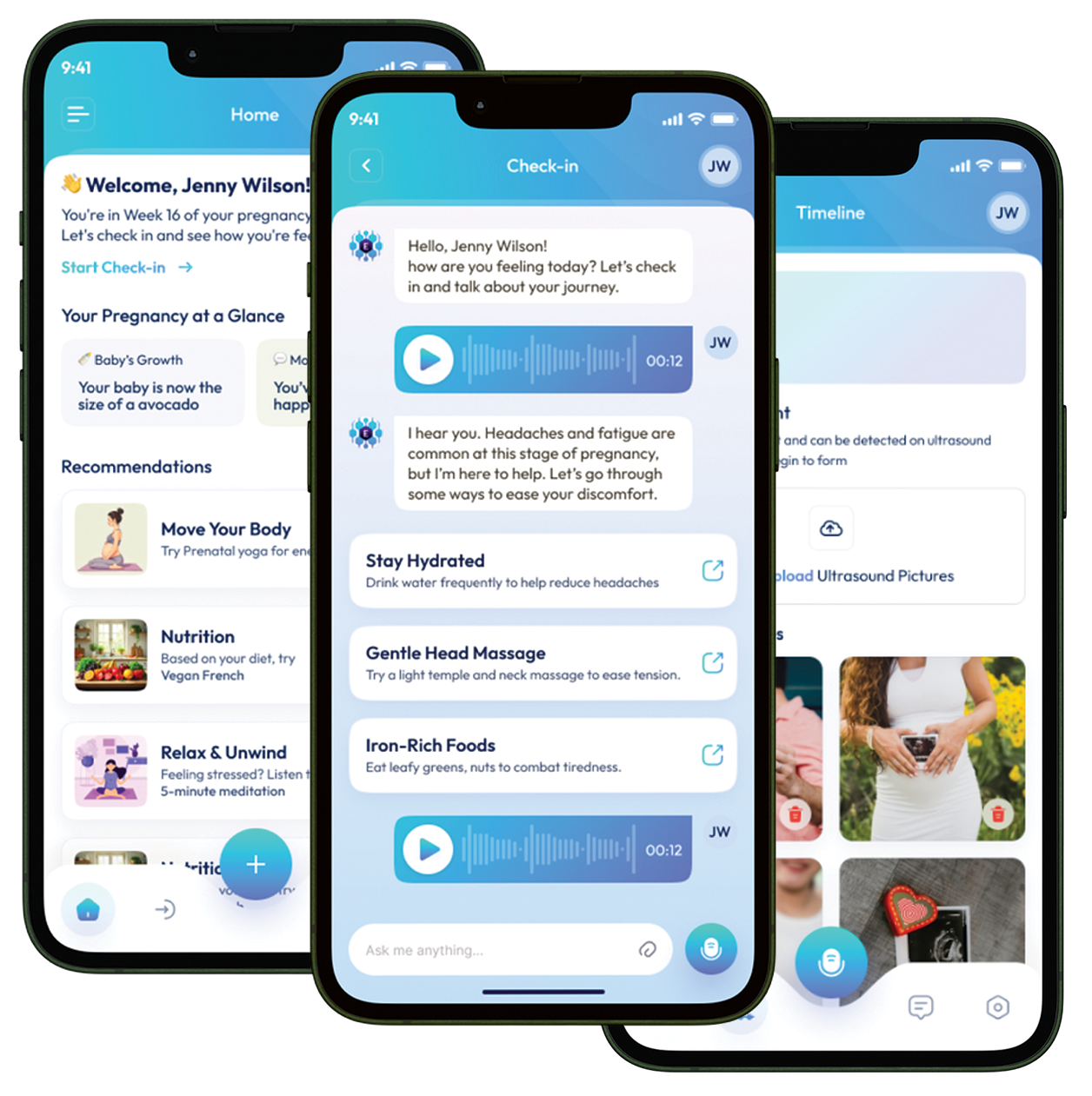
“We’re capturing biomarkers that make up your voice,” she said, noting the app establishes personalized baselines for every user.
Two design priorities guided her: safety, including encrypting people’s voices, and inclusion of supporting partners. She says men often have postpartum symptoms, too, but lack a place to safely share what they’re feeling.
Hurd created the first prototype in April 2024. Today, she describes the product as being “at the fork of a wellness app and a clinically backed app.” Active conversations are underway with several in-state universities. Auvia’s proprietary analysis engine is currently being built out, with more validation steps planned.
The company is in the process of raising capital and preparing for a spring 2026 launch to consumers and doulas. Auvia Health was the winner of the NEW Launch Alliance Pitch Event held Dec. 3 at TitletownTech in Green Bay, taking home the $2,000 prize.
The app’s potential implications are broad: Maternal mental health affects population health, workplace productivity, child development, emergency care utilization and long-term economic outcomes.
“This now becomes a population health issue,” Hurd says. “And it has an economic impact that should be setting off alarm bells everywhere.”
Phoenix-Aid: Addressing a global wound-care crisis

Neenah-headquartered Phoenix-Aid grew from a founder’s recognition that existing solutions fail millions each year.
Ashwinraj Karthikeyan, founder and CEO of Phoenix-Aid, lost his grandmother in South India to a diabetic foot ulcer (DFU) in 2018. Globally, DFUs affect more than 200 million people — they are painful, chronic, highly vulnerable to infection and often lead to amputation.
Karthikeyan’s path to wound care wasn’t direct. His early passion was materials and aerospace engineering — inspired partly by his father, who founded Claris Carbon in Oshkosh. He grew up experimenting in the lab. While working on an extracurricular research project on infections at the University of Virginia, he learned a co‑worker at his former retail job had died from a surgical site infection. Then, when his grandmother died from DFU, Karthikeyan felt called to act.
He spent a year helping his father at Claris Carbon and eventually established Phoenix‑Aid.
Today, Phoenix-Aid is developing a nanocomposite carbon-polymer wound dressing designed to accelerate healing, block infection and improve patient comfort, all while being affordable and easy to use in underserved regions.
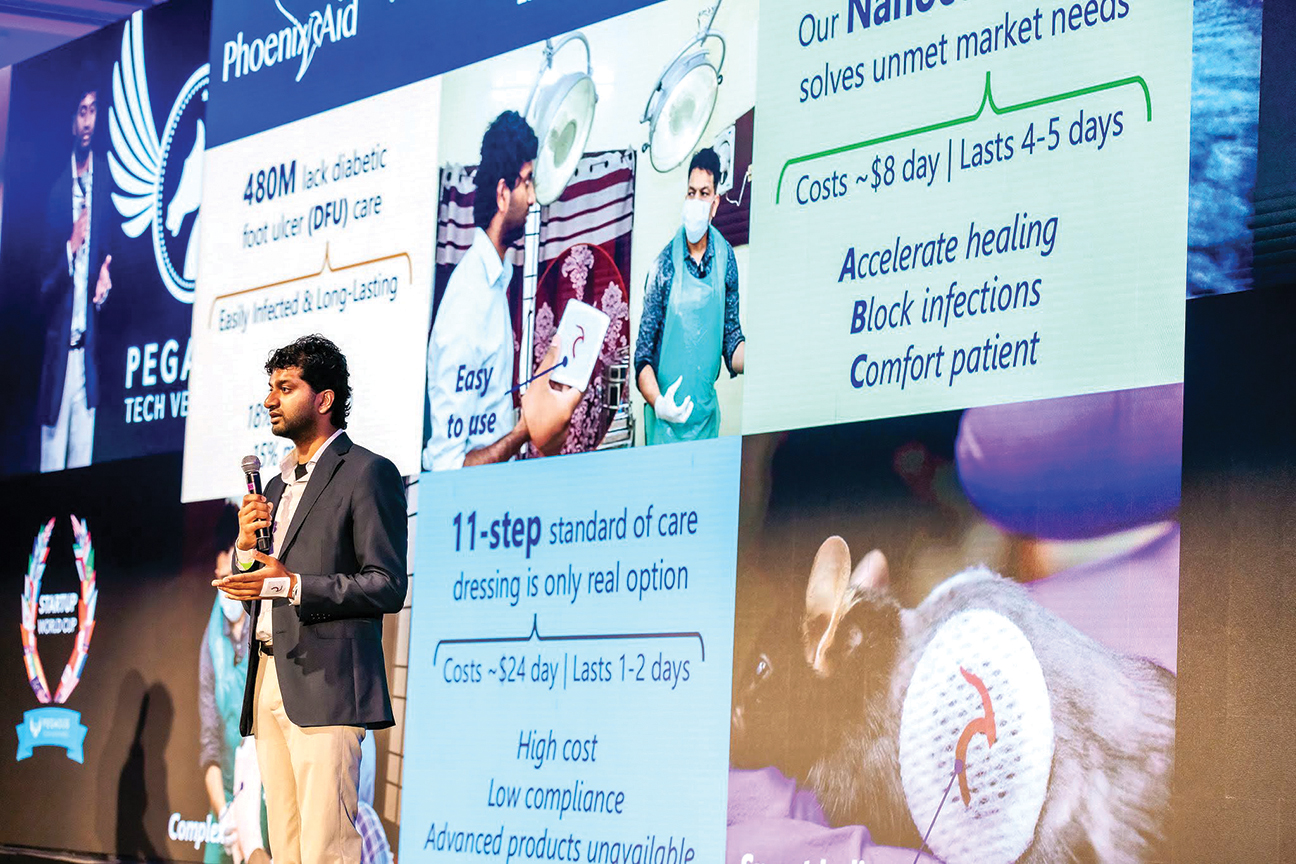
Karthikeyan conducted research in India and the U.S., visiting rural Montana, veterans hospitals and low-income communities to understand what patients actually needed. He learned wound care compliance is often low because conventional dressings require daily changes. Phoenix-Aid’s dressing aims to last longer, cost less and be far simpler.
The technology is simple to use but highly sophisticated in its design, and its value proposition comes down to the ABCs: “Accelerate healing, block infections and comfort patients,” he says.
Phoenix-Aid is preparing a clinical trial in India in early 2026 and is conducting animal studies now in Madison. India provides rapid, cost-effective data collection aligned with U.S. FDA and insurance guidelines. The company expects to launch in India in late 2026 with the U.S. to follow. And even though the first market is India, Karthikeyan says Phoenix-Aid is proudly Made in Wisconsin. R&D and the lab are housed in Neenah, and manufacturing will remain in the Midwest.
Amnis: AI brings the care ecosystem together
When Shana Kettunen began considering her next career move, she found herself returning to a concern voiced repeatedly by health care leaders: Critical communication often breaks down when hospital patients with complex needs are referred to outside organizations.
“Making referrals and sharing health information from inside the hospital to outside it when you’re not on the same electronic health record is challenging,” says Kettunen, co-founder and CEO of Green Bay-based Amnis.
As she explored the issue further, Kettunen spoke with long-term care facilities to understand their processes, what worked and what routinely failed.
“It revealed that it was very challenging,” Kettunen says. “Health care is very siloed, resulting in communication that is often insecure and referrals lost in transit. Care transitions suffer.”
Recognizing the issue, she partnered with software developers to build an AI‑powered, HIPAA-compliant online platform designed to improve the efficiency of communications, admissions, discharges and referrals between health care organizations, long‑term care facilities and patient-facing community resources such as transportation, nutrition and housing. After a pilot with several Northeast Wisconsin health care organizations, Amnis officially launched in July 2024.
Early use revealed a desire for the platform to work even if only one party had the platform, so Amnis expanded for all referrals in 2025.
Today, Amnis allows facilities to manage care transitions across organizations through a secure login, eliminating the need to fax paperwork back and forth. Nearly 20 organizations use the platform, saving an average of three hours per referral.
The platform’s AI capabilities provide even more value by scanning patient documentation and producing a concise, clinically relevant summary that flags high‑risk areas for the receiving facility.
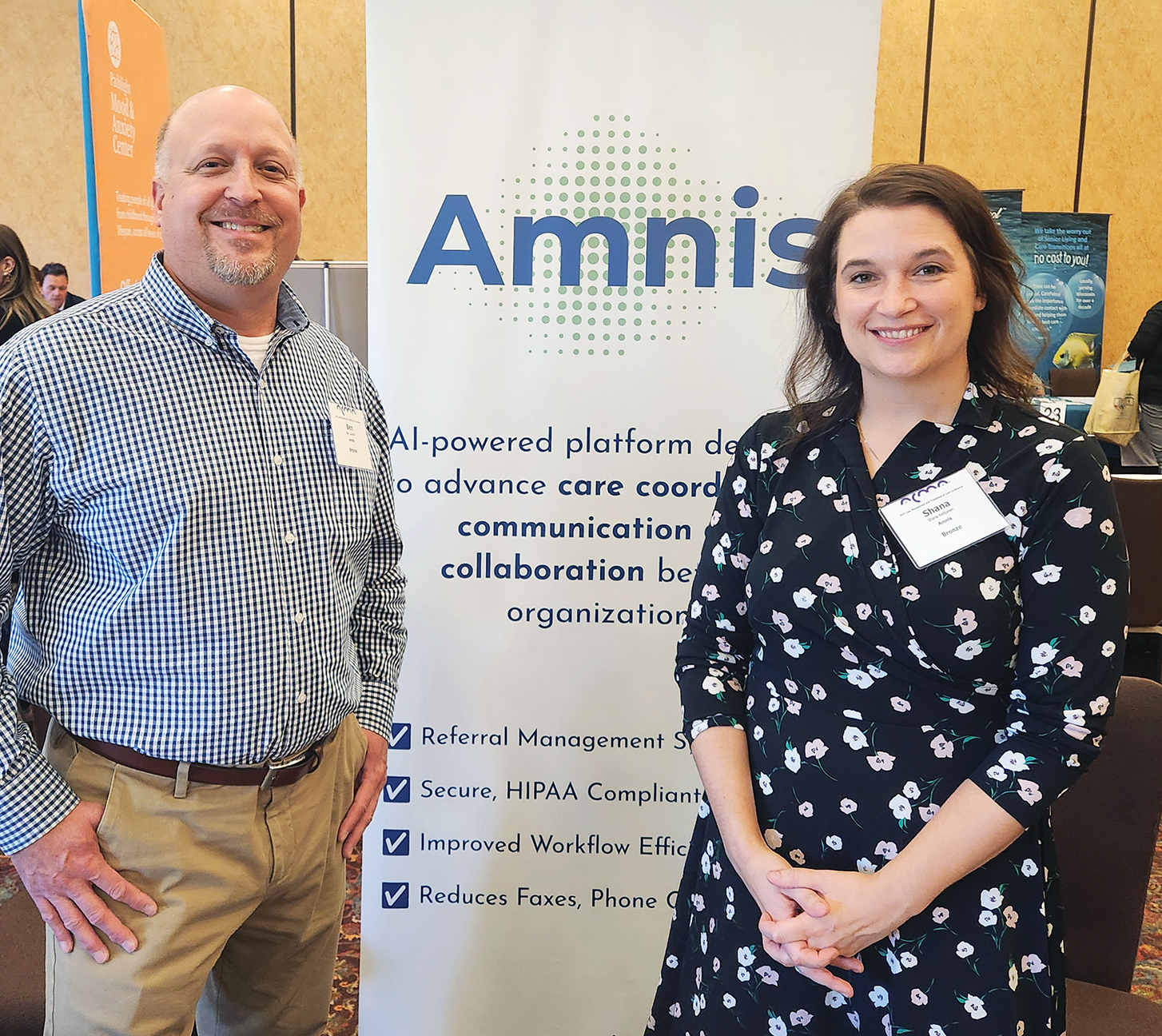
“We can help the skilled nursing facility determine if this is a patient they can care for. AI is a tool that can make the team more efficient,” Kettunen says.
While Amnis’ current clientele is primarily in Northeast Wisconsin, Central Wisconsin organizations will begin using the platform this month, and demand is expected to grow. By 2030, one in five Americans will be at retirement age, and more than 10,000 people will become senior citizens each day through the end of the decade. The 85+ age group is the fastest-growing segment and is projected to nearly triple by 2050.
The stakes of not adapting are high, Kettunen says.
“We already have a stressed long-term care environment in skilled nursing facilities as they deal with staffing shortages, high costs and higher acuity patients,” she says. “Those things make it the perfect opportunity for technology to come in and make teams more efficient.”