
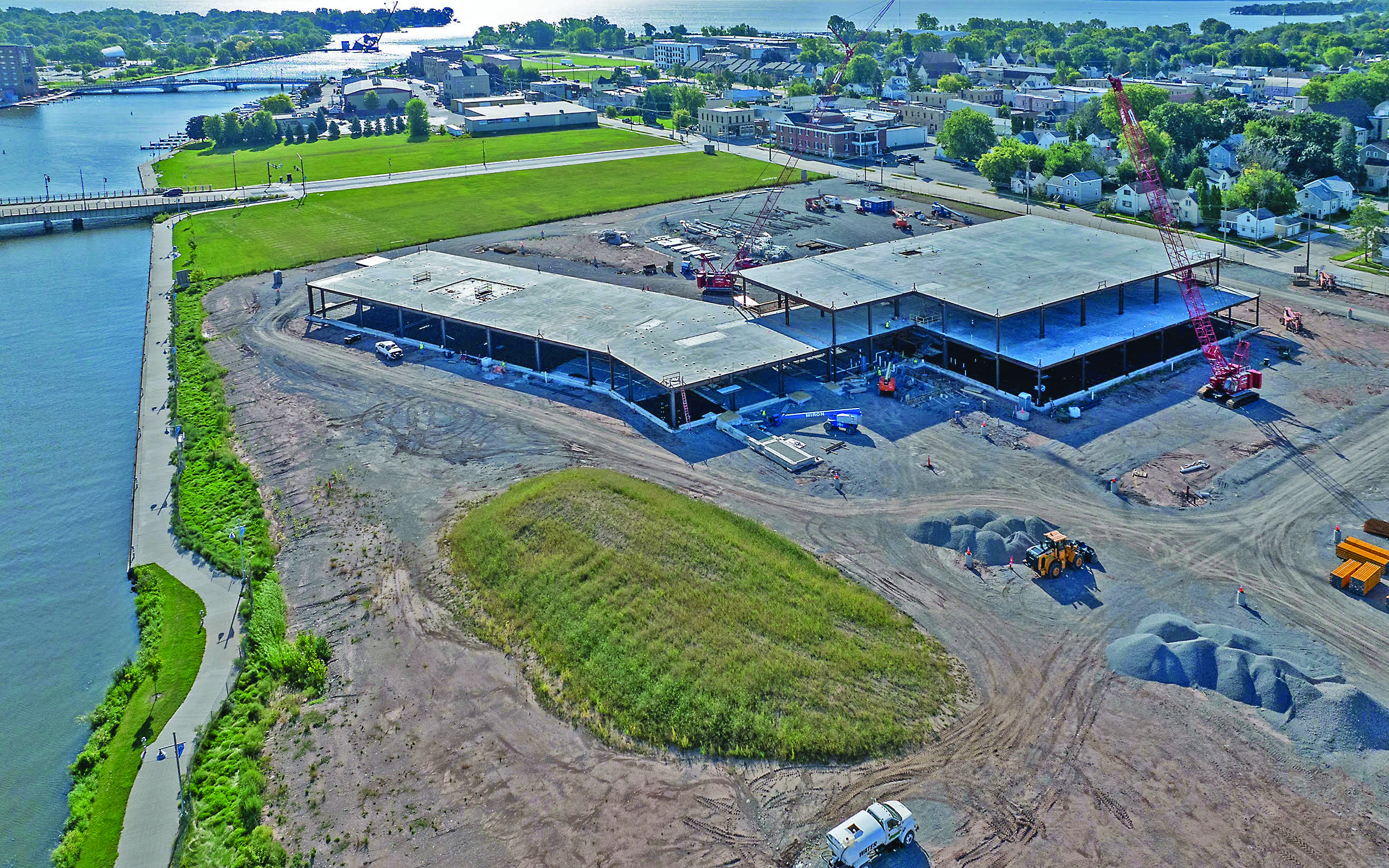

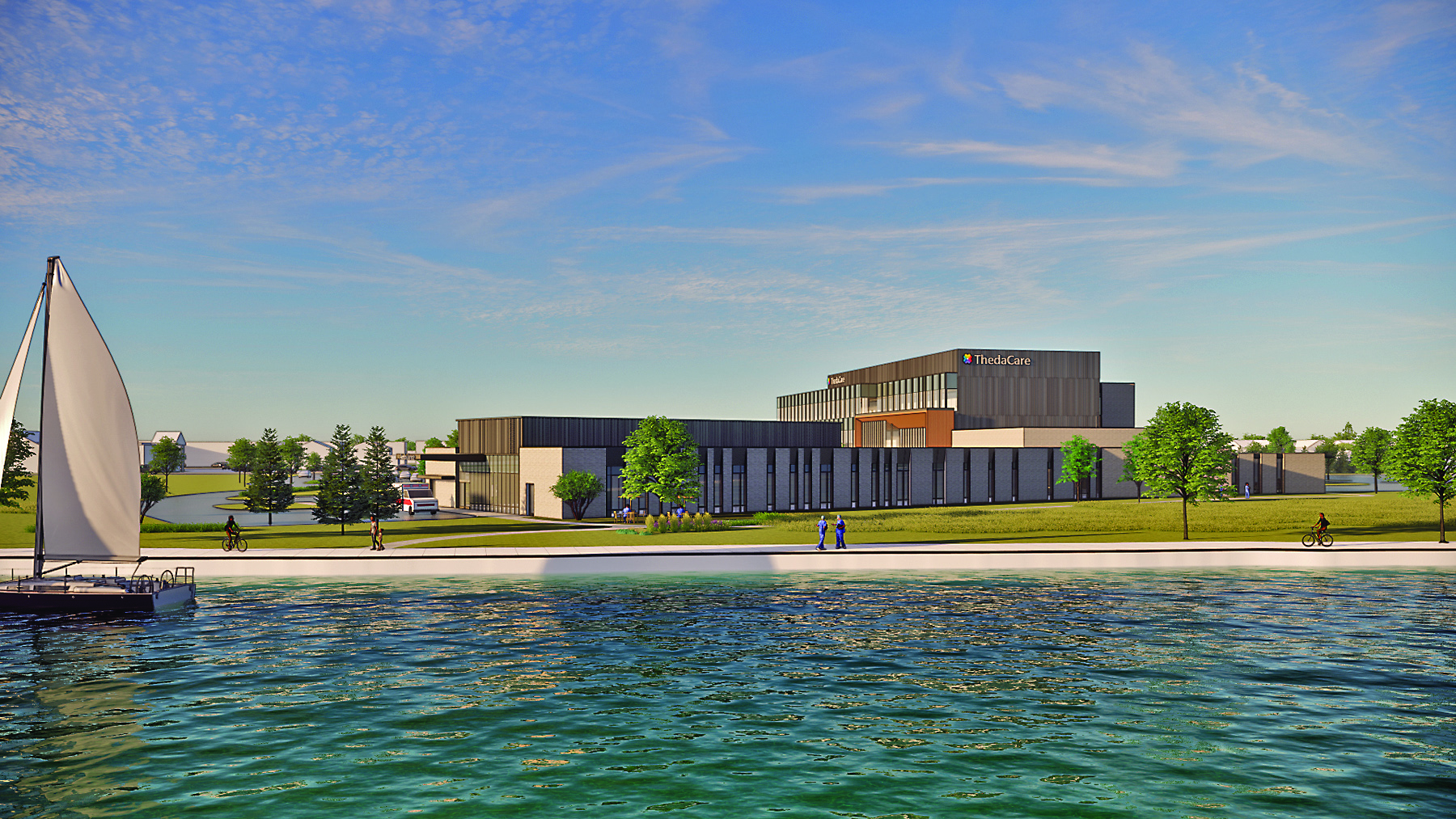
When ThedaCare decided to build a new health campus in Oshkosh at the corner of Sixth and Oregon streets, Rob Chartier of Miron Construction Co., Inc. expected a few challenges.
He did not know how many.
“The challenges just kept coming, but we took them one by one. We found solutions and kept going,” says Chartier, Miron’s vice president of health care.
Challenges — whether it is poor soil, a high water table or a tight building site — are common on building projects, forcing construction firms to develop creative solutions.
While ThedaCare’s lot along the Fox River had been vacant for some time, Chartier says a door manufacturer was previously located on the site, which led to several issues with soil conditions, including contaminated soil and a layer of sawdust, which as it decays omits methane gas.
As challenges were uncovered, Miron used its integrated project team consisting of the designer, client, trade partners and other specialists, such as engineers when needed, to talk through problems and solutions and to keep the lines of communication open. The team meets weekly.
“It’s all about keeping everyone informed. We would discuss problems and come up with a solution,” Chartier says.
As a brownfield site, it was also important to keep the Wisconsin Department of Natural Resources and Environmental Protection Agency in the loop about what was happening, says Jenny Nikolai, vice president of ThedaCare’s community hospitals in Fond du Lac and Oshkosh.
“We knew there would be challenges, but we want to ensure we are doing things right,” she says, adding the new hospital will be the only one east of Interstate Highway 41 in Oshkosh.
Before construction began, project partners worked with a geotechnical engineer to determine the best foundation system for the site.
“Each site is different and unique,” says Rick Pell, senior structural project engineer with HGA, the building’s architect. “Various factors impact how we develop, design and construct a building — including the history of the area. In this case, it was determined a deep system foundation would be best for the health campus in Oshkosh.”
Chartier says nearly 900 steel pipe piles were driven into the soil, filled with concrete and then capped. Piles were used in the construction to support vertical structures and transfer their weight to deeper, stiffer soil layers. Structural beams were then formed and poured with concrete so construction on the foundation slab could begin. It took two months to install the piles.
A deep gravel subbase with geogrid material provides further support while a vacuum plumbing system minimizes the required space in the infrastructure below the floor slab, creating a more streamlined foundation for the building. Subgrades were also improved throughout the site, Chartier says.
Vacuum plumbing is more hygienic than traditional plumbing, Chartier says. “There’s no splash or droplets released into the air,” he says.
The building was originally designed to be a two-story, 85,000-square-foot structure with the ability to add on more stories. This summer, ThedaCare received approval from the City of Oshkosh to add a third story, which Nikolai says is needed to meet the needs of local patients. The building is expected to open in 2025.
“It was important to have those pilings since they stabilized the building and allow for future additions,” she says.
Stabilizing poor soil
Consolidated Construction Co., Inc. of Appleton worked on a large project earlier this year in Illinois, where workers were challenged by how wet the site got after a rainfall. Brian Gebauer, the firm’s vice president of construction, says that led to work stopping on the site.
“Time was critical on this project, but we also needed a solution that wouldn’t break the budget,” he says.
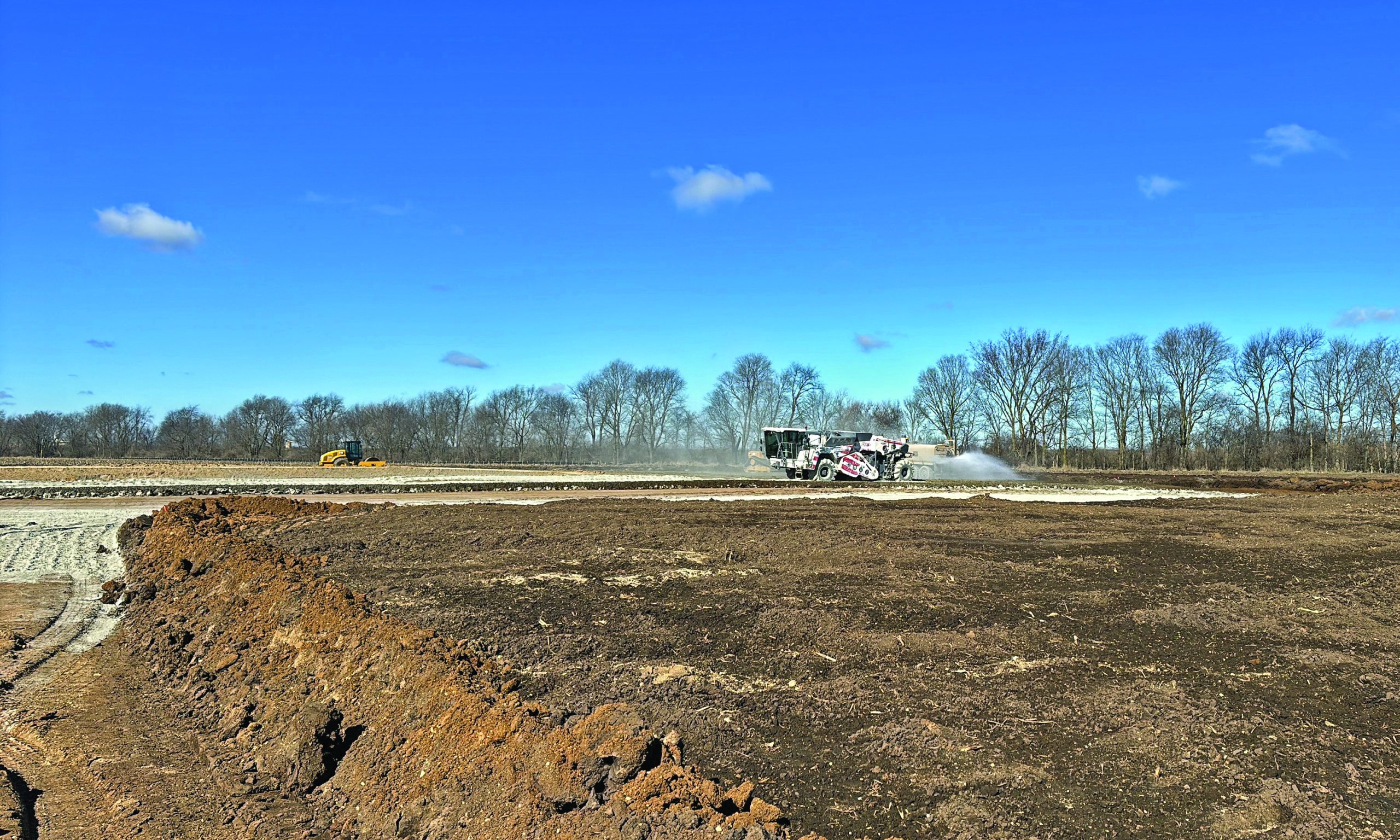
Consolidated needed a solution so workers could keep to the project’s tight schedule. The project team developed a plan involving spreading out cement and mixing it with the soil around the building’s footprint. When the soil is mixed with the concrete, it stiffens up, says Danny Van Groll, senior project manager with Consolidated.
“With the stiffened soil in place, we were able to run trucks in and out of the site with no problem and we could keep working through all kinds of weather,” he says.
Van Groll says the extra work was completed in two days, allowing the project to stay on schedule. Consolidated kept in close contact with the client, keeping it aware of the soil stabilization project.
“It was an inventive solution for a problem that would have delayed us from reaching our deadline,” Van Groll says.
Gebauer says in the end, “we put blacktop over the stiffened soil, and we were able to finish on time.” He adds he’s noticed a trend with more projects having poor soil conditions: “We can’t make any more land, so you’re dealing with what’s available.”
‘You can’t test every inch of soil’
Joe Harvey, vice president of construction at Hoffman in Appleton, says poor soil conditions are a common challenge with construction sites. Before the company considers building on a site, it is tested to identify any problems so there is time to investigate solutions before construction begins.
Testing “is an important part of our due diligence,” he says. “But you can’t test every inch of soil, so surprises do happen.”
At that point, Hoffman will leverage its environmental consultants to develop a remediation plan. The goal is to keep the project on time and on budget, Harvey says.
Soil conditions are important because the land needs to be able to handle the building’s structural load, says Paul Martzke, president of Immel Construction in Green Bay. He says a lot of advance research is done on sites to look not only at soil conditions, but also at water pollution and how the noise from the project will impact neighbors.
“Undeveloped sites, starting from scratch, can be the most challenging since you don’t know what’s underneath the grass. There could [be] another structure or remains of another structure under the grass,” Martzke says. “It’s naïve to think an empty site is the easiest — there could be remains of wetlands. You don’t know until you begin testing.”
To deal with poor soil, the site can be over-excavated, and fill is then brought in to stabilize the site, Harvey says. “If there is a problem, we look to identify extra costs and how it will affect the schedule. We document what we found and how we fixed it,” he says.
Before crews turn over any soil, Martzke says it is vital to learn as much as possible about the site, going back to what has previously been on the site and understanding what animals and plants live there.
Martzke says doing pre-work on a site is part of a construction company’s due diligence.
“You always want to find out any problems before construction starts,” he says.