


In October, the Wisconsin Department of Workforce Development scored a win when it secured a $15 million competitive grant to enhance early childhood education. A key component of the grant was a Quality Jobs, Equity, Strategy and Training (QUEST) program to meet one of the industry’s most pressing needs: recruiting and retaining qualified child care workers.
Wisconsin’s early care and education professionals are highly educated and underpaid. Additionally, many of them lack access to benefits like health insurance and retirement, according to Wisconsin Department of Children and Families Secretary Emilie Amundson. Because of this, she says, it is hard to attract and retain quality professionals given they can often make more in a less stressful setting.
But the data is clear, Amundson says: Getting more quality professionals into the industry is a critical need — not just for vital child development reasons, but for economic reasons as well.
“Child care is the work that allows all other work,” she explains.
And while it’s easy to see and demonstrate in a field like early childhood education, no segment of the U.S. workforce shortage is immune from creating economic and societal ripples. Industries from teaching to trucking to tech are both feeling the labor shortage and proposing innovative solutions. A K-12 apprenticeship program is currently under development by the Bureau of Apprenticeship Standards, and Wisconsin’s new QUEST grant is not only focused on bolstering existing efforts to make child care jobs more attractive, but also adding early childhood education apprenticeship sponsors across the state.
The 2021 bipartisan infrastructure law contained a provision allowing 18-year-olds to become interstate truckers — lowering the age from 21 and paving the way for apprenticeships in the field, which Schneider CEO Mark Rourke told Wisconsin Public Radio was “a positive development.”
And on the IT front, the U.S. Department of Labor partnered with the U.S. Department of Commerce and White House in July to roll out a 120-Day Cybersecurity Apprenticeship Sprint that added nearly 2,000 apprentices to the nation’s workforce after just a month.
With a labor shortage that isn’t going away, the Wisconsin Department of Workforce Development says it is seeing more and more industries backing efforts that get Wisconsinites into the workforce faster.
“Anecdotally, we are hearing that many employers are opting to hire ‘underskilled’ individuals and upskill them internally versus holding out for fully qualified candidates,” says Jennifer Sereno, the office’s communications director. “DWD works diligently to develop easier, more straightforward processes to access work-based learning.”
Indeed, companies that want to offer accelerated training, apprenticeships and internships to address workforce shortages often lack the time, expertise and resources to do it themselves. Assistance can come from agencies like DWD, the state’s higher education institutions, and even private companies like U.K.-based startup Multiverse — which currently runs paid internship programs for 500 global companies — looking to capitalize on the demand.
In short, it takes a village. “Through cross-sector solutions, we can develop an early care and education system that meets the needs of all Wisconsin families,” Amundson says. “We appreciate the partners who are coming to the table and helping us better support our communities and the economy.”
“Business and industry partnerships allow businesses to combine resources, both human capital and funding, to generate solutions to workforce issues,” Sereno adds.

Starting block
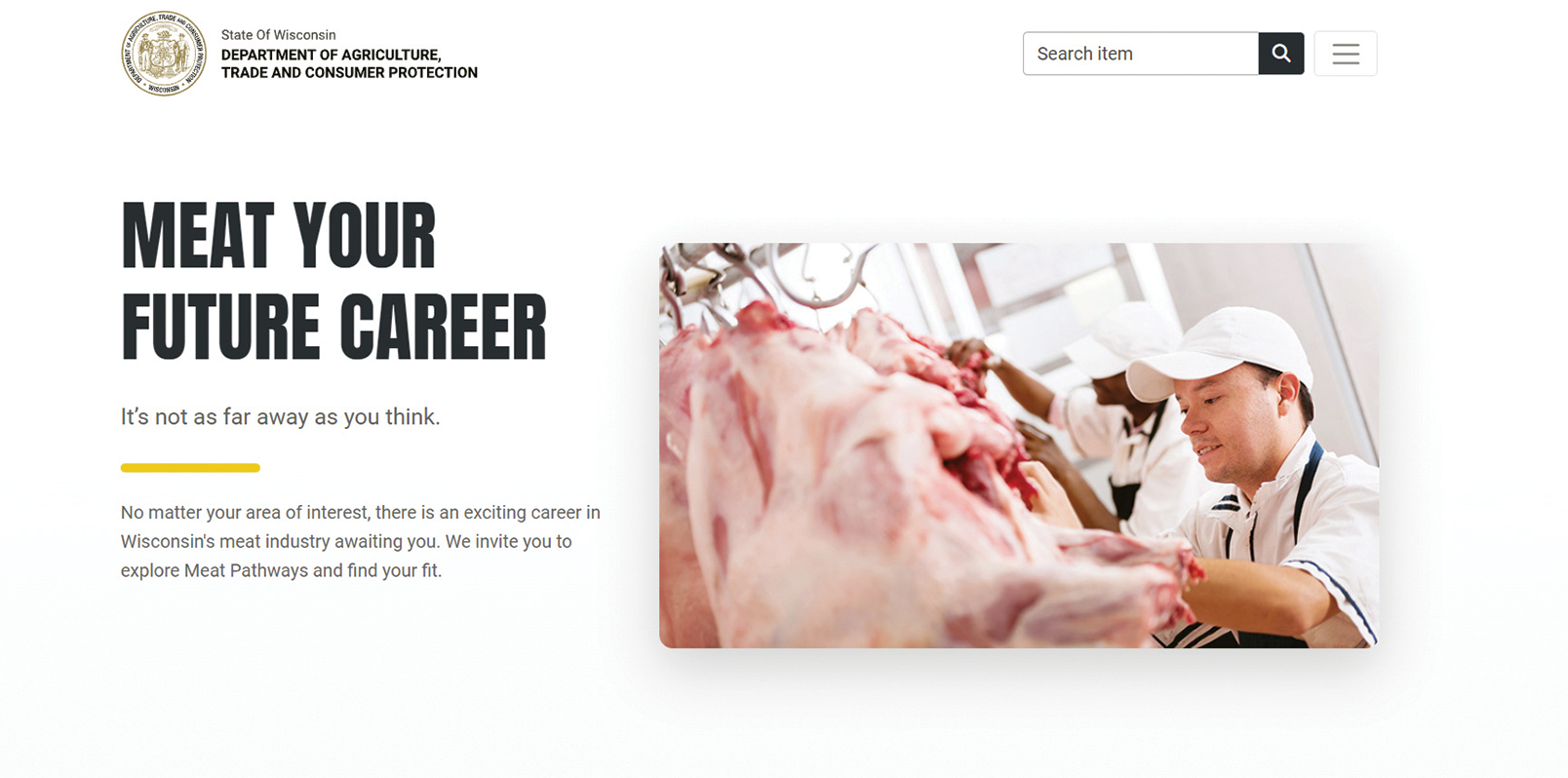
In May, the Wisconsin Department of Agriculture, Trade and Consumer Protection (DATCP) announced a Meat and Poultry Supply Chain Resiliency Grant Program to help support the long-term viability of Wisconsin’s meat and livestock industry. In addition, Gov. Tony Evers designated $5 million to create a Meat Talent Development Program. Today, the state’s Meat Pathways website invites students to “meat your future career,” with information on jobs such as meat microbiologist, chef and barn manager.
The program is also supporting a new initiative at Fox Valley Technical College: a certificate program focused on the butchering trade — a field that has traditionally relied strictly on on-the-job training.

“If you wanted to be a butcher before this, you went straight from high school to the butcher shop, and you ended up with a lot of shops having to spend all that time and energy training,” says FVTC agriculture instructor Kaitlin Spierings, who designed the program alongside culinary instructor Jeff Igel. “A person has to be very precise and meticulous and clean, as well as being OK with blood and viscera and that kind of stuff, so finding that right person just by hiring untrained people off the street is a huge burden. And it’s highly likely it doesn’t work out.”
The beauty of FVTC’s new program, Igel says, is that it presents students with a broad spectrum of careers in the meat industry. Following a pair of carefully designed internships, students who aren’t inclined to slaughter animals may still find employment in the industry, working more on the culinary side or in a butcher shop that doesn’t harvest livestock.
And generating interest in the profession can come from multiple angles, Igel adds.
“I’ve had students in the culinary program who left and became butchers because when they went through the meat identification [class] they found out ‘I enjoy this,’” Igel says. “And some prefer daytime hours; they don’t like this nights and weekends idea.”
FVTC will begin enrolling butchering students next month, and through DATCP’s support those who successfully advance through the eight-credit program will receive tuition reimbursement.
Spierings and Igel say the implications of Wisconsin’s butcher shortage are higher meat costs, lower meat quality and the closure of small businesses — many of which are key rural employers. There’s a “sweet spot” for harvesting animals, Igel explains, and when that window is missed it creates a plethora of problems along the supply chain.
For FVTC, the meat industry program is less about students earning degrees and more about solving those problems — engaging directly with the industry as it seeks to fulfill the Wisconsin Technical College System’s mission.
“The employers are thrilled,” Igel says. “As I was writing the curriculum, I met with eight different butcher shops, and I had eight different drafts. I’m thrilled with how interested they were in this and passionate about what they had to say.”
Apprenticeships for every industry
Every passionate practitioner needs someone to inspire along their same path. And as Wisconsin students prepared to go back to school in September, the state rolled out 14 new occupational pathways and modernized the state’s youth apprenticeship (YA) program to bring more high school students into a variety of industries — including opportunities for aspiring dairy graziers, IT broadband technicians, airport operations managers and arborists.
“It was a no-brainer to work with DWD to help create the nation’s first youth arborist apprenticeship,” says August Hoppe, workforce development coordinator for the Wisconsin Arborist Association.
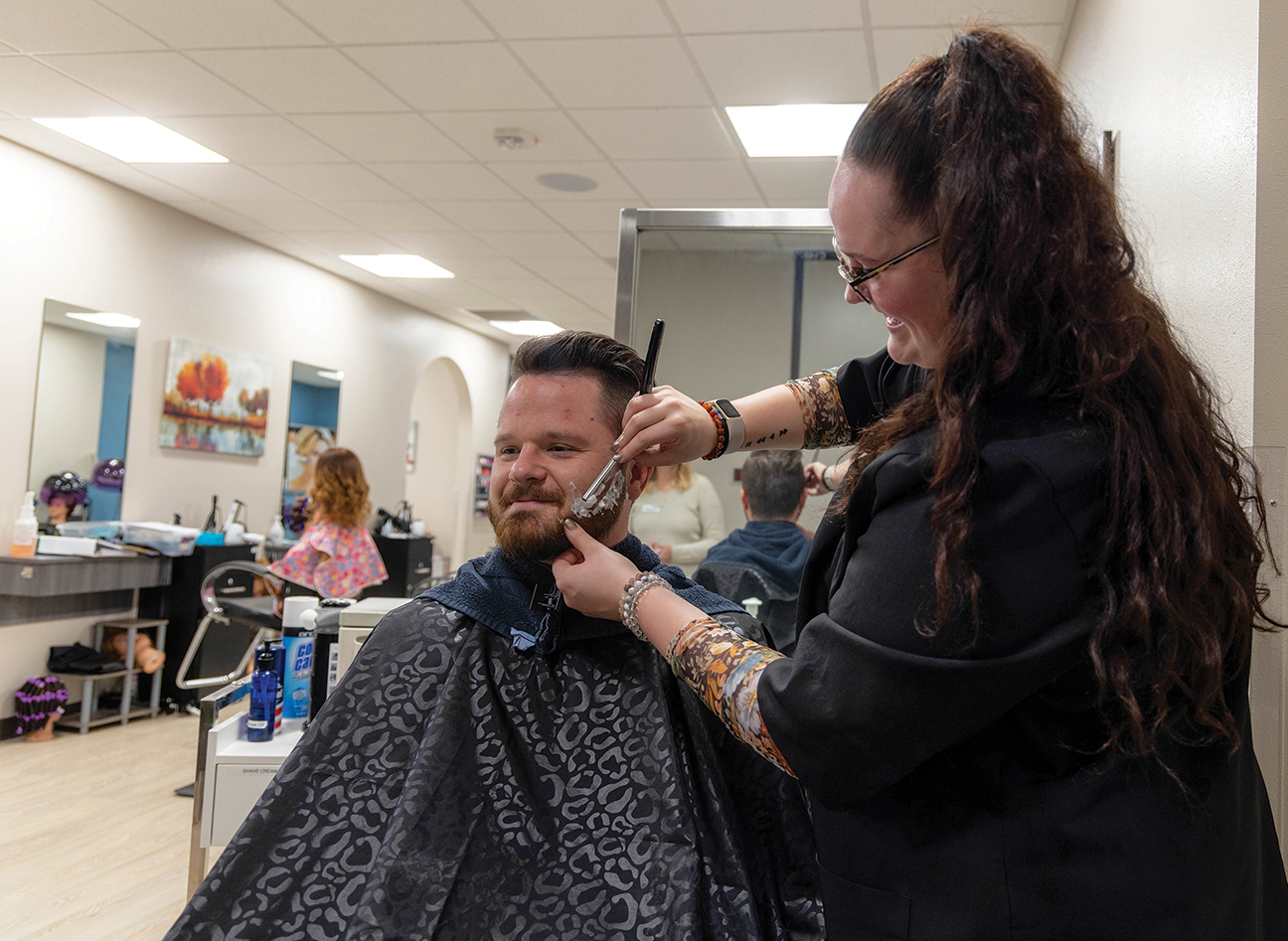
But creating quality apprenticeship programs doesn’t happen by magic. It takes coordination and effort by people like Dawn Berna-Donley, a third-generation master barber and cosmetology instructor who recently created an eight-credit barbering apprenticeship program at FVTC. Barbering and early childhood education were added to FVTC’s roster of apprenticeship programs this year — diversifying a list that previously included only construction and manufacturing trades.
“I’m exhausted, but I’m on it. We’re doing the barber apprenticeship and I could not be more pumped up about it,” says Berna-Donley, adding that the labor force specializing in men’s hair care and beard design has taken a series of hits since 1989, when the State of Wisconsin combined its credentialing for barbers and cosmetologists into a single license.
Not only does the cosmetology program take twice as long to complete as the barber program, it also requires students to learn things like nails, makeup and bikini waxing — which drove many men out of the profession, Berna-Donley says.
The licenses were separated again in 2012, but the damage had already been done. Barber shops closed, and men had begun visiting salons. Add to the mix changing hairstyles, decreased emphasis on men’s grooming and a global pandemic that made people’s appearances downright sloppy, Berna-Donley says, and there’s a lot of ground to make up. She says the exception has been in the African American community, where men’s hair and beard styling has remained a consistent priority through the years.
“But now barber shops are making an enormous comeback,” Berna-Donley says. “The problem is, they don’t have enough barbers to do the grooming [customers are demanding].”
Berna-Donley says the new FVTC apprenticeship program, which launches in January, has already received enthusiastic support from the business community. But even if only one student enrolls for the spring semester, she says, she is making progress toward her goal of revitalizing the trade in Wisconsin.
“A barber apprentice is going to need to know how to do a fade, do a flat top, do a straight-edge razor shave, and the mentors we have haven’t gone to barber school, so it’s a little bit messy,” Berna-Donley says. “It needs to get shaken up. We need to start making some more barbers and encouraging them to be mentors. And if you start to produce some high-end barbers and they get out into the industry, they are going to make bank.”