
Photographs by Shane Van Boxtel, Image Studios
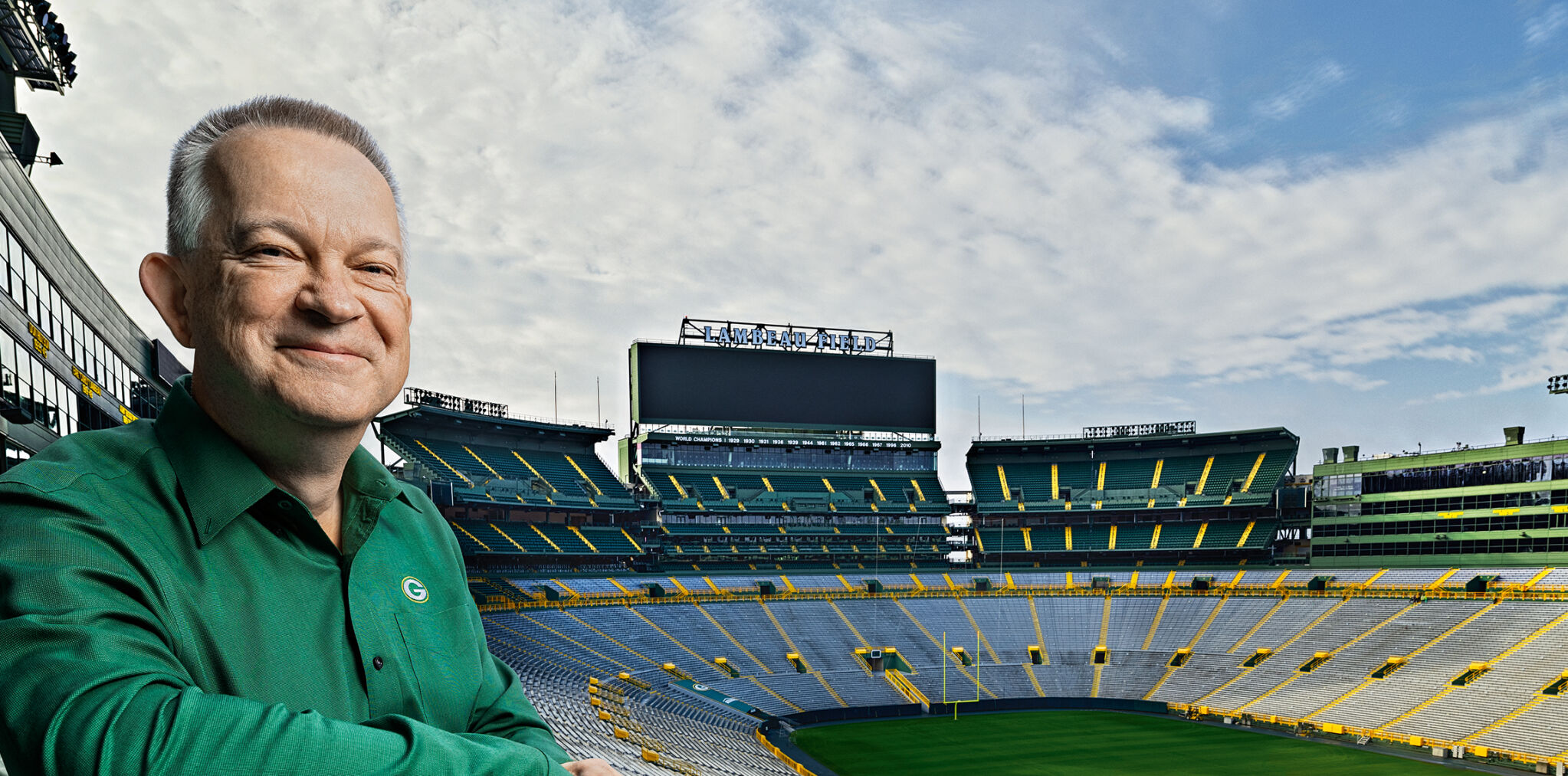
On an overcast October morning, Paul Baniel sits in the stadium at Lambeau Field overlooking the south end zone. Ask Baniel’s former colleagues at the Green Bay Packers and they will tell you the stadium, especially that end zone, wouldn’t look anything like it does today without Baniel’s golden touch.
“Paul was the right person at the right time for the Packers,” says Mike Simmer, retired CEO of BMO Harris Bank and current treasurer for the Packers’ executive committee, who worked with Baniel for each of his 14 seasons with the team. “He stepped in at a time when we were working on large growth, including some big capital projects. He was very strategic in helping the organization evolve through that growth period and manage some of those big projects.”
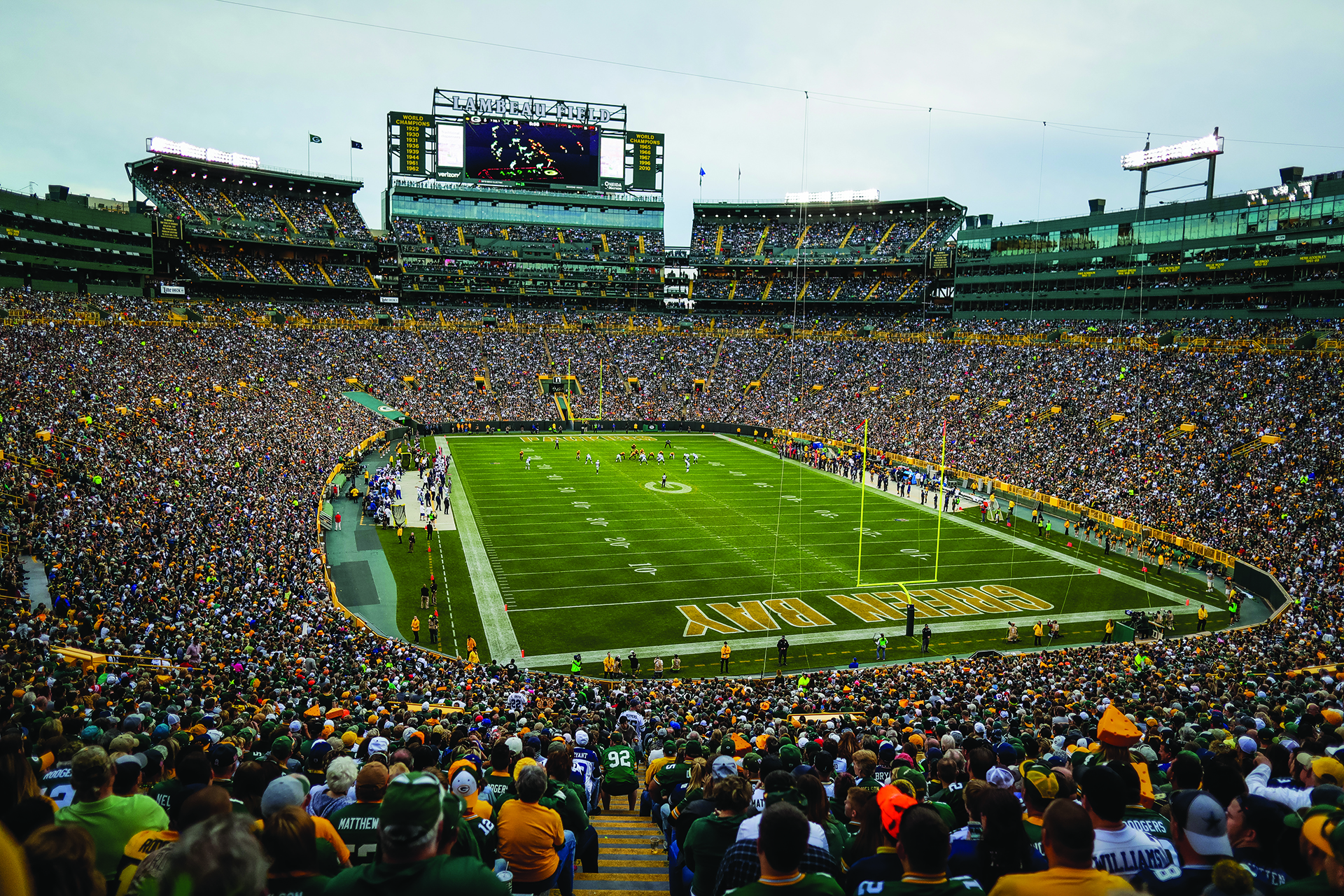
One of the most significant projects at the storied stadium during Baniel’s tenure was the $312 million expansion in 2013, which included the south end zone renovation. Simmer calls the project “a resounding success.”
“Aside from the large renovation 20-plus years ago, the south end zone project is the largest that’s been done at Lambeau, and Paul was involved with the planning, budgeting and execution of it,” Simmer says. “It added thousands of seats for fans; it got people off the season ticket waiting list; and, from a CFO standpoint, it came in on budget.”
Baniel has been retired from the Packers since Oct. 1, but as he surveys Lambeau Field on this blustery fall day, he says it feels like yesterday that he was working on the project that added nearly 7,000 seats to the 66-year-old stadium.
“In my role, you have to do the blocking and tackling and make sure that the financial statements are accurate, timely and reliable. But I was definitely blessed with being part of some great projects, and that certainly made it more fun,” Baniel says.
While the Milwaukee native officially served as the Packers’ vice president of finance and administration, Baniel says his primary role was being a steward of the franchise’s legacy.
“You just want to leave the organization better than you found it,” he says. “I feel good as I walk away knowing that the organization is going to be in a strong position for quite a while.”
It all adds up
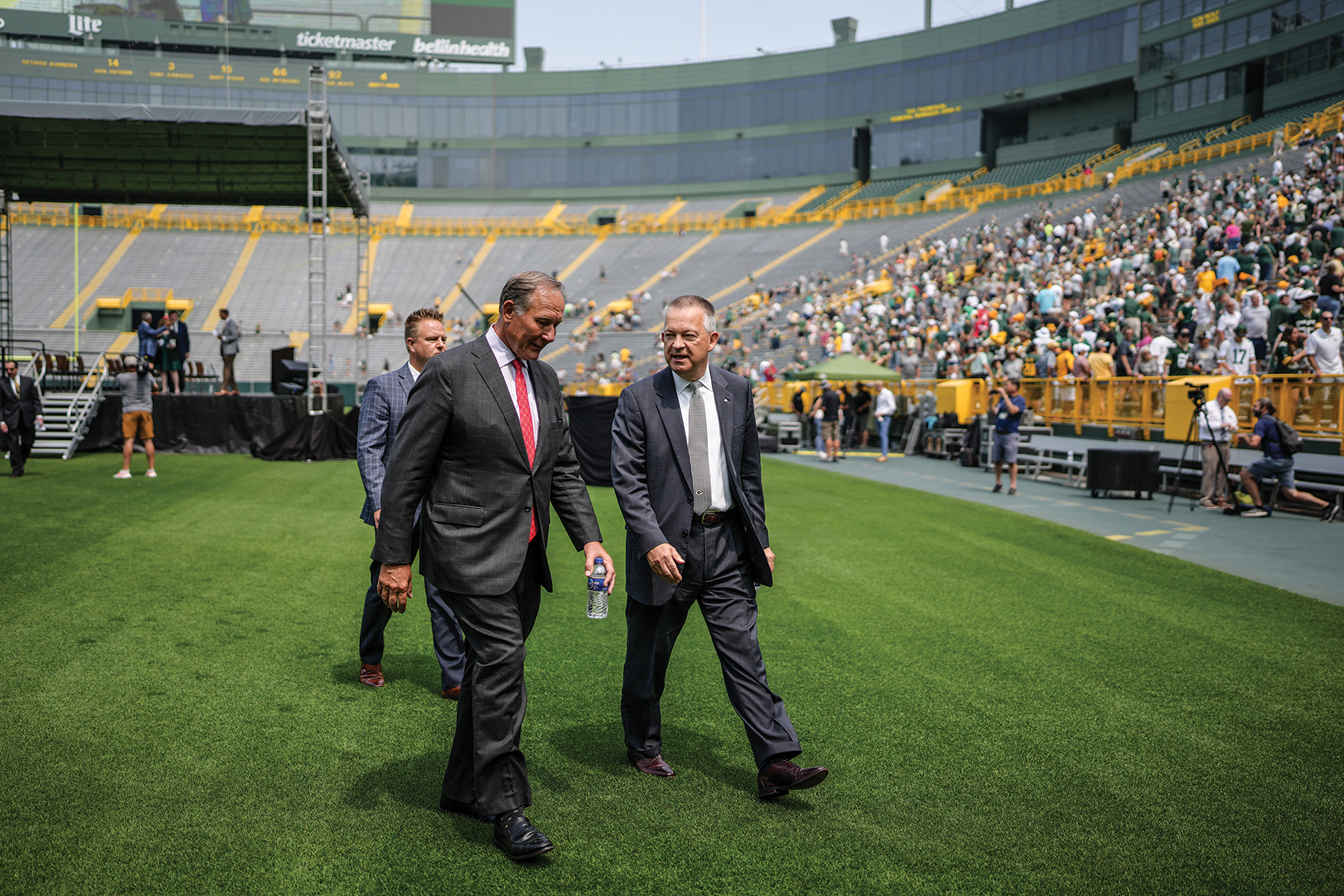
Baniel was recently honored with Insight’s Lifetime Achievement Award during the Dec. 5 CFO of the Year event held, fittingly, at Lambeau Field. Here Baniel’s 37-year career in the sports and entertainment industry was celebrated by colleagues, friends and family.
Growing up as the seventh of 10 children, Baniel credits his father — CFO for the Selig Ford car dealership in West Allis — for recognizing his accounting talent early on.
“I never had thoughts of going to college back then, but in my sophomore year of high school my dad pulled me aside and said maybe you should be looking at accounting as a primary career. That’s what changed my focus,” Baniel says. “The next day I was in my counselor’s office, adjusting my four-year plan to make sure I could get into college.”
After earning an accounting degree from UW-Milwaukee, Baniel spent three years with the international public accounting firm Price Waterhouse before joining the Milwaukee Brewers in 1987. He spent 16 seasons with the Major League Baseball team — he became vice president of finance in 1995 and added treasurer and secretary shortly after. During his tenure, Baniel worked on the financing of then-Miller Park (now American Family Field) which opened in 2001 and helped the team rebound from a historically challenging financial era.
Baniel’s next career move was in 2003 to Potawatomi Casino Hotel, where he served as chief financial officer for six years. In keeping with his track record, Baniel led the casino’s $240 million expansion in 2008 — tripling the facility’s size.
Packers President and CEO Mark Murphy joined the NFL franchise in 2008 and was involved in hiring Baniel as vice president of finance the following year. Baniel’s experience in professional sports finance and leading growth made him the ideal candidate, Murphy says.
“He came on early in my tenure and he was a godsend for me,” Murphy says. “If you look at the financial position we are in now compared to when he started, it’s tremendous. Paul was instrumental in really solidifying the financial future of the Packers.”
In July, the Packers released financial results for the fiscal year ending March 31, 2023. Total revenue increased by 5% to more than $610 million, exceeding the previous year’s record of $579 million.
Murphy says Baniel’s influence can be seen in all facets of the business, from updates to the annual budget process to his work with the audit committee, but he says it can be seen especially prominently in his work through the team’s investment committee, which oversees the investment of the team’s “rainy day” reserve/investment fund, as well as the approximately $50 million in the Green Bay Packers Foundation.
Over the last decade, the organization’s investment fund has nearly doubled. In 2022, Forbes reported that while Green Bay is the smallest of the NFL’s 32 markets, it boasted the league’s largest investment fund at $533 million. Due to Wall Street’s bear market in 2022, the investment fund experienced some losses this fiscal year, but Murphy says its overall growth has been impressive.
“Paul was a key person on our investment committee; the fund was maybe $50 million when he started and is now approximately $500 million,” he says.
As the NFL’s only publicly-owned team, the Packers are unique in football and Baniel has helped usher in an era of financial success, Simmer says.
“We are in very strong financial shape, which for a lot of our 100-plus-year existence hasn’t been the case. The evolution of the organization and our finances over Paul’s 14 years has been fantastic,” he says. “The ability of the team to continue to make improvements to Lambeau Field and field a very competitive team every year is dependent on our financial success. Paul has done a great job in positioning us to compete with other teams who have a lot more financial resources.”
Coming from his experience in Major League Baseball, Baniel says working for the Packers “was like going to heaven” as the finances in the NFL are the envy of all the other professional sports accountants.
“If you do what I do, you want to be with an NFL team because 70% of the revenues are shared. So some of the disparities that exist in other pro sports really are not an issue in the NFL,” Baniel says.
Even still, number crunching holds an innate amount of tedium, even for dedicated NFL accountants. But Baniel says his job satisfaction came from the birds-eye view the role afforded him.
“Accounting is not a thing where I jump out of bed in the morning and say, ‘Oh boy, I get to go through debits and credits,’” Baniel says with a laugh. “But when you are a chief financial officer, you get to see the whole company — you see the whole forest — and getting the whole thing to run well is really gratifying. For me, that’s where the fun is.”

Football Over Finance
Baniel is described by his closest colleagues as a quiet changemaker, a big-picture strategist and an unshakable sounding board for issues that go far beyond the numbers.
Susan Finco, president of Leonard & Finco Public Relations, has served on the Packers’ board of directors since 2000 and its executive committee since 2015. She says Baniel’s financial expertise is only part of the equation that made him successful in his role with the team.
“He is everyone’s trusted resource, but it’s more than just financial,” says Finco, who was one of Baniel’s Lifetime Achievement Award nominators. “He has a strategic way of thinking about things and understands the big picture. It’s not just ‘How much is this project going to cost?’ It’s ‘How does it fit into everything else?’”
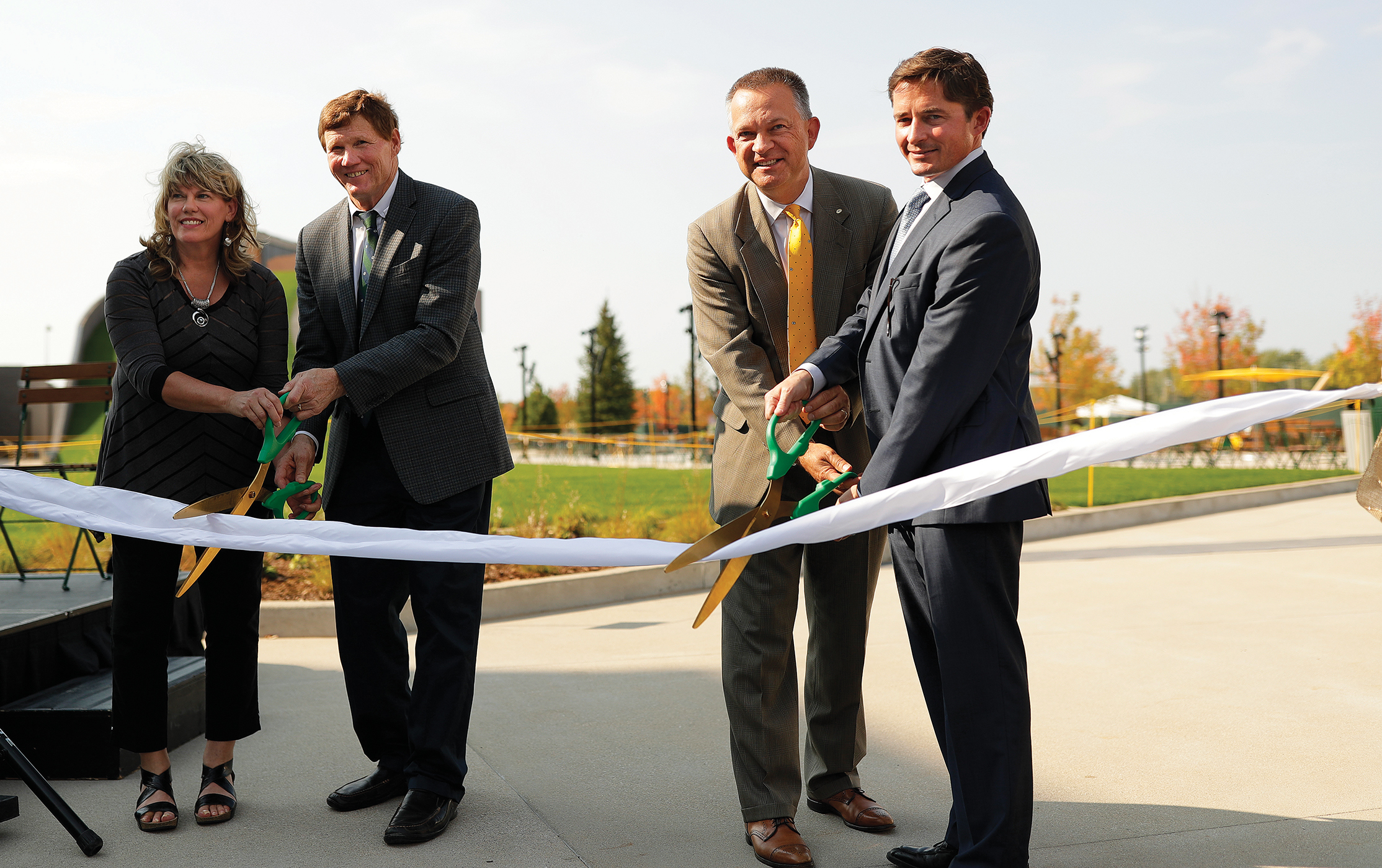
Finco points to the 45-acre Titletown development west of Lambeau Field as a prime example of Baniel’s ability to see the entire organization and its role in the broader community. The mixed-use community development includes dining, apartments, townhomes, the seven-story U.S. Venture Center with 150,000 square feet of office space, Lodge Kohler hotel and a 10-acre park that features game courts, an ice skating rink, tubing hill and regulation-sized football field.
The total investment for Titletown, which broke ground in 2018, is estimated to be about $300 million when complete. This includes contributions from partners in the development.
“From a purely financial perspective, it’s not something that would make sense for every organization because you have this huge part of the development that’s free, open to the public with programming and activities — there isn’t a monetary ROI from that,” Finco says. “It’s community goodwill and community engagement. There are a lot of developers who would have looked at that parcel and said let’s go for density and as much revenue as we can generate, but Paul understood the Packer culture and desire to do something that also gave back to the community.”
Not only has the Titletown development been good for Green Bay, its reach will soon touch the entire state — it helped Green Bay cinch the 2025 NFL draft, which is expected to have a $94 million statewide economic impact.
Giving back to the Green Bay community is a central component of the team culture. The Packers’ charitable impact has grown under Baniel’s leadership, and it is expected to continue doing so.
“Paul is one of the key reasons we are in a position where we can [contribute] just under $10 million a year in charitable impact,” Murphy says.
Finco respects Baniel for his ability to provide context for the numbers, which only tell part of the organization’s story. This is especially important for a publicly-owned team with approximately 5.2 million shares owned by 538,000-plus shareholders.
“There are things in the financial world that are incredibly complicated, but Paul will go to great lengths to translate what those numbers mean not only internally in the organization, but externally to shareholders, fans and the community,” Finco says. “You see that every year when the Packers release their financial reports. He works very closely with the board treasurer and with Mark to develop a narrative that goes with the numbers, so people can understand the impact.”
‘Going Out On Top’
Baniel officially retired Oct. 1 and worked with his successor, Maureen Smith, for weeks leading up to that time. Smith comes to the organization with more than 20 years of experience in various industries including sports, consulting, finance and health care. Most recently, Smith served as executive vice president and chief operating officer with Minnesota United FC of Major League Soccer, where she spent seven years growing the club from a minor league startup to a Major League Soccer club with more than 450 employees.
“Maureen is dynamite,” Finco says. “She is going to make an equal impact as Paul. He’s left us in good shape, and she has the expertise to continue to grow it.”
Growth almost seems inevitable — the NFL reached nearly $12 billion in national revenue in 2022, marking a 68% increase since 2016. “The popularity of professional sports and the economics of it just continue to grow,” says Baniel, who advises that the next generation of financial leaders must maintain a forward-looking strategic approach.
“One thing that served me well was I always liked to try to anticipate the next couple of steps after a decision was made,” he says. “I think I had a fairly good sense of being able to have that strategic vision, trying to see around the corner, if you will, at what impacts a decision will have.”
Now, just weeks into his retirement, Baniel is looking forward to traveling and spending more time with his wife, Nancy; their four adult children; and their first grandchild, born in June.
Murphy jokes that Baniel, 62, is too young to retire, but says his career, marked by countless accomplishments and a graceful exit from the game, serves as an inspiration to many.
“His career ended the way everybody hopes theirs does,” Murphy says, “going out on top.”