

The 2025 commercial real estate market outlook seems more positive than recent years, with looming economic clouds apparently having mostly dissipated.
Charlie Dercks, principal for J. Ross & Associates, says while the market is always changing and multiple financial variables are at play, the market as of the end of 2024 seemed “relatively stable for a change.”
“I think the stability creates a healthier lending environment in any market,” Dercks says, “and I would say in any market stability is welcomed.”
As it relates to the various commercial real estate asset classes, “there are certainly some lingering effects out there as it relates to construction costs and material costs,” Dercks says.
But things are looking more hopeful because of the interest rates being less volatile.
“I think this relatively stable market is going to be the new norm at least for the foreseeable future,” Dercks says.
A report by Collier’s indicated that the economy in 2024 was “notably resilient” despite earlier concerns about a mild recession on the horizon. “The Fed’s cautious approach … highlights a balanced response to electoral and fiscal uncertainties, suggesting that future rate cuts will be gradual, leaving interest rates above pre-pandemic levels,” the report stated.
Manufacturing and warehouse

Dercks says that Northeast Wisconsin is seeing “more normal vacancy rates and more normal demand in the market,” as stability in the market as well as construction and material costs begin to plane out. While industrial space in the region was hot during the past couple of years — with vacancy rates at 2% or less — “I think a large portion of the demand in our market has been met over the past 12 months,” Dercks says.
That could partially be because the post-COVID growth the industrial market sector saw has been completed, or it could be because some projects have been put on hold.
Additionally, industrial rental rates have risen significantly, from $2 per square foot or lower to “easily $5 and above,” says Garritt Bader, principal at GB Real Estate Investments.
“So I think that you saw some building, you saw some of those higher prices, and again we’re really kind of cooled off,” he says.
Anecdotally, Bader has noticed an uptick in the industrial sector just in the past few months. While rates have dropped a bit for borrowing, it’s not clear why it’s happening, he says.
Why it’s happening, he says, is “a little bit of a question mark — do companies finally feel like ‘I’m at the breaking point, I’ve stuffed every box, every basement I have and I need to do something, maybe?’”
Retail
Collier’s notes that retail may be experiencing a cautious market stance as nationwide more stores are expected to close for the first time since 2020. “Retail occupancy rates, excluding malls, have reached a decade-high of 95.6%, demonstrating the sector’s resilience and stability,” the report said.

While experts say retail was significantly overbuilt through the early-mid-2000s, there was a decade-long period after the Great Recession in which supply hardly grew, Bader says. Then, after the pandemic, people had more of a desire to get out of the house and shop in person.
“The market has held on incredibly well, because supply stopped being added, demand grew, rates held or rose — retail’s in a very good spot,” Bader says. “If you look around the region there are virtually zero empty boxes anymore. The only one I can think of is Shopko East Town, and that’s in the process of being redeveloped as we speak.”
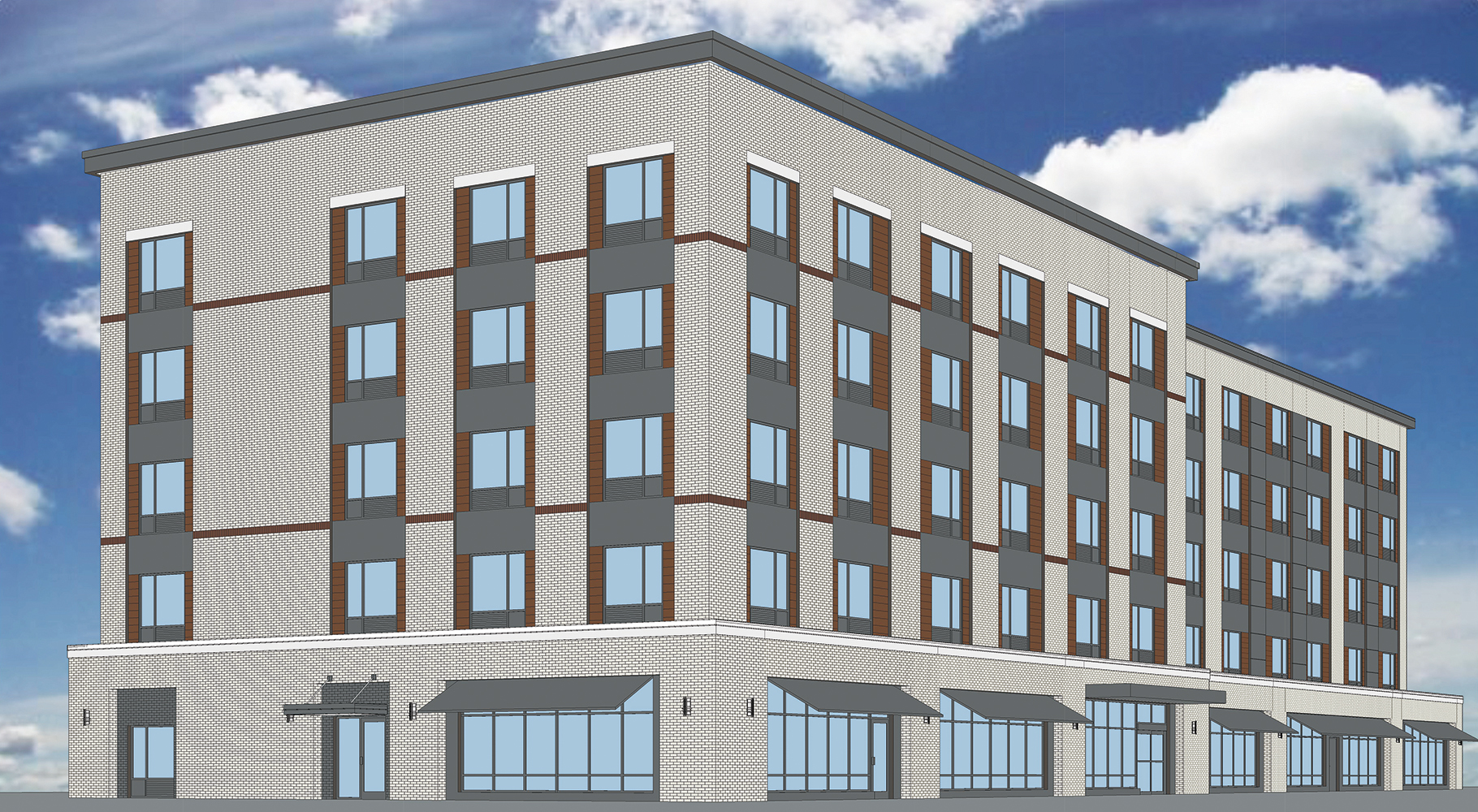
Bader’s firm is working with the owners of that building, De Pere 230 Development Partners LLC, to repurpose it into various spaces including retail. The Green Bay Press-Gazette reported in January that the city’s plan commission recommended approval for both a five‑story, 90-room hotel and five-story mixed-use building on the property, the first two of six planned buildings that would add housing and commercial space.
A significant amount of development has taken place over the last one to two years, to “a pace that we haven’t seen in the recent past,” Dercks says. For one, the Northeast Wisconsin market is growing to a size where it’s attracting more national tenants, “and you’re starting to see those pop up on more high-traffic corridors.”
Office space
Dercks says two key factors are influencing the majority of movement in the office sector, whether it’s an expansion or a contraction: recruiting and retaining talent. That means creating “a work environment that’s more welcoming post-COVID, and in many times more welcoming equates to nicer, higher-class office space,” he says.
Still, office space is “the laggard of the group,” Bader says, largely because of that post-pandemic shift to working from home or hybrid schedules.
There is some activity among owner‑occupants building new, but Class A office buildings — high-end, larger buildings in prime locations — are generally all full, he says. That includes the Nicolet Center and U.S. Venture’s buildings in Green Bay’s Titletown and in Appleton.
With those talking about converting office space into multifamily use, prohibitive costs often mean it makes more sense to demolish a building and rebuild — as with the UnitedHealthcare campus in Howard. “It simply makes more sense to tear down than to try and repurpose something that was never intended for that use,” Bader says.
Yet there are some that are underway, such as with the U.S. Bank building on Pine Street in Green Bay, which is in the process of conversion.
Multifamily housing
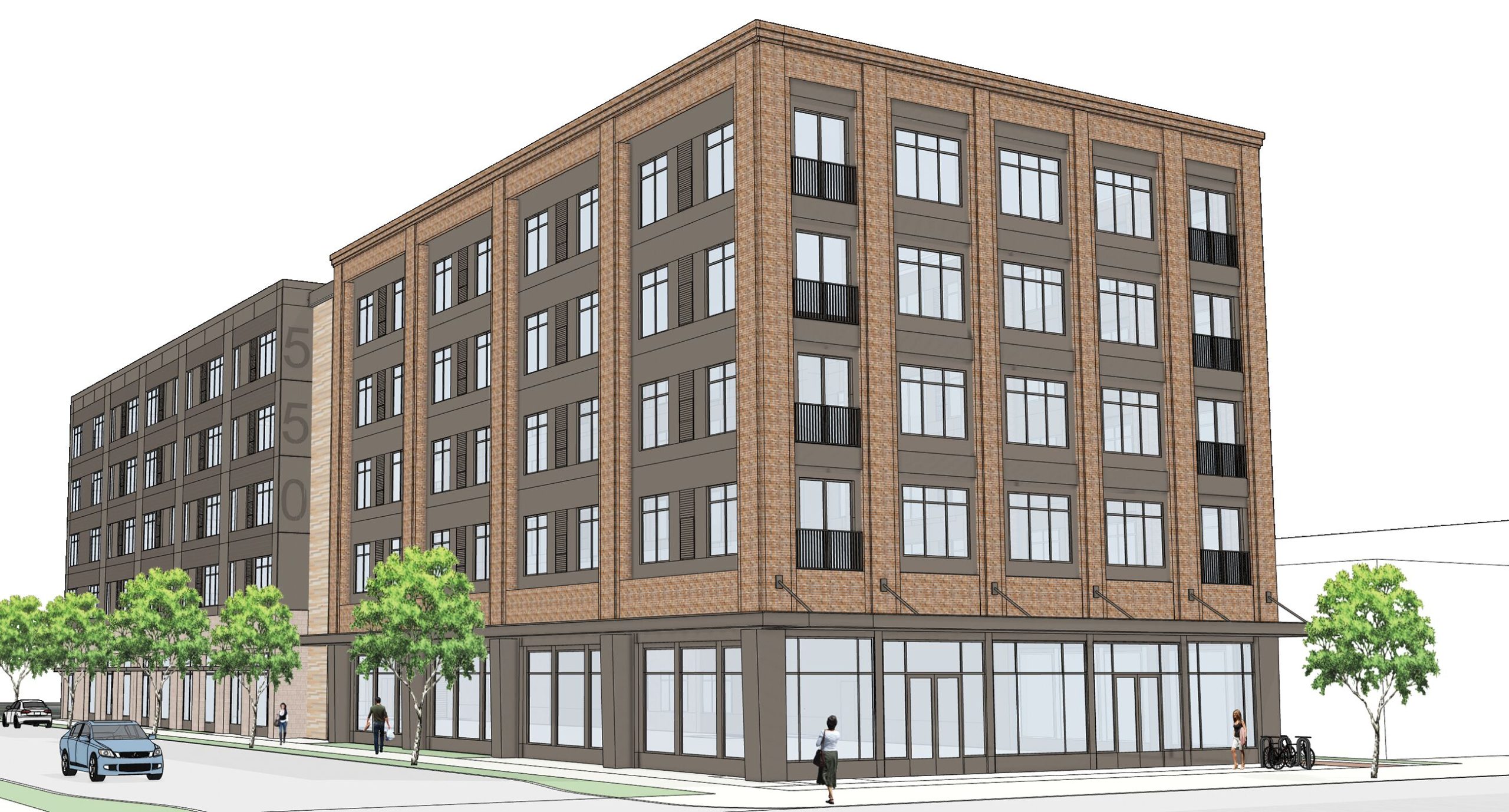
Bader says following the Great Recession, homebuilding and apartment building construction waned for several years, which created a structural deficit of a half million or more units. “So broadly speaking, that’s what’s driving a lot of the supply/demand imbalance there,” Bader says.
Dercks says the multifamily sector in Northeast Wisconsin is seeing a plateau. “There was a significant amount of units added to the market, and I think the market is still waiting to see how the dust settles from those additions,” he says.
While data shows the area still needs more housing, “I think the key point to that is, at what cost? With building construction costs being higher, it creates a bit of a hurdle with new construction and affordability to the median worker or median citizen here in Northeast Wisconsin,” Dercks says.
For the commercial real estate market in general, Dercks believes the most influential variable is that the market is experiencing more interest rate consistency and less uncertainty overall.
“I think that environment is going to be the new norm and because of this,” he says, “the gap between buyers and sellers is starting to close.”