
Steve Servais, executive vice president of administration for AriensCo, never would have imagined that, in the space of 18 months, the manufacturer would raise its starting wage by $7. Then again, contending with an unemployment rate sitting south of 2.5% prompts bold action.
Successively raising starting wages for entry-level roles from $13 per hour to $20 per hour — $22 for second shift — has been just one of many efforts AriensCo has pursued in an attempt to attract the workers it needs in a competitive talent environment.
“Hourly recruiting, I’ve never seen anything like this. These are kind of uncharted waters for companies. You’re trying to be creative. You’re trying to differentiate yourself,” Servais says.
In the past year and a half, the company has tried both short- and long-term solutions to attract and retain workers. It was one of the first players to offer a sign-on bonus, giving workers $2,500 for staying for 90 days … but on day 91, it saw 50-plus-percent turnover and people fleeing to the next sign-on bonus elsewhere. It tried extending the time to six months, but fewer than 20% reached that point.
Next came attendance bonuses, where workers could receive $200 per month for having perfect attendance. The move did little to attract external talent and created nothing more than a blip of improvement for internal attendance.
The company tried offering busing from Green Bay and the Fox Valley to its Brillion plant. It picked up at multiple locations, but oftentimes the buses would carry only one or two people.
Finally, it hit upon a formula that worked. Raising wages from $16 to $20 helped, but workers wanted more … and less, meaning they were done with working mandatory overtime and were seeking better work-life balance. AriensCo began offering workers the option of working four 10-hour days or five eight-hour days. This allowed the company to become more flexible on requiring overtime. A weekend-only offering where workers receive no benefits but work two eight-hour shifts for $25 per hour also has proved popular.
“You have to be willing to pull a lever and see if it works or not, and if it doesn’t, you’ve got to shut it down and try something different,” Servais says.
In addition, AriensCo is investing heavily in Brillion, both through its hospitality arm of Round Lake Farms and Stone Prairie as well as the Ariens Nordic Center, which is slated to open in December. It’s also completing a massive renovation of the Brillion Works site, with plans to pursue development including housing and health care.
No doubt, employers of all kinds can relate to AriensCo’s quest to attack the talent problem from every angle. As the employment crunch worsens, companies are getting innovative and becoming solutions partners in addressing workforce barriers.
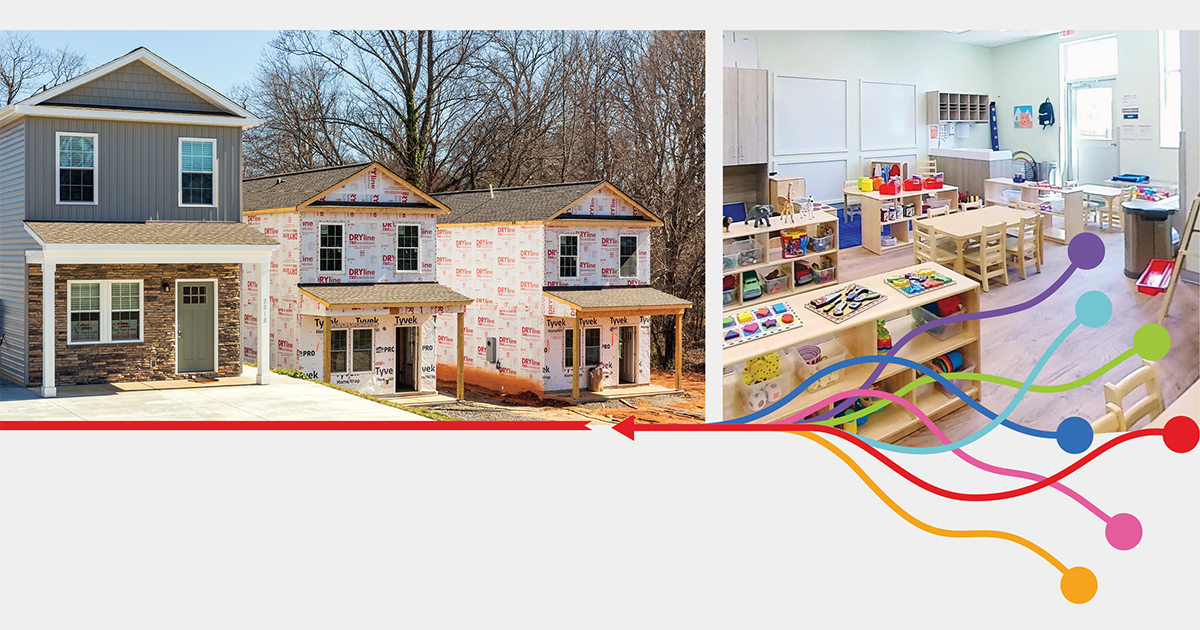
Housing help
Sheboygan County may not be large by population numbers — it had only around 115,000 residents as of 2020 — but it’s home to several sizeable family-owned manufacturers, including Johnsonville, Kohler Co., Masters Gallery Foods and Sargento Foods, along with scores of other firms of all sizes. Collectively, those companies have more than 2,500 job openings in the county.

While these businesses see several employment barriers, including the need to overcome negative perceptions about manufacturing careers, the aforementioned large players got together and decided to address the issue of housing.
The Sheboygan County Economic Development Corp. is leading the effort, with a goal of developing approximately 600 single-family housing units over the next three to five years throughout Sheboygan County. Johnsonville, Kohler, Masters Gallery Foods and Sargento Foods have collectively donated $8 million to date with a total goal of raising $16 million to make affordable homes available in the county.
One of SCEDC’s goals is to address barriers that individual companies can’t on their own, and that makes it well positioned to tackle the housing problem, says Brian Doudna, SCEDC executive director.
“Because of the open positions we have, the companies that we have that are headquartered here … we need to make sure they can make strategic investments in our community to maintain the lifestyle we’ve always enjoyed here in Sheboygan,” he says.
Past efforts to bring more housing have focused on creating offerings for white-collar young professionals. The county developed many market-rate apartment projects, and now those efforts are “self-sustaining,” says Johnsonville CEO Michael Stayer-Suprick. This latest effort is aimed at adding single-family homes at a price point that’s affordable to manufacturing workers.
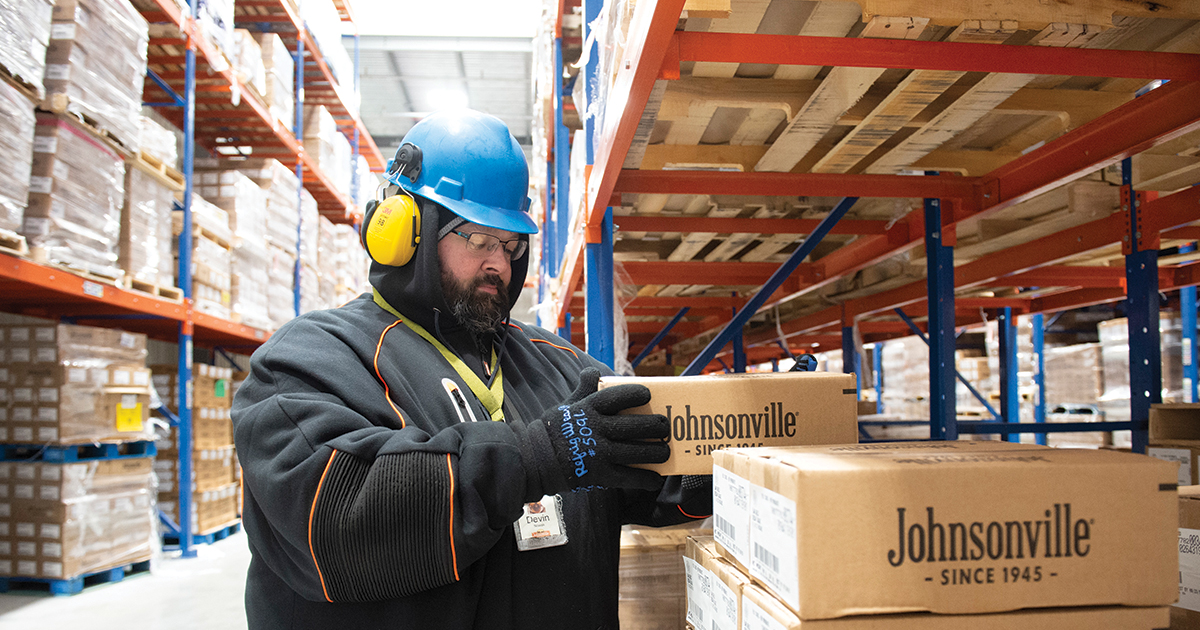
Starting wages for manufacturing workers range from $18 to $25 per hour, and companies are looking to attract workers from a 150-mile radius. That’s a tough proposition when there are few places to live, Stayer-Suprick says. “When we looked at it, we said housing happens to be one of those key components, that [people] within our organizations aspire to own their own house.”
Both Doudna and Stayer-Suprick acknowledge that, with high prices and rising interest rates, it’s a tough time to build affordable housing. But that’s not deterring the group. SCEDC is working with the University of Wisconsin-Madison to analyze sites across the county for housing development and looking at ways to achieve affordability.

Enough developers and contractors are already in the local market, and SCEDC aims to inform them and give them the necessary analysis tools to help them feel comfortable pursuing the work, Doudna says. The hope is for that to lead to more of this type of development occurring naturally.
While the four large companies that have donated money to the fund are competitors, Sargento CEO Louie Gentine says collaborating was an easy choice.
“Certainly, there’s always competition, but I also think we realize what’s happening right now. So we could be competing for labor, but maybe we should strive for the point where we’re not competing for labor and we’re marketing ourselves as who we are and attracting more people into the Sheboygan County area,” he says.
Doudna says he’s grateful for companies’ willingness to invest. The funds could be put to several uses, including infrastructure, construction and mezzanine financing, which can be used to pay for acquisitions or development projects.
Stayer-Suprick sees the work as just the beginning. “We’d love to see this live on in perpetuity and be a flywheel of success into the future. When that stops, if there’s still monies in that fund, we get to, as a group, talk about, ‘Hey, what’s the next problem we’re trying to solve?’”
Expanding child care
Access to affordable, quality child care is another top employment barrier, and a coalition of Manitowoc County employers is coming together to address the issue.
“There is a clear lack of availability of child care. Child care capacity in Wisconsin is short by 120,000 spots. Even when available, existing options often do not offer the flexibility working parents require, especially for off-shift and irregular work,” Wisconsin Aluminum Foundry CEO Sachin Shivaram wrote in a commentary that appeared in the May 2022 issue of Insight on Manufacturing.
Shivaram is working with other stakeholders and employers to devise solutions to the multipronged problem. Jamie Zastrow, executive director of Manitowoc County economic development group Progress Lakeshore, is helping lead the effort.
Access to child care was a problem before the pandemic, and it’s only grown more acute. Recruiting people to work in child care is a top concern, Zastrow says.
“Who wants to be a child care worker for $11 an hour?” she says. “It’s about creating child care education as a career of choice because it definitely does take the right people.”
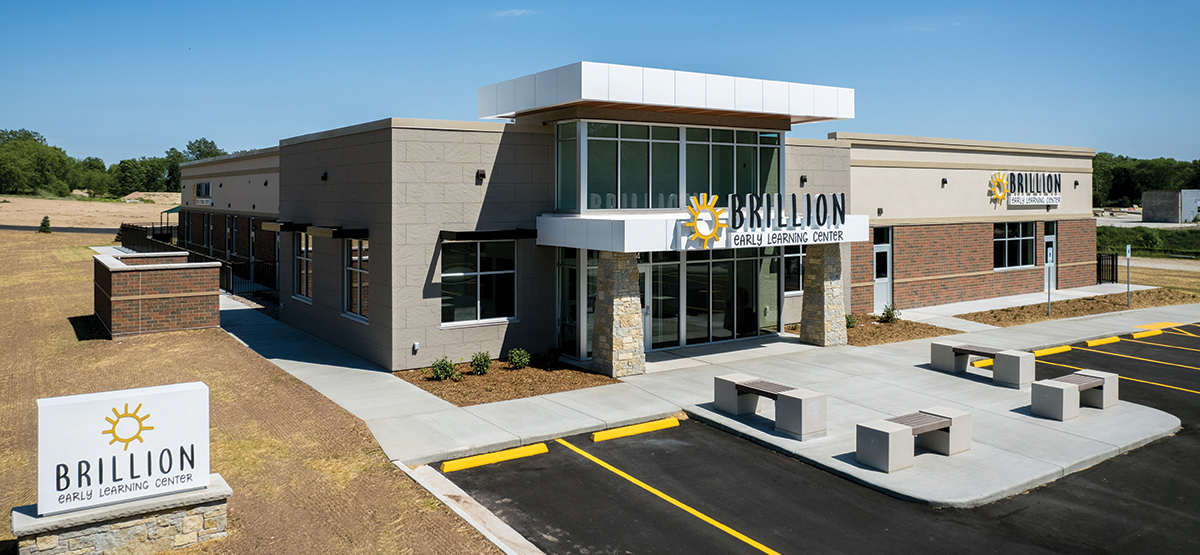
AriensCo, which partnered with KinderCare to open the Brillion Early Learning Center, can attest to this. The manufacturer pays 50% of the cost for both parents and grandparents seeking child care. Servais says the program has been popular and helps attract talent, but it has a waiting list because KinderCare is struggling to attract workers.
Zastrow says the consortium, which includes the chamber of commerce, YMCA, United Way and Family Connections in addition to employers, is looking at all options, including viewing the Brillion Early Learning Center as an example to follow. It’s also examining offering scholarships for early-childhood education training through Lakeshore Technical College.
The group has applied for a Wisconsin Economic Development Corp. Workforce Innovation Grant and a Dream Up grant from the Wisconsin Department of Children and Families, under which 30 communities will receive strategic planning support and $75,000 in funding.
Receiving the grants is just part of what’s needed, and Zastrow says an employer cost-sharing model will be key in helping programming increase and become more universal. Such a solution would help give child care centers, which operate on slim margins, the confidence to hire more workers at a higher wage, she says.
“It’s good for the employers. It’s good for the employees. It’s good for the child care providers, that they can confidently invest in their workers and facilities.”

