

Jim Theodoroff says he’s “always been into garbage” — going back to a childhood fascination with watching his neighborhood garbage collectors at work. In 2014, he became a garbage man himself when he established PolyWrap Recycling, Inc. It started as a Sheboygan-based brokerage service for companies looking to divert low-density polyethylene (LDPE) plastic materials like stretch film, bubble wrap and banding from the waste stream. But today Theodoroff and his business partner Jeff Haen are focused on supporting recycling from a different angle: as manufacturers of the RACK’n Pak Recycle Bagging System and Vent Press Bags.
When a warehouse worker removes the plastic wrapping from a pallet, balls it up, and throws it into the trash, their employer is essentially paying to throw away air, Theodoroff says. Furthermore, lightweight plastics can easily escape landfills — and those that remain don’t break down quickly, if at all. (Nor, Haen says, do you want them to.)
But besides the obvious environmental benefits, recycling LDPE plastics pays. Companies like Trex use it to make their composite decking material, for example, so there are plenty of recyclers that will pay for it. Nevertheless, Haen says, only about 10% of the material currently gets recycled — which is why he and Theodoroff invented the RACK’n Pak system to make it easier to move that number and replace an antiquated, wasteful and inconvenient system.
Repurposed Gaylord boxes have become a valuable commodity on manufacturing floors and in distribution centers because of their durability and compatibility with pallets and forklifts. Most companies that currently recycle plastic film use them as vessels to collect the material. But the system wastes time and energy; repeatedly bending over the boxes’ rigid edges and increasing forklift traffic present safety concerns.
Knowing that most medium to large companies have 60-inch vertical balers, Theodoroff and Haen reverse-engineered a system that allows organizations to compress and bale stretch plastics within a bag made of similar material. Their rack system, all components of which are sourced and made in the Midwest, is easy to assemble, takes up far less space than a Gaylord box and holds just as much if not more waste because of the specially-designed Vent Press bag, itself made of recycled materials, which uses vent holes to compress the material and is designed for easy handling.
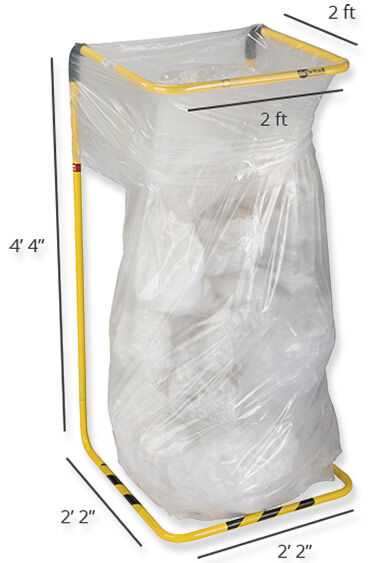
“The placement of the holes might seem random, but strategically it took a while to figure out the best release points throughout the bag to compress the material and get maximum weight out of the vertical baler,” Theodoroff says, adding that he and Haen started R&D on the now-patented and trademarked system in 2015.
Among RACK’n Pak’s biggest customers are major medical centers like Mayo Clinic, distribution centers like US Foods and even the U.S. Postal Service. The opportunities for growth seem almost endless, and Haen says curbside programs and collection points for everyday consumer recycling are a good bridge to mainstreaming LDPE plastic recycling.
“How do we centralize collection points — that’s kind of the new resurgence; Minnesota’s doing a huge one right now,” Haen says. “Grocery stores have always been fairly receptive, but people don’t know they do it.”
Indeed, Theodoroff says communication is the company’s biggest challenge. Once people see and understand the product, it sells itself. He says free trials are always happily sent and nearly always purchased. He and Haen can also use their brokerage and recycling expertise to help companies figure out how to most cost-effectively recycle their plastic given the spike in transportation costs; recyclers are widely available, he says, and PolyWrap doesn’t charge for those consulting services.
“They have to see it to believe it. It’s an easy process,” he says. “The material is needed; there’s a lot of building supply material made out of this now, even garbage bags and grocery store bags. As that evolves, it’s just going to continue to grow.”