
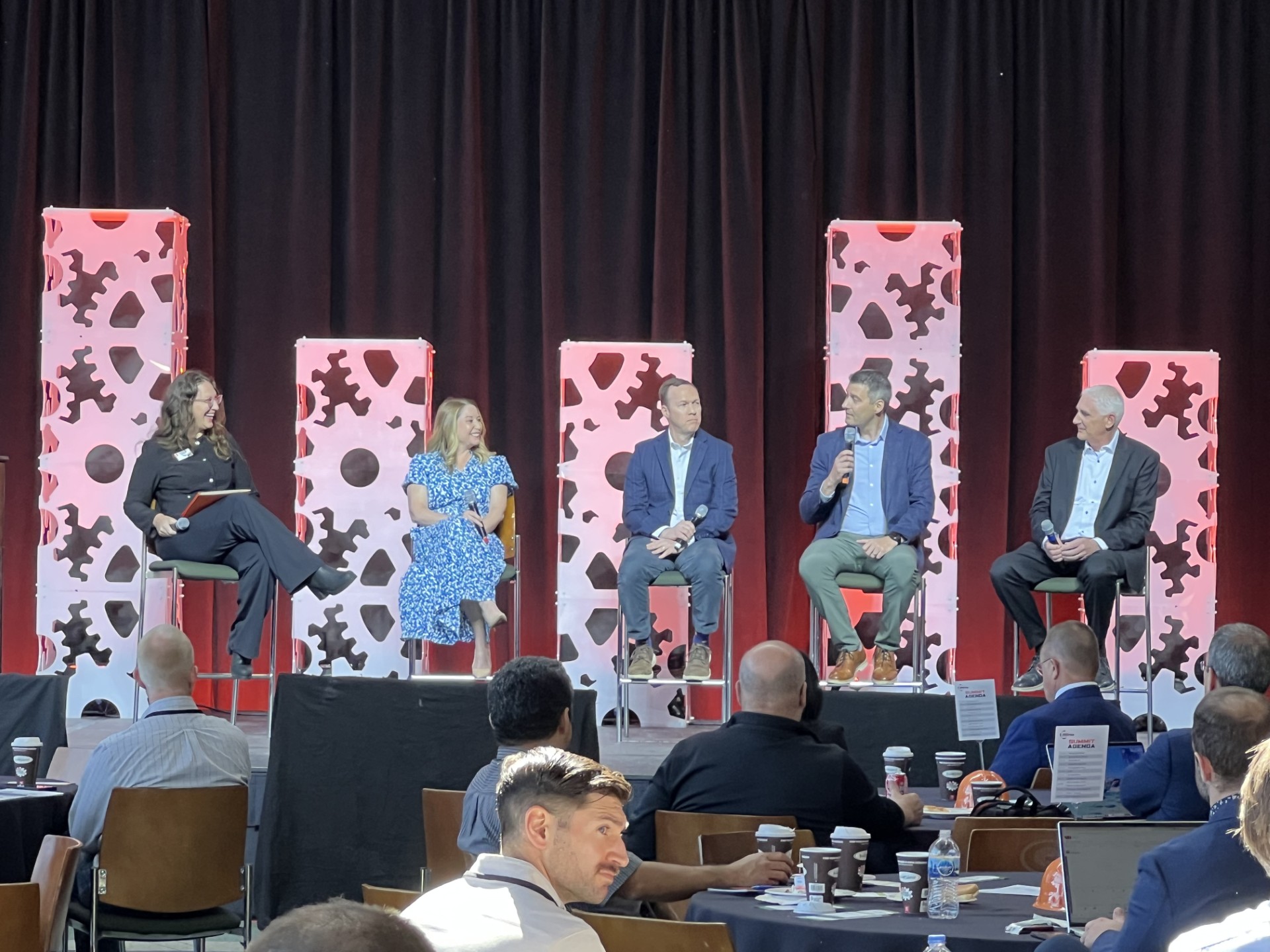
The inaugural Wisconsin Drives Manufacturing Summit June 1 and 2 at Lambeau Field in Green Bay brought together key workforce leaders, manufacturing executives, educators, researchers and policymakers.
A central focus of the summit was the transformation of manufacturing by rapidly evolving technologies like AI, digital twins and other technologies. The summit aimed to chart a path forward for continuing growth and innovation through partnerships and collaboration between industry, academia and government.
Tuesday kicked off with morning keynotes by Artie Starss, president & CEO of Harley-Davidson and Bob Buttermore, senior vice president & chief supply chain officer for Rockwell Automation.
Buttermore spoke on “Automation to Autonomy,” about the value of incorporating AI and other technologies and how they’re creating more efficiencies across Rockwell plants, including within supply chain, energy, troubleshooting and training time.
“The evolution to autonomy is not about eliminating jobs, it’s about supercharging the power of people,” Buttermore said. “Technology ultimately is driven by people. The expertise of people is what creates technology, it’s what applies technology, it’s what manages technology to drive manufacturing transformation.”
The company is currently building its fifth Wisconsin plant in New Berlin, a one-million-square-foot facility filled with software-defined automation, AI and robotics.
Buttermore said Rockwell needs people with end-to-end experience and digital experience, fusion operating teams, a disciplined innovation structure and partnerships with schools and universities to help develop more workers who are interested in supply chain and manufacturing. “We ultimately have to work together cross-functionally across organizations…it’s actually about working together as one team to drive innovation with technology discipline, innovation structure.”
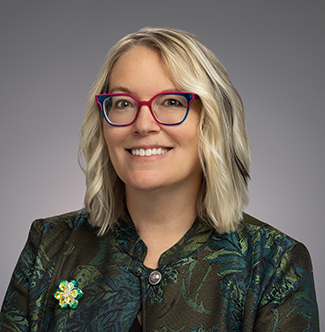
Following Buttermore was a panel discussion, led by Insight Publications Publisher Angela O’Kray. “Perspectives on New Manufacturing Frontiers and Workforce Excellence” speakers included Rachel Byers, VP of HR with MTI Motion; Ted Nikolai, VP of Processing Engineering & NPI for Kohler; Pat Masterson, vice president of global supplier quality for Husco and Hank Kohl, president & CEO of MPE Inc.
Panelists said to keep up with new technologies they need workers with agility, problem-solving and intellectual curiosity. O’Kray asked the panelists whether companies are prepared for the technological change ahead.
“I would say none of us are, and for us to be ready, we need to tie industry closer to education,” Kohl said. “Education needs to tie themselves closer to industry and get aligned with where we’re going faster right now.”
Universities are still producing engineering students that are behind technology curve, he said.
“Industry’s still trying to learn what that technology curve can do for us,” Kohl said. “So the power of combining those together that have been done in other countries has proven successful, and I think we need to learn to do that through Wisconsin.”
Masterson also discussed the importance of educational partnerships and the opportunities that still remain. “I don’t think we can wait till people are in university,” said Masterson, whose company hosts job shadow days and hires high school interns. “We can’t just expect people are going to come into manufacturing without encouraging them along the way. …we need our kids to be making things and building things and breaking things, and maybe limiting the screen time for the children and thinking about teaching them to be inquisitive.”
A lunch session featured Scott Manley, executive vice president of government relations for WMC, and Saumil Shah, managing director for the Milwaukee Office for Accenture. Manley kicked off the session speaking about manufacturing challenges and opportunities, including tax rates/credits, costs including healthcare and tariffs, and the worker shortage. He said the Wisconsin workforce is projected to decline by 200,000 by 2050.
“We’re not going to be able to hire our way out of the reality that’s in front of us,” Shah said. But while there are real challenges, “what I hope you all see are opportunities, and more importantly, there is a fundamental shift that is happening right in front of all of us… the question now becomes, what do we do with that opportunity?”
An afternoon panel, “Economic Development Through Technology Adoption and Manufacturing and Workforce Needs” was moderated by NEWMA Executive Director Ann Franz and featured Dale Kooyenga, president and CEO of Metropolitan Milwaukee Association of Commerce; Tracy Pierner, present of Blackhawk Technical College; John Miller, Secretary & CEO of WEDC; and Liz Filter, President & CFO of VARC Inc.
The rest of the day’s event offered participants session tracks with various topics focusing on talent, training & building skills for the future workforce; applying advanced tech for measurable results, and strengthening domestic manufacturing and strategic ecosystems.
Monday’s event included networking and an innovation showcase featuring:
- A 1000 Island Ice Rescue Boat (named the “Coolest Thing Made in Wisconsin 2025”).
- A Wisconsin startup-built quantum technology robot.
- A Saildrone prototype being within U.S. national security.
- High-performance boat engines and motorbikes made by Wisconsin companies.