
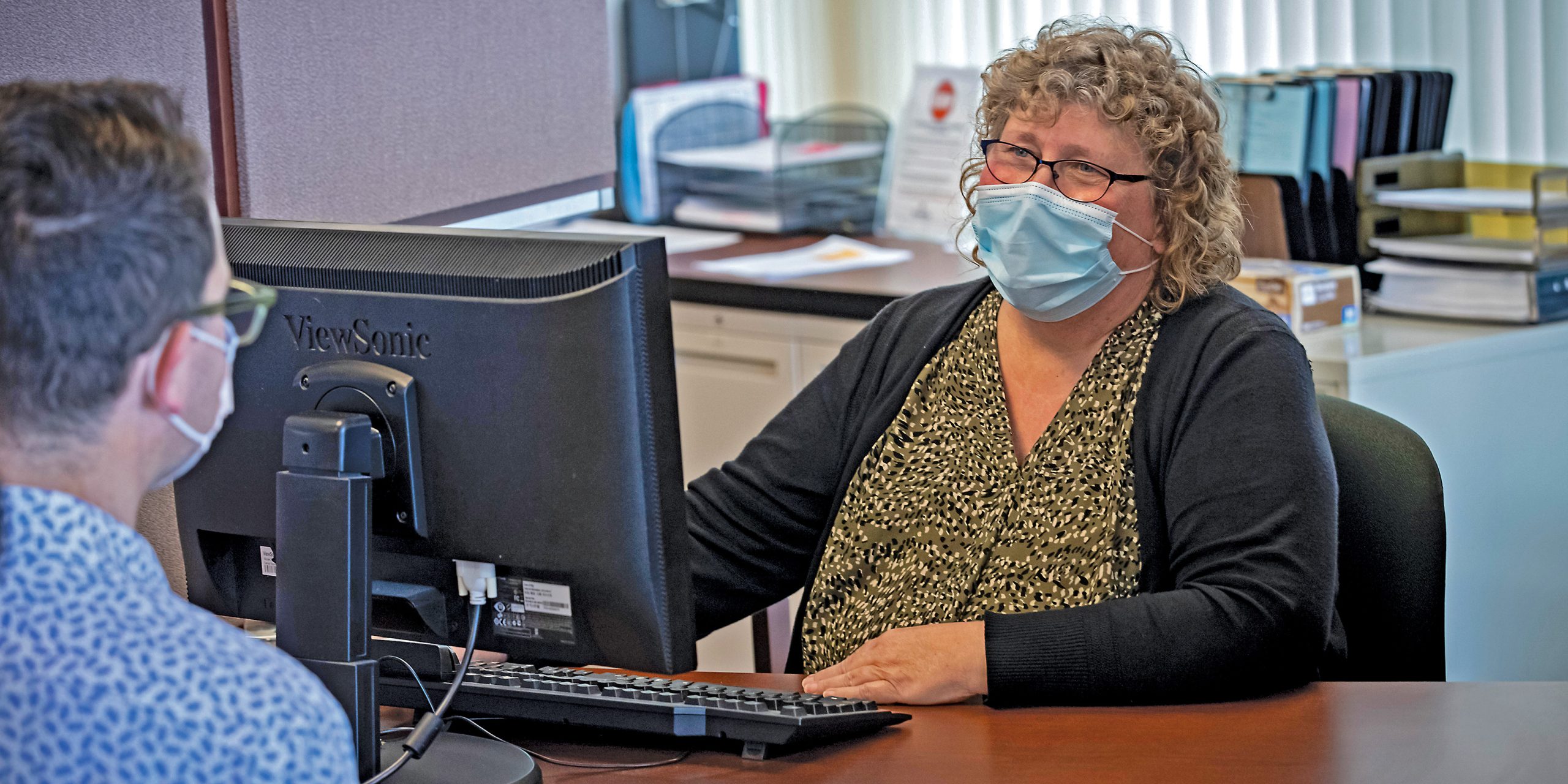

When the COVID-19 pandemic struck Northeast Wisconsin in spring 2020, hospital and clinic systems had to adjust quickly. How could providers continue serving patients while also keeping everyone safe from the virus? How would they manage staff shortages when providers were diverted to caring for COVID patients — or when employees themselves tested positive or became sick?
The answer was the same as it was for companies, organizations and individuals everywhere: technology. But for the health care industry, there were a few more considerations.
Prior to the pandemic, insurance companies and Medicare had somewhat narrow parameters in which they would pay for video visits with providers, says Lesley Bitters, director of operations for BayCare Clinic, which provides specialty care services to health partner Aurora.
But “payers — so insurance companies, the state government, the federal government — all really banded together to make that available to people during the pandemic,” Bitters says.
While health systems had already started using phone check-ins, texts and “patient portals” for appointments, refills, medical information and messaging, telemedicine was something newer.

“Health care is always evolving from a technology standpoint, but the pandemic really forced us to change rapidly,” says Mark Thiel, vice president of primary care for ThedaCare.
To maintain patient care during the initial shutdown, “we took about 500-plus providers and rapidly got them up on a video platform … and that really gave us the opportunity to maintain that connection with our patients,” Thiel says.
Video visits were particularly important for those patients with health conditions that put them at risk of severe disease if they contracted COVID-19, Bitters says.
“We didn’t want to bring those people into environments where there were lots of people,” Bitters says. “And so the pandemic really changed it in terms of how many people were able to use that technology.”
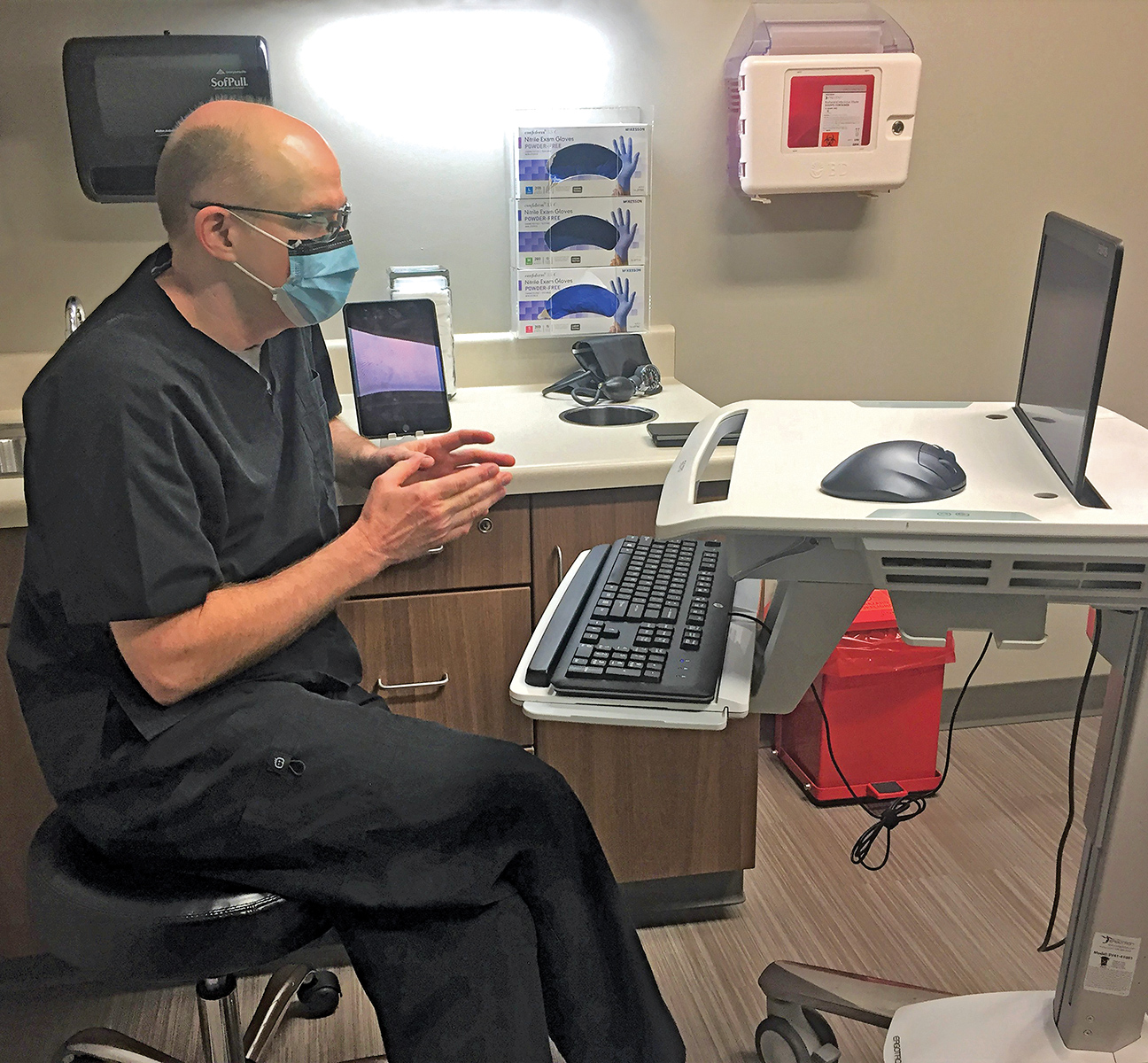
Providers also implemented video technology within the hospital, even putting tablets in some patient rooms to minimize the number of people going in and out, Bitters says.
“I’ve been a nurse for 30-plus years and never would’ve envisioned that,” she says.
Learning curve
The main concern in implementing video technology is patient-privacy compliance regulated by HIPAA, or the Health Insurance Portability and Accountability Act, which ensures patient health information is not disclosed without the patient’s consent.
Regional health care providers implemented technology that ensured HIPAA compliance. But the federal government also made it easier for providers to adopt new technologies by relaxing penalties during the pandemic emergency in case there was a breach, Bitters says.
BayCare established an FAQ page and how-to advice such as reminding patients to conduct video visits from a private place, Bitters says. The clinic system also put in place a “super user” at each of the practices to help answer any questions about the video technologies.
While the process went smoothly overall, challenges arose around poor internet or cellular connectivity in certain rural areas, Thiel says.
“We really had to adapt to meeting the patient’s needs and recognizing that we can’t fix everything either,” he says. ThedaCare discovered that offering multiple platforms, including Zoom, Webex and cellular mobile to reach patients, worked best.
Going forward
While telemedicine and video don’t work for every type of visit or medical need, hospital and clinic systems have recognized the benefits of video visits and want to continue using them.
“In primary care, we’re seeing maybe 3 to 5% of our visits through the telehealth platform or the virtual health platform,” Thiel says. “We’d like that to grow — we’d like to meet patients in their home for years to come.”
In a region where people often will drive great distances for work or school, video medicine improves patient access.
“How many times have you gone to the doctor, and the visits may be quick, but you’re from four hours away?” Bitters says. “And our clinic is primarily specialists, so you don’t have a neurosurgeon in every community.”
Video visits make sense for patients with ongoing issues, such as pain or weight loss management, or those who may have transportation concerns.
“If you think about people that don’t drive, or people that need to use public transportation, or people that are more mobility-challenged, I think this really provides an opportunity to meet these needs,” Thiel says.
Health care professionals hope to see regulations keep up. Cross-state regulations, for example, will need to be updated to allow doctors licensed in Wisconsin to continue treating patients from the Upper Peninsula. Doing so also would provide continuity in caring for Wisconsin residents who spend winters out of state, for example.
Additionally, “a lot of the telehealth pre-pandemic was focused on access for rural communities, which is incredibly important,” Thiel says. “But folks in our urban communities or suburban communities also benefit from being able to utilize telehealth services.”
Closing gaps
Patient portal use increased in 2021 as the adoption of the 21st Century Cures Act led to more transparency in health care, requiring certain types of medical notes and test results to be published to a patient portal quickly, Bitters says. It also allows patients to connect more directly with the person who can help them access refills, medical records and scheduling.
“All of that allows our front desk, patient-facing people to actually focus on the patient who’s in front of them,” Bitters says.
ThedaCare is using automation technology to reach more patients. Formerly, provider staff would call patients to remind them about annual visits or screenings — but that reached only about 10% of people, Thiel says.
“You can imagine that a lot of people don’t answer their phone anymore,” Thiel says. “They’re not home, they’re working — all of those other things that keep people busy.”
In 2021, ThedaCare partnered with a vendor on automated outreach such as texting and email, using artificial intelligence to populate the information into the medical record. With a three-month pilot last year, ThedaCare was able to resolve about 1,000 “care gaps,” increasing connections to about 30%, Thiel says. That allowed medical assistants and nurses to have more direct time with patients versus spending time making phone calls.
Eventually, patients will be able to schedule visits for needs such as mammography or a colonoscopy, Thiel says. “We’re not quite there yet, but those are things in the future.”
Staffing solution
Technology and automation have helped support clinics and hospitals as they manage staffing challenges. They also allow some workers to continue their jobs remotely or on a hybrid basis.
“There are some things that can’t be remote,” Bitters says. “The person who takes your X-ray can’t do that from home, I get that. But the person who schedules your surgery, maybe they can, and the person who schedules your appointment.”
BayCare is making other changes, such as shifting some ongoing staff training and development to an on-demand system through an employee portal, eliminating the need for a whole department to take time out on a certain day or time, Bitters says.
ThedaCare used its patient-centered Ripple app as a way to assess employees for COVID-19 exposure, eliminating the need to have someone staff clinic entrances for that purpose, Thiel says.
“That’s the thing that’s really exciting about technology, is finding ways to use it in novel-use cases that allow us to meet other needs,” Thiel says.
Medical coding assigning for insurance reimbursement has become automated. Some systems are adopting wearable technology to help monitor patient vitals such as EKG information and activity.
“I don’t think technology or artificial intelligence will ever replace humans in health care,” Bitters says. “I think they’ll augment them. But some of those automation technologies can let people focus on other things.”
Editor’s note: Mark Thiel is the husband of Insight Editor Jessica Thiel. He was selected by ThedaCare as the organization’s source for this article.