

Aging is a fact of life. It turns a high profit for cosmetic companies; it’s a large part of the debate surrounding increased cost in health care and insurance; and at its basic level, we face it each day in the mirror as we brush our teeth and ready for our day.
The share of American people 65 and older reached nearly 17% in 2020, according to the U.S. Census Bureau. An average of 10,000 people turn 65 each day, and by 2034 there will be more Americans past retirement age than there are children. Driven by the baby boomers, the 65-plus population experienced its largest-ever 10-year numeric gain — an increase of 15.5 million people — from 2010 to 2020.
This aging population has — and will continue to have — significant care needs, and that growing population is an issue that has come into sharp focus for stakeholders as the eldercare industry suffers workforce shortages. In fact, Eldercare Workforce Alliance predicts that by 2030, 3.5 million additional health care professionals and direct-care workers will be needed to meet the growing need.
“This has been a huge issue for our local community,” says Christel Giesen, assistant director of the Aging and Disability Resource Center in Brown County. “The team we have here [assisting] individuals and family members with connecting to those services is finding that because providers don’t have sufficient staff, they end up either with waiting lists, limited services or even closures.”
What that means for families, Giesen explains, is relocating loved ones into counties where services are available. For the older adult in this situation, they may be in a location without family and friends close by and a support system dismantled by geography. That can have a cyclical effect, with isolation and depression entering the picture. For family caregivers who are still working, added distance means an even more difficult juggling act.
“We have a real robust list of service providers in our community, and many of them don’t have capacity because of the workforce shortage,” Giesen says.
WisCaregiver Careers program seeks to alleviate some of the strain
As a growing aging population is occurring concurrently with a workforce shortage in caregiving at every level of accreditation, the Wisconsin Department of Health Services is working to increase the number of trained caregivers for home- and community-based services.
With funding secured through the American Rescue Plan Act, the DHS launched a free, professional workforce advancement program to increase the number of caregivers working in home and community-based settings (HCBS).
The certified direct care professional (CDCP) program, known as WisCaregiver Careers, is offered in partnership with the University of Wisconsin-Green Bay. The program offers a streamlined path to successfully become a certified direct care professional, with the hope of alleviating the shortages that exist for caregivers in at-home and community-based settings.

“This is designed really for all caregivers who are not working in a nursing home, hospital — in those more institutional settings,” says Kevin Coughlin, a DHS policy advisor.
The training, which is estimated to take about 30 hours, will prepare caregivers to provide personal care support activities of daily living, such as bathing, dressing, grooming, eating, mobility, toileting, transferring and range of motion exercises.
“I think the department is investing a lot in our home- and community-based services to keep people in their homes and in their communities as long as possible,” Coughlin says of the program’s focus. “What we found, too, is many times it is less expensive to keep people in their own homes — and that’s where people want to live.”
In addition to non-medical in-home care, caregivers with the certification will be able to work for home- and community-based services, one-on-one care (IRIS), in one- to two-bed adult family homes, three- to four-bed adult family homes, community-based residential care facilities, personal care agencies and residential care apartment complexes.
And though the goal of 10,000 caregivers by 2025 may not fill the positions open currently in nursing home facilities, which require higher accreditation, the training can be used as a springboard to those other positions also suffering from shortages, such as certified nurse aides, medication aides, licensed practical nurses, registered nurses and administration and management positions.
The opportunities don’t stop there, Coughlin adds. They plan to put the infrastructure in place to connect the CDCP training to existing training, as well as create new training that will be considered a kind of “micro credential” in areas like dementia care.
“It really builds their resume up, and then it also helps our employers out there find the right fit for individuals,” Coughlin says.
Expanding the pool through recruitment and culture
As caregiver recruitment efforts build momentum, sites like St. Paul Elder Care Services in Kaukauna and Green Bay have been working to increase the talent pool within their care community.
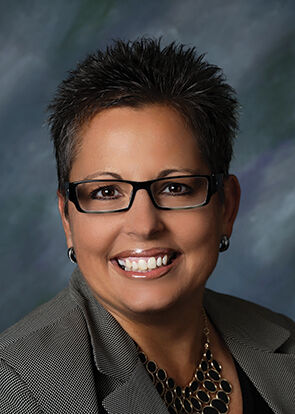
Becky Reichelt, executive vice president, says they’ve made recruitment and retention a focal point over the last several years, focusing on increasing benefits for the positions available and improving the culture for employees. She says their employees’ physical and financial health, as well as their well-being, are front and center.
“We really are focusing on our culture and focusing on the relationships that our staff — our associates — can have with those who we serve, with our residents and our tenants and our patients,” she says.
Reichelt says the WisCaregiver program will help bolster efforts like those St. Paul Elder Care Services already has in place. They’ve worked frequently with high school students who can start their careers in dining services, move into caregiving and then further their education to become a CNA. They also work closely with local tech schools and nursing programs. To recruit in new areas, they are interested in working with recently retired citizens or those who may be burned out from a current career and interested in caregiving.
“It’s nice that we have had numerous situations where it’s kind of a career ladder, where they start in a dining services position, where they get the feel and the understanding of how to care compassionately for the people who live here, and then grow to that next level,” Reichelt says. “We have made that a priority so that we can help to be that catalyst or that support for people who are new to entering the workforce in the health care field.”
At the heart of the matter
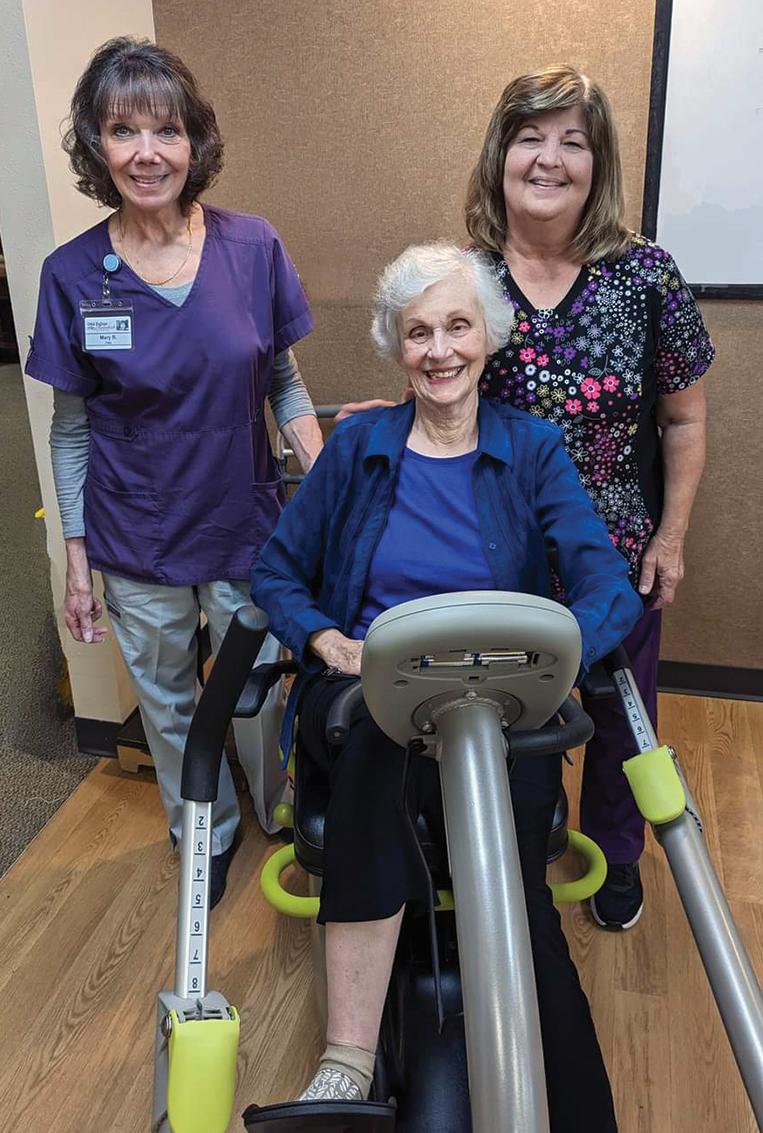
Green Bay-area producer and documentarian Eileen Littig recently experienced the importance of caregiving firsthand. As someone who was physically active, and proud of her 10,000 steps each day as an octogenarian, she did not expect an at-home fall would lead to a broken femur.
As she began her recovery from the painful incident, Littig says she depended on her rehabilitation center’s staff for nearly everything.
“They were absolutely incredible to me,” she says of her experience. “They had to teach me how to get out of bed, how to use a walker, how to get to the bathroom. They dressed me. They gave me showers. They brought my meals. And they were always upbeat; they were kind and they were wonderful to me.”
Throughout her career in television, Littig has encouraged community conversation. Throughout this experience, she learned more about the factors facing caregivers across the industry — low pay, long hours and physically demanding work — and thought about the wonderful care she received in light of that.
Littig says she and her husband recognized how quickly things can change, as well as how shocking it can be to go from an active life one minute to needing help with everything in the literal blink of an eye. With children living outside of the area, outside caregivers will be crucial in the years ahead when the Littigs require extra help.
“When this happened, it was a wake-up call,” she adds. “Who’s going to do the caregiving?”
How the business community can be part of the solution
While the shortage of caregivers of every accreditation is a complex and multi-layered issue, there are ways the business community can become part of the solution. As Giesen says, engaging in conversations regarding caregiving needs in the community with their employees is an important place to start.
“It’s a huge issue because a lot of working adults are caregiving,” she says, “and sometimes they won’t have the conversation for fear of losing their job. We can open the door to the conversation and look at what types of support would be helpful to those family caregivers. Usually, it’s flexibility. Sometimes it might be an adjusted work schedule; sometimes it might be a temporary reduction in hours. If their employees don’t have support, whether it’s for children or for their aging parents, [employers are] not going to have a worker in the field or at the desk, at their office.”
Recognizing the pressures that caregiving responsibilities place on working adults, employers have a critical role in retaining valuable workforce members and ensuring business continuity. When workers feel supported, they can better balance their work and caregiving roles, leading to increased productivity, loyalty and career satisfaction.
As Littig emphasizes, raising awareness is paramount to the future of the eldercare industry.
“We have to get this information out and educate people,” Littig adds. “These are the people who are going to take care of us — your parents, you and everyone else.”
For more information about the WisCaregiver CDCP program, visit wiscaregivercdcp.com.