
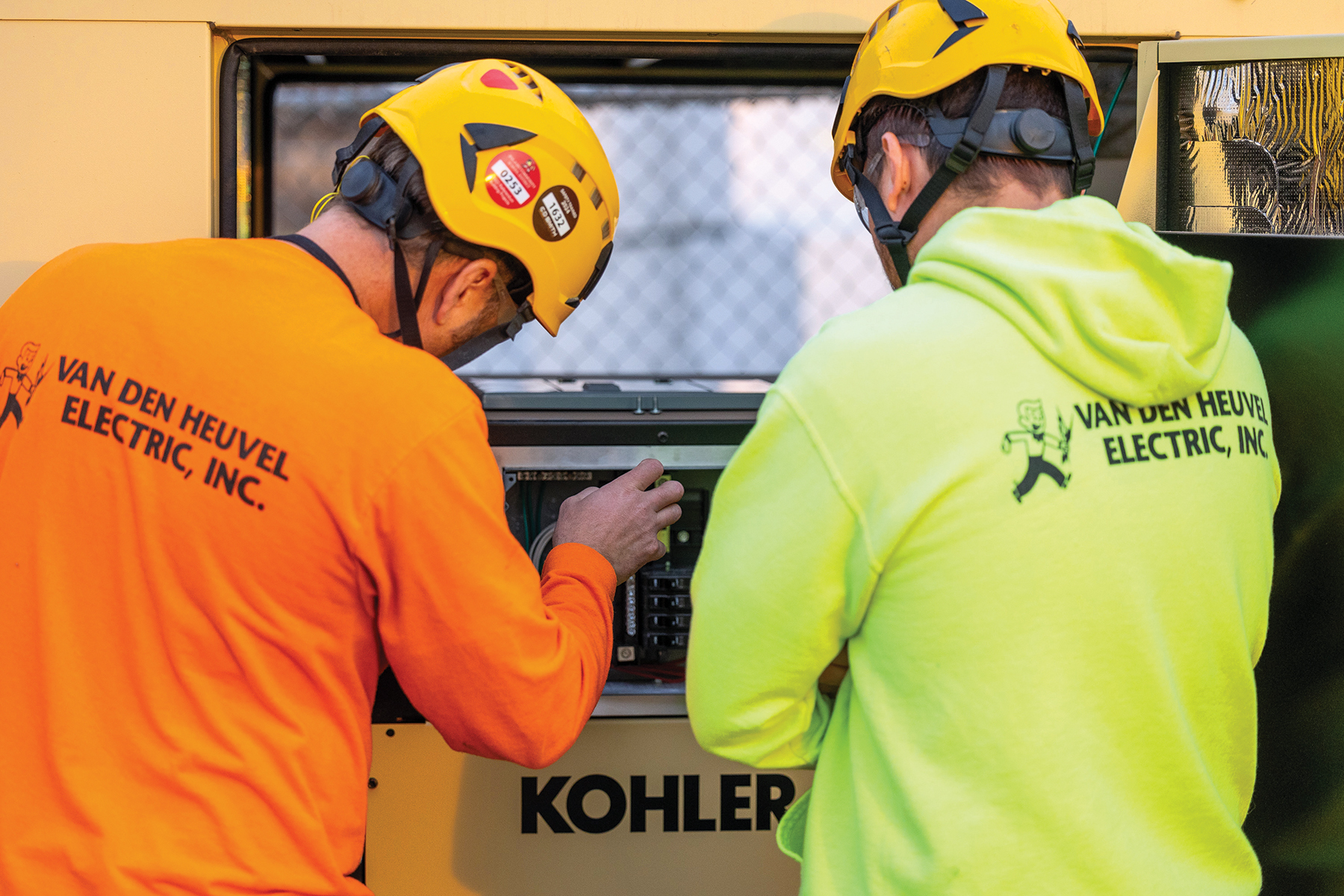
You’re not imagining it: Getting electrical work done on time is harder than it used to be. And it’s not just your project or the electrical industry. The entire state is feeling the squeeze. As of June 2025, Wisconsin Public Radio reports that we’ve had more job openings than people receiving unemployment benefits since 2021. The bottom line? The economy is generating more jobs than there are people to fill them, and the trades are right in the thick of it.
What the delays look like
Right now, most of our electrical team is in the schools. Summer is the only time to get in and get things done before students come back. But the work takes hours, and a lot of hands. Without enough licensed electricians, things slow down.
At the same time, we’ve got clients in manufacturing waiting on us to hook up new machines. But we can’t get there until the schools are done. Their process slows down, too. It all snowballs. One delay affects everything else.
Again, part of the issue is due to the workforce. A lot of the older generation is retiring, and for years, kids were told college was the best path to success. But trades like ours have great pay and good job security, and we’re hiring. Interest is coming back, but the gap is still there between new apprentices and experienced electricians.
What to know about scheduling
Here’s the biggest mistake we see: everyone wants their work done in summer. That’s when most businesses are also booking projects, so the calendar fills up fast.
My advice to business owners is to schedule work during slower times, like winter. Or better yet, plan further ahead. A lot of summer jobs for electrical are already spoken for by April or May. By June, most companies are usually booked solid, particularly those that work in industries such as manufacturing, health care, commercial and schools. These projects have strict safety codes and specific requirements, such as running everything through conduit, not open cable. It’s not like residential work. It takes more time, more people and tighter coordination.
How to stay ahead
If you’ve got a big project in mind, don’t wait. Even if it’s not happening until next year and you don’t have final specs, start the conversation now. It gives you more flexibility and more chances of locking in the crew you need. Ideally, plan at least a year out, especially if your timeline is tight or penalties are on the table for delays.
We’re doing our part to stay ahead and grow the workforce through internships and partnerships with local schools. The union (IBEW Local 158) does help us fill needs, but we could use more outreach at the high school level to show students what a solid career the trades can be.
The reality for all of us is that the current labor gap won’t disappear overnight. A solid strategy is to be proactive, not reactive. It’s the simplest way to keep your project, and everyone else’s, on track.
About the Author

Jake Pfeiffer, Electrical Estimator/Co-Owner, Van Den Heuvel Electric, an HMI Company
Email: jakep@vandenheuvelelectric.com
Jake Pfeiffer is an electrical estimator/co-owner at Van Den Heuvel Electric, an HMI Company, with over a decade of experience in the electrical industry. He has successfully managed and estimated a wide range of industrial and commercial projects, and leads efforts to integrate electrical operations with HMI to maintain project continuity.

