


Photograph by Shane Van Boxtel, Image Studios
When Dustin McClone was in college, he suffered from debilitating migraines. After years of visiting countless specialists with no relief, he was finally referred to a health care professional who claimed to have the answer.
The provider explained to Dustin that his brain was off-center in his skull, and a manual adjustment would finally free him of pain.
“So I lay on the table and he takes his thumbs, shoves them into my mouth, and starts pushing down on the roof of my mouth. He does this for about 30 seconds — the most uncomfortable 30 seconds of my life,” Dustin recalls. “Well, it didn’t do anything.”
Dustin later learned the provider had attended a conference the week prior and this new treatment for migraine relief was all the talk. Reflecting on the experience today as president and CEO of McClone Insurance, Dustin sees many parallels between this trendy, yet ineffective, pain relief technique and the current state of the insurance industry.
“This is the way the insurance industry works,” he says. “There’s no systematic process. It’s not using data to actually identify [risks] in organizations. This is why everyone hates our industry; it’s solutions in search of a need.”
Instead of throwing unnecessary solutions at clients, McClone Insurance identified a major gap: Clients struggle most with risk identification, leaving their businesses vulnerable. This sent McClone on a transformative journey that included the development of a risk identification process that has not only revolutionized the company’s approach with clients, it’s fueled its recent growth.
“Where we flipped it on its head was [by investing] a tremendous amount more on that identification piece using tools, talent and technology,” says Dustin, whose grandfather Ralph McClone started the business in 1949. “If we can identify the risks that are going to impede a business — we can’t solve all of them — but if we can identify them, at least then together we can solve the ones that matter most.”
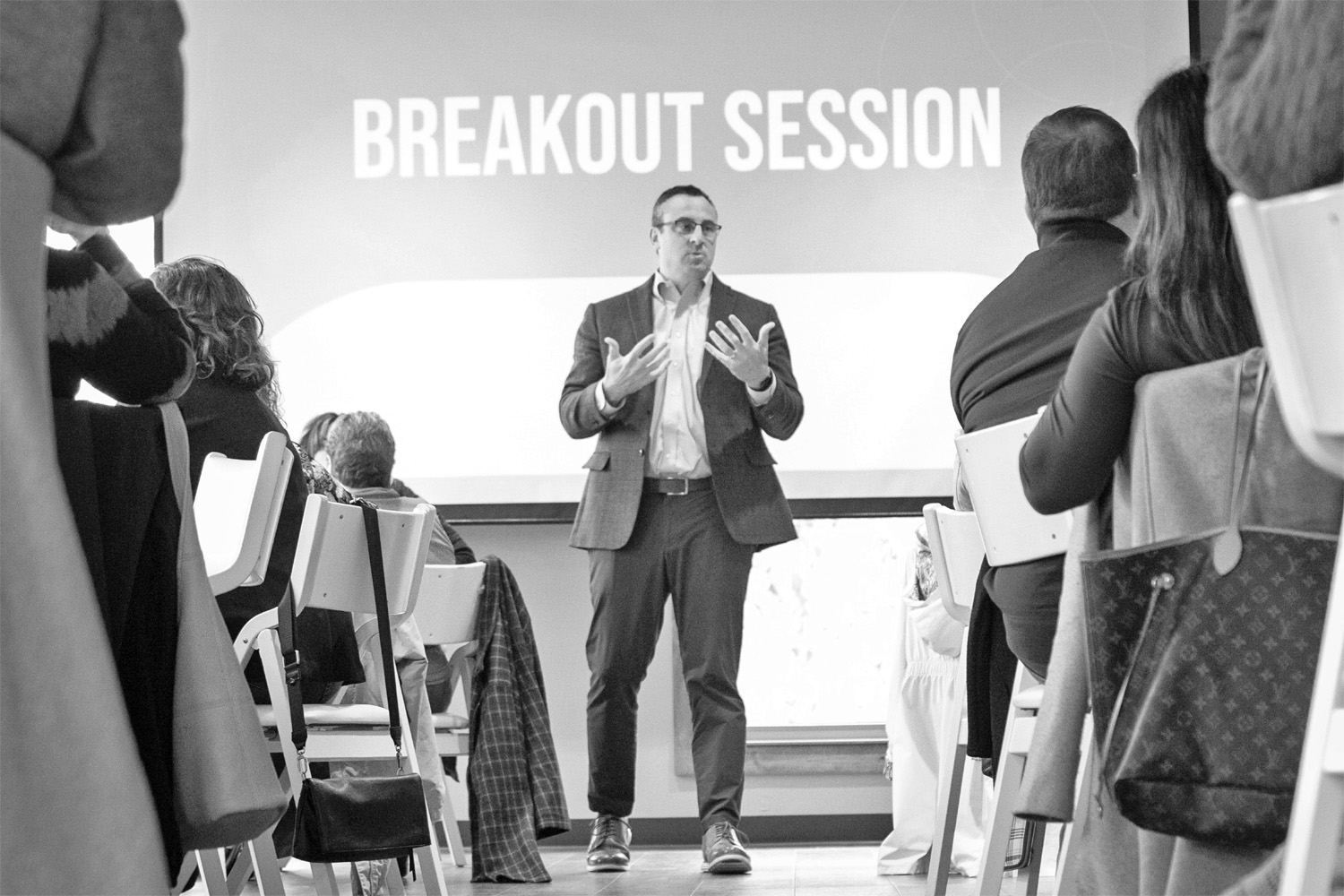
Mapping the path forward
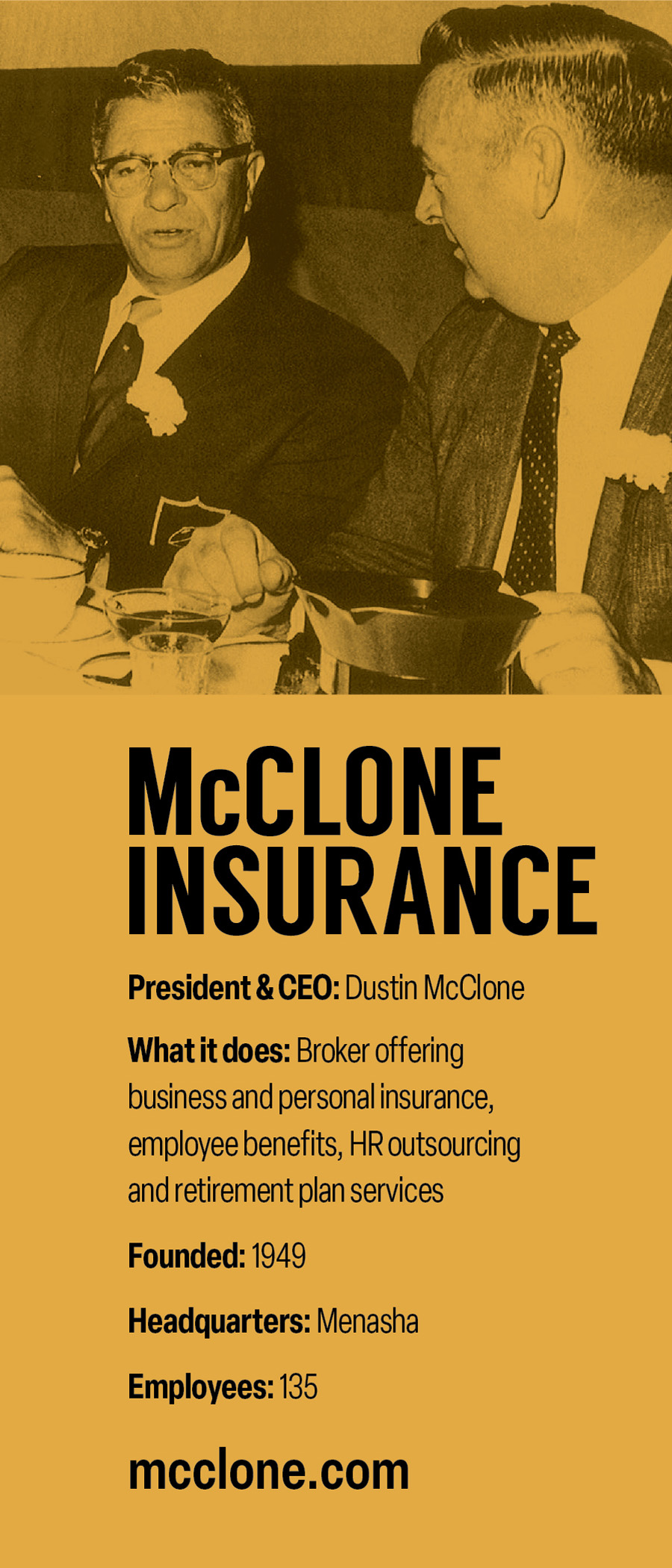
Ralph “Cyclone” McClone was “never an insurance guy,” according to Dustin. He was a teacher and St. Mary Catholic Schools head coach who simply needed a hustle to support his growing family. He landed on selling insurance from his kitchen table.
Ralph’s passion for people drove the business’ early success.
“Because he was a teacher and a coach, he was dedicated to finding and building great people and giving them a path to success in their own right,” Dustin says. “That foundation is still who we are.”
Dustin’s father and second-generation leader Mike McClone, the eldest son of 10 children, bought the business in 1987 and took over as president when it had fewer than 10 employees. By Mike’s retirement in 2018, the McClone team had grown to 60 members.
It was under Mike’s leadership that McClone Insurance leveled up as a company, Dustin believes.
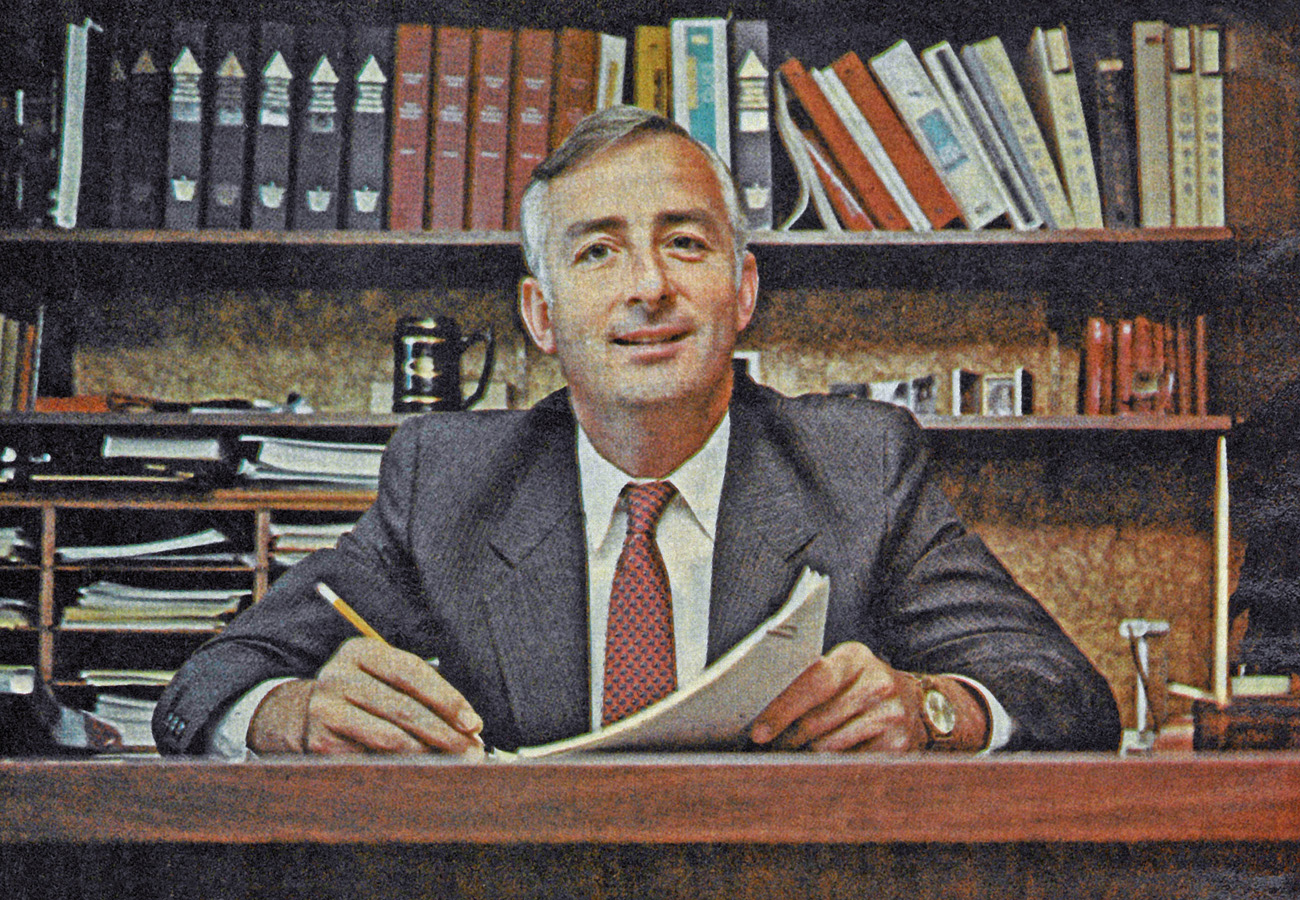
“[My dad] took a lot of that foundation and really just built systems, structure and strategy to drive growth from there,” he says.
Still headquartered in Menasha, today McClone also has offices in Madison, Milwaukee, Sheboygan and Fond du Lac, offering business and personal insurance, employee benefits, HR outsourcing and retirement plan services. Dustin and his brother-in-law, Erik Brenn, took ownership of the company after his father’s retirement, and now 135 team members serve clients throughout Wisconsin and across the globe.
One benefit of a generational family business is that it provides a “long view of the world,” says Dustin, who believes this was a key ingredient when the business started on its journey to reinvent its model more than 10 years ago.
“I give a lot of credit to my dad. He gave me the latitude to try stuff and fail, and try to figure out a different way,” he says.
Dustin says the current broker model (which he refers to as “copy, quote and pray”) works well for brokers, but not for clients. Most brokers sell insurance products without understanding what problems they’re solving, he says. It might be profitable in the short term, but ultimately the result is an inability to deliver on promises, which leads to client frustration and a lack of true risk mitigation.
“We basically went back to the studs and said — and this is stupid to say out loud — but ‘what if this industry was actually based around the customer?’” Dustin says.
This obvious but radical question led McClone to develop a client-centered, four-part RiskMAP process. It is a significant shift away from simply quoting products to see what sticks, to identifying and solving actual business risks using a systematic, proactive approach.
“It’s really problem-solving 101 — you identify a risk or issue, you develop solutions, you implement those solutions and you monitor the results,” says Dustin, who admits the process itself isn’t especially earth-shattering. However, McClone’s deep investment in the tools, talent and tech that support it, is.
Challenging the status quo didn’t come without its own risks. In fact, Dustin says the reason many brokers won’t attempt this approach is because it requires an initial period of shrinkage as they stop long-held sales practices and reallocate resources.

“You shrink to start because you’re stopping the sales engine that works for the broker,” he says.
But long-term, this shift has fueled growth through better client outcomes and stronger talent attraction. It has even led to the creation of a successful new division, McCloneHR, which outsources payroll, benefits and human resources to McClone’s team.
“We were able to pair these three things together in a way that no one else in the country is doing,” Dustin says. “It’s because we saw a client problem and looked at it through the client lens first, rather than just through a revenue lens.” [continued]»
Gaining clarity
Over the last five years, McClone has doubled in revenue and Dustin says it’s been a domino effect of adopting the RiskMAP model. The new model has resulted in greater talent attraction, which has increased the company’s services.
To do this, McClone has invested in tools and tech to power the RiskMAP model, positioning itself as an incubator that regularly pilots and tests emerging technologies such as AI, automation and analytics. McClone’s partnership with insurance tech and software company Applied gives them early access and influence over what’s coming next.
One of McClone’s proprietary tools is Ai³ Analytics which combines artificial intelligence (including data and proprietary filters) with the McClone team’s reasoning and experience to deliver insights clients can act on. Another is RiskCHECK360, a comprehensive assessment that gives clients a clear framework to identify and improve their overall risk profile.
These investments have increased customer satisfaction and attracted more clients — even lured former customers back.
Miron Construction Co., Inc. is a boomerang customer of McClone’s that, 10 years ago, was looking to convert to a self-insured, or self-funded, health plan.
The Neenah-headquartered construction company had previously worked with McClone on its business, property and casualty insurance. But as it grew, Miron took its business to a larger broker they felt could better meet their needs.
“For a long time, we felt we were too big for them,” says Dean Basten, treasurer and CFO of the $1.74 billion company with 1,700 employees. “When Dustin took over, he became focused on growing the business. As we approached the self-insured decision, we brought in more brokers. McClone was one of them, and they won the business … Don’t underestimate their capabilities.”
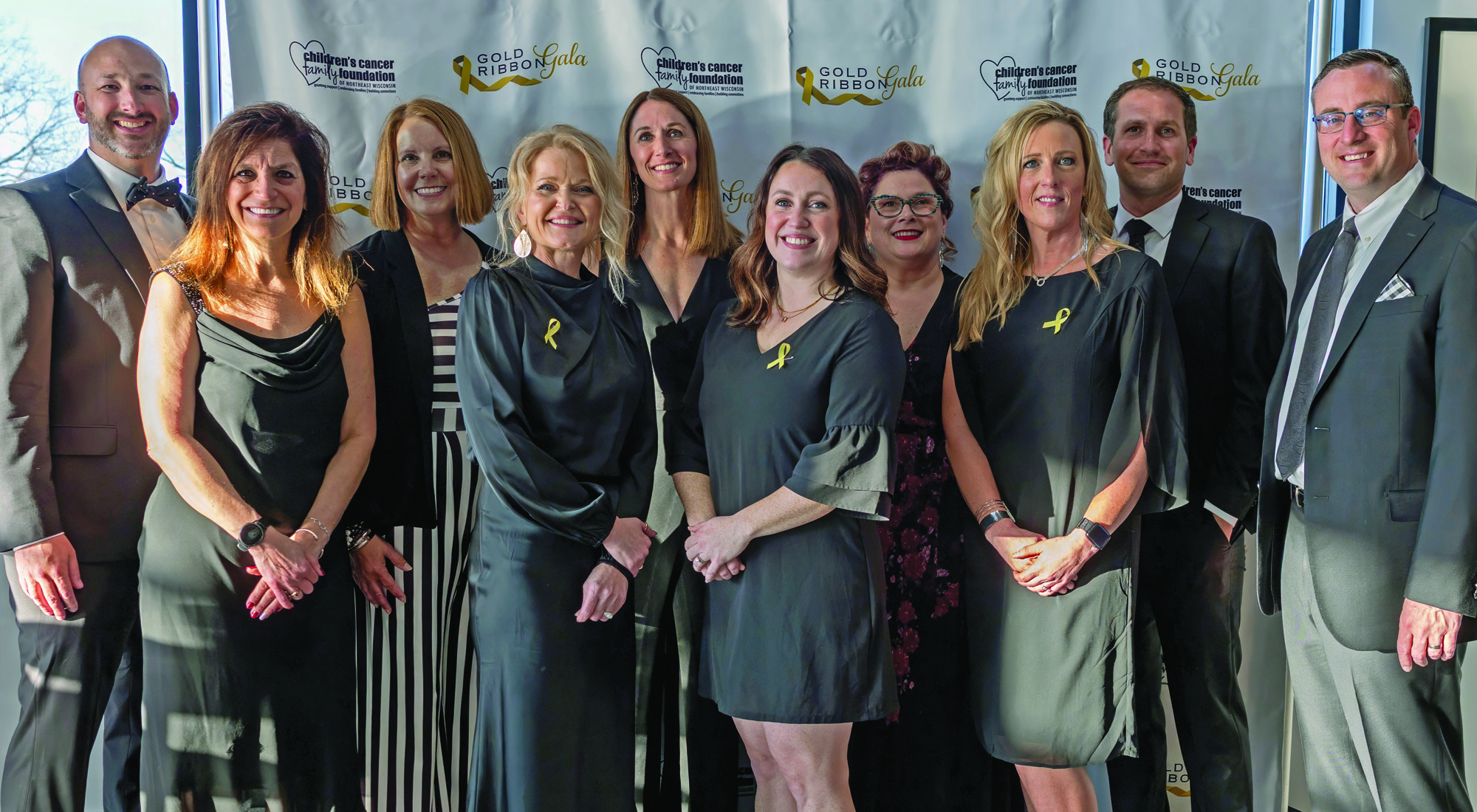
Basten says McClone played a critical role in transitioning Miron to its self-insured health plan.
Under these plans, employers fund employee medical claims instead of purchasing coverage from an insurance company.
“It’s a new frontier when you do that as a business, but McClone really helped us navigate that and helped us understand the risks and rewards — and, most importantly, how to be cost effective on our self-insured program,” Basten says.
McClone helped Miron design a cost-effective plan that also preserved the employee experience. Despite Miron’s year-over-year growth, Basten says the company has been able to maintain level health-care costs — a significant win for any business.
“We have a really top-notch benefit plan with McClone’s help, and that’s another tool for us to attract and retain employees,” Basten says. “McClone has been really instrumental in that being successful for us.”
Employee education has been a key piece of the puzzle, Basten adds.
“You need to educate your employees to be better consumers of health care, and that’s where McClone really shines,” he says. “They have people that have been an extension of our HR department.”
Sarah-Beth Janssen, McClone senior strategic risk advisor, is one of those people. Janssen has been with McClone for 15 years and currently works in the employee benefits division. She presents to the Miron team at its annual open enrollment meeting and offers sessions on health benefits during Miron’s quarterly all-staff meetings.
Janssen says the health insurance system is disconnected, which makes it difficult for consumers to navigate. When Janssen shares information on, say, the cost differences between health care facilities for the same procedure, it is often the first time employees are hearing it.
“When I go out and do open enrollment meetings with a new client for the first time, there’s just jaws on the ground,” she says. “We take it seriously that it’s our job to teach them, and by doing that we’re creating not just savvier consumers, but people that feel more empowered to make the right health care decisions because they actually understand how it works.”
Prescription drug costs, Janssen says, are a pain point for nearly every employer in the country and typically account for 20 to 30% of a plan’s overall claims. But among McClone’s clients, that number is significantly lower.
“For most of our groups, their prescription spend is less than 10%. And it’s not by chance,” Janssen says. “It’s because we operate with transparency. We look for those transparent partners, so we can bring that to our client because it’s helping them save money.”
She adds that McClone works creatively within health plans to deliver care in new ways, whether it’s identifying lower-cost providers or exploring virtual care options.
“We work with our clients to help develop a strategy on what that looks like so that we are meeting people right where they’re at,” Janssen says. “We have the ability to help drive forward much-needed change in a broken industry, and we get to do that.”
“Culture by design”
For much of its 76-year existence, McClone was known as a mid-market leader, serving primarily Main Street businesses with 500 or fewer employees. Over the last 10 years, McClone has entered the national and international space, working with clients of all sizes that have operations around the world.
As it grows, Dustin says McClone will put an even greater focus on culture development.
“We’re going into our next phase of hypergrowth, and to do that we realized we need to be more intentional about culture,” he says.
The team developed 24 actionable behaviors that support company values, which they refer to as the “McClone Code.” For example, behavior No. 19 is “email sucks.” This encourages face-to-face communication when solving difficult situations.
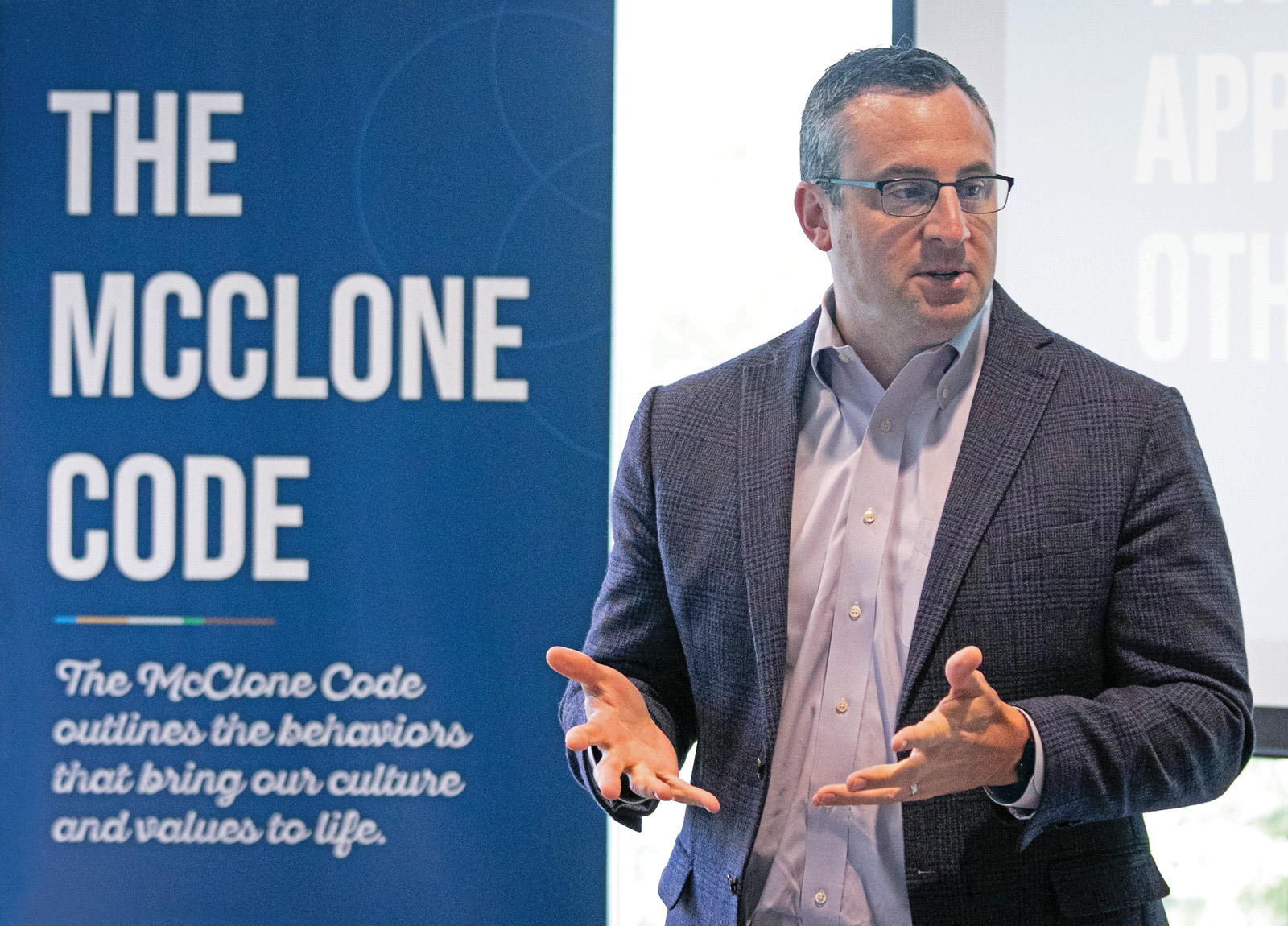
“At some point, the industry is going to want to flip to our [RiskMAP] model. It makes too much sense for them not to. But when that differentiation goes away, our culture will stick,” Dustin says. “That’s the one thing that we can laser focus on, because in our business, it’s all people. If we don’t have good people, we don’t have anything.”
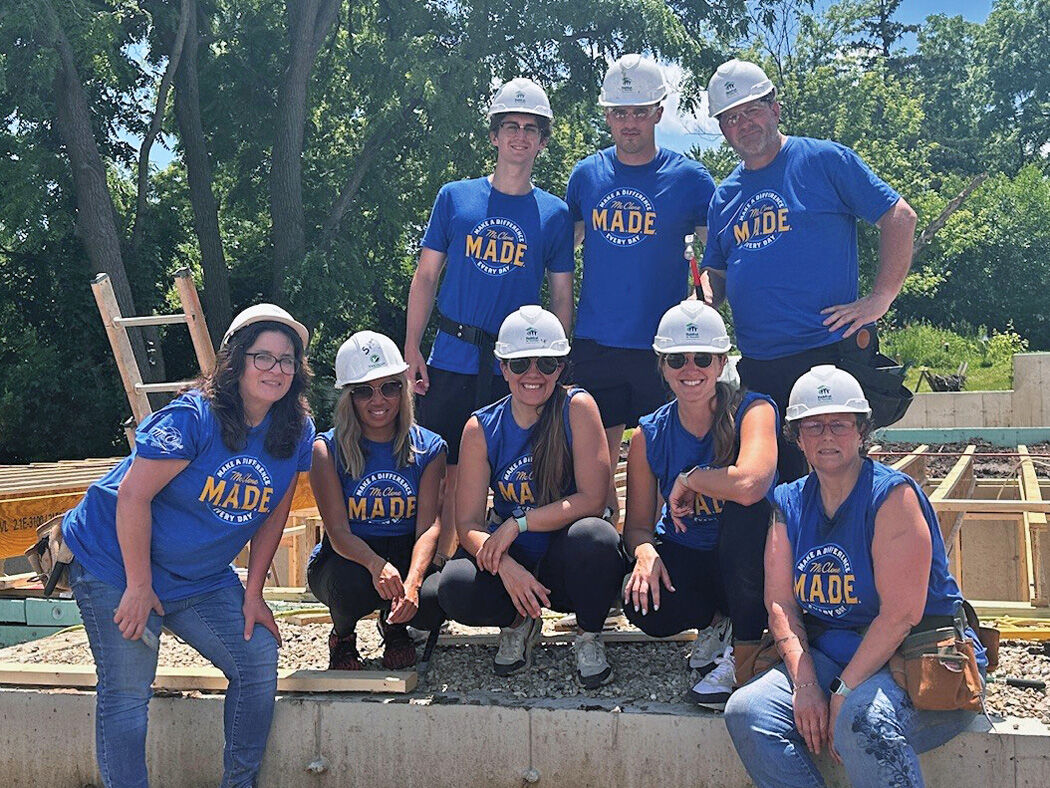
Philanthropy and community service are important parts of McClone’s culture, Dustin says, which is why the team developed McClone M.A.D.E. (which stands for Make a Difference Every Day). This initiative includes donating 10% of every dollar earned back into the community through McClone’s charitable foundation and other corporate gifts. Team members also receive paid volunteer time off, and they can donate up to $500 per year to nonprofit organizations and receive a dollar-for-dollar match from McClone.
Bergstrom Corporation in Neenah has grown up alongside McClone, sharing the same founding year, and has been a McClone partner since. John Hogerty, Bergstrom’s executive vice president and general counsel, has personally witnessed Dustin’s leadership transition at McClone and his focus on culture as the company grows. One of McClone’s more recent acquisitions was Neckerman Insurance in 2021, which expanded McClone’s footprint in the Madison area.
“As they’ve acquired businesses in different parts of the state, I’ve had a lot of conversations with Dustin about how he’s working to bring their cultures together and make sure that he can retain the important culture of integrity that his family started with this business,” Hogerty says.
That commitment to integrity and long-term partnerships hasn’t gone unnoticed by clients like Hogerty, who say the consistency in McClone’s people and principles is what keeps them coming back.
“We continually come back to them and continue that partnership, and I think probably the biggest reason is the people that they have and their integrity,” he says. “The culture of their workplace really matches up with ours, and I know that they’re going to be with us and helping us in the long term.”
Dustin, who says McClone is poised to double in revenue over the next five years, has always viewed his company as a bit of an underdog in their industry, but that mentality has driven the company to punch above its weight, challenge national players and stay relentlessly focused on making meaningful relationships.
“We’re this little company headquartered in Menasha that is scaling to be in the top 1% nationally, taking on these absolute behemoths,” he says. “That’s what gets me really excited — thinking about 10 years from now, the impact we’re making in our communities, with our clients, with our team and the number of lives we can impact.”