
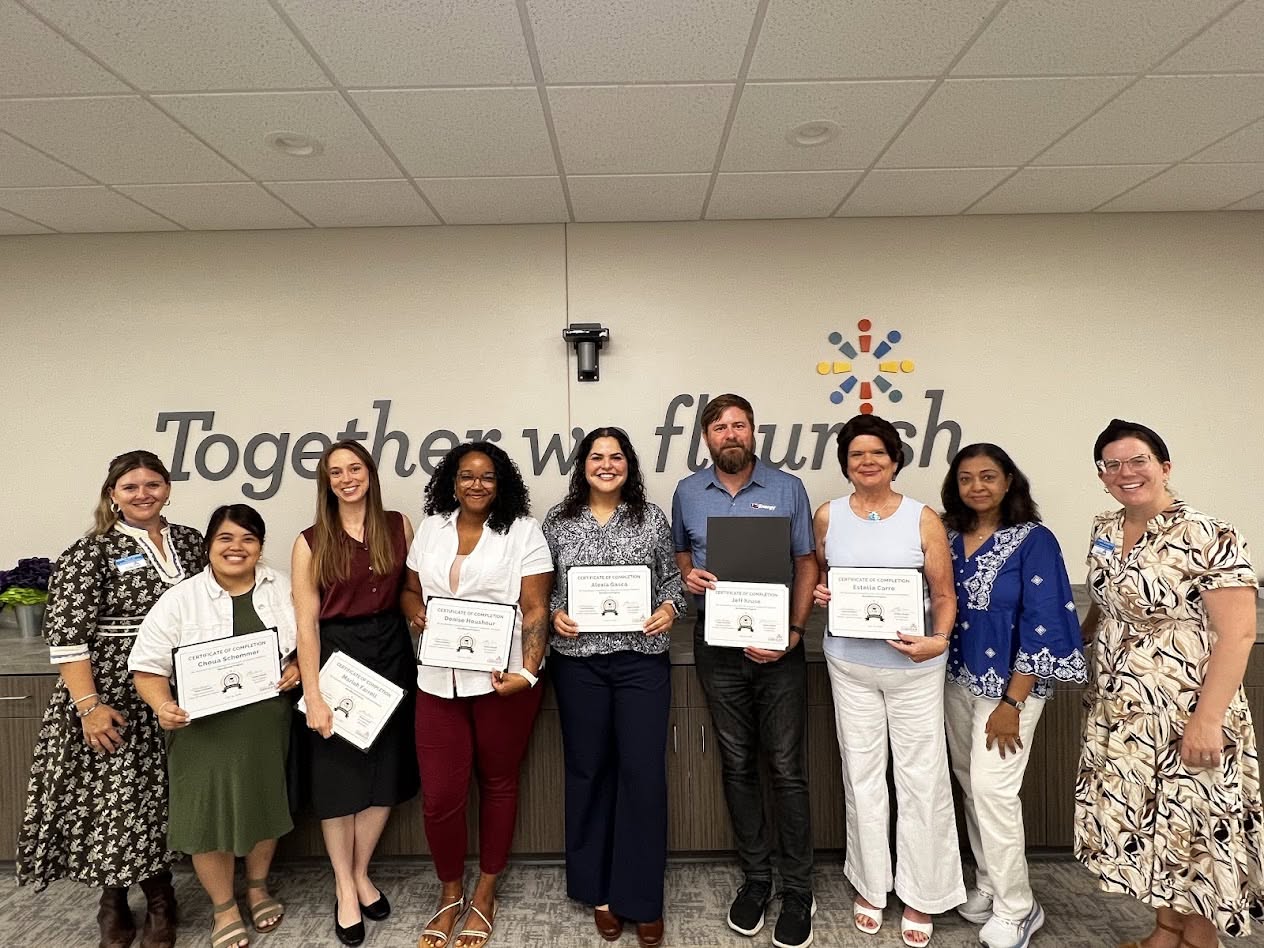

After 10 years as “the nonprofit that supports nonprofits” across five counties with training, education, resources and personalized guidance, the Fox Valley’s Nonprofit Leadership Initiative was at a crossroads: become its own 501(c)3 or integrate more fully with the Community Foundation for the Fox Valley Region, which had housed the organization since its inception.
Executive Director Hope Schaefer’s office is just down the hall from CFFV’s community engagement team, so the steering council’s ultimate decision to deepen the partnership made for a pretty seamless transition.
As of January, NPLI is officially part of CFFV’s community engagement team and therefore has more resources at its disposal to better serve the region, according to Amy MacKenzie, director of marketing and communications for the community foundation.
The deeper integration, Schaefer adds, also eliminates redundancy in NPLI’s communications with nonprofits and connects existing knowledge about nonprofit funding needs with NPLI’s ability to provide education and resources.
“Nonprofits in our community are calling Hope and her team and saying, ‘Hey, we’re experiencing this — whether it’s board members maybe not supporting the executive director in ways that are needed, or it’s board education or worry about finances,” MacKenzie says.
One of the key financial topics NPLI has supported over the last two years has been navigating federal policy changes, including executive orders that froze or eliminated nonprofits’ funding. Schaefer points to the 2022 creation of NPLI’s Financial Leadership Program as a pivotal moment in the organization’s timeline.
“Ensuring financial leadership and nonprofit finances are emphasized was so important, and it’s become one of our core programs,” Schaefer says.
Then this spring and summer, Schaefer says, NPLI’s key focus pivoted to natural disaster response.
The flooding in Shiocton and New London this spring, as well as the Fox Cities tornado this summer, were opportunities for NPLI to demonstrate its value, including providing temporary office space at the community foundation and leveraging NPLI’s support and expertise to ensure a rapid response could still be a thoughtful one.
Within the same day the July tornado hit, “[nonprofits] were mobilizing and expanding their … programming, or trying to immediately respond to their own clients or participants in their programs who had lost their homes,” Schaefer says. “They were really stretching themselves when nonprofits were already stretched.”
NPLI specifically provided a lot of support around compliance in the wake of the tornado. Schaefer says it was important for nonprofits to find the best pathways for funding that wouldn’t jeopardize their future ability to receive funding from FEMA or the SBA.
“I’ve been executive director for eight years, and these were things that I never had to think about or navigate,” Schaefer says.
As NPLI looks to the future, Schaefer says one of its greatest opportunities is the number of nonprofits it has yet to touch, especially in Shawano and Waupaca counties. Schaefer says NPLI has served more than 600 organizations, but there are north of 1,600 nonprofits in its five-county service area.
“We’re here,” she says. “Our single-day trainings are free or low cost. We’re trying to be as accessible to nonprofits as possible. Nonprofit work can be very isolating, and ensuring nonprofit leaders don’t feel along is a key space that I think NPLI helps fill.”
Five counties, five keys, five trends
NPLI recently helped facilitate a survey and three listening sessions that zeroed in on five key areas of support nonprofits say represent their greatest needs “beyond grant funding.” These included:
- Advocacy
- Capacity building
- Technical assistance
- General training
- Board training
Ninety-nine nonprofit staff and board members representing 79 organizations participated in the February 2026 listening sessions. Across all five of the above topics, five trends were identified and included in the 2026 overview report:
Workforce constraints: These include burnout, understaffing, lack of time to train or innovate
Outdated infrastructure: Technology, data systems, cybersecurity and AI readiness are major gaps, and nonprofits lack the time and capacity to use technology to the best of their ability
Boards are a limiting factor: Undertrained, unclear on their roles, not strategically focused on governance and not reflective enough of the communities they serve
Advocacy is essential, but under-resourced: It is core to maintain sustainability and growth, but nonprofit leaders lack the time, skills and funding to engage in advocacy work.
Collaboration requires infrastructure: Nonprofits want shared systems, staffing and training but lack the scaffolding to make it real.
Funders can strengthen the ecosystem: Normalize overhead; fund things like advocacy, training and technology; convene organizations; coordinate among the funders’ groups; shift harmful narratives.