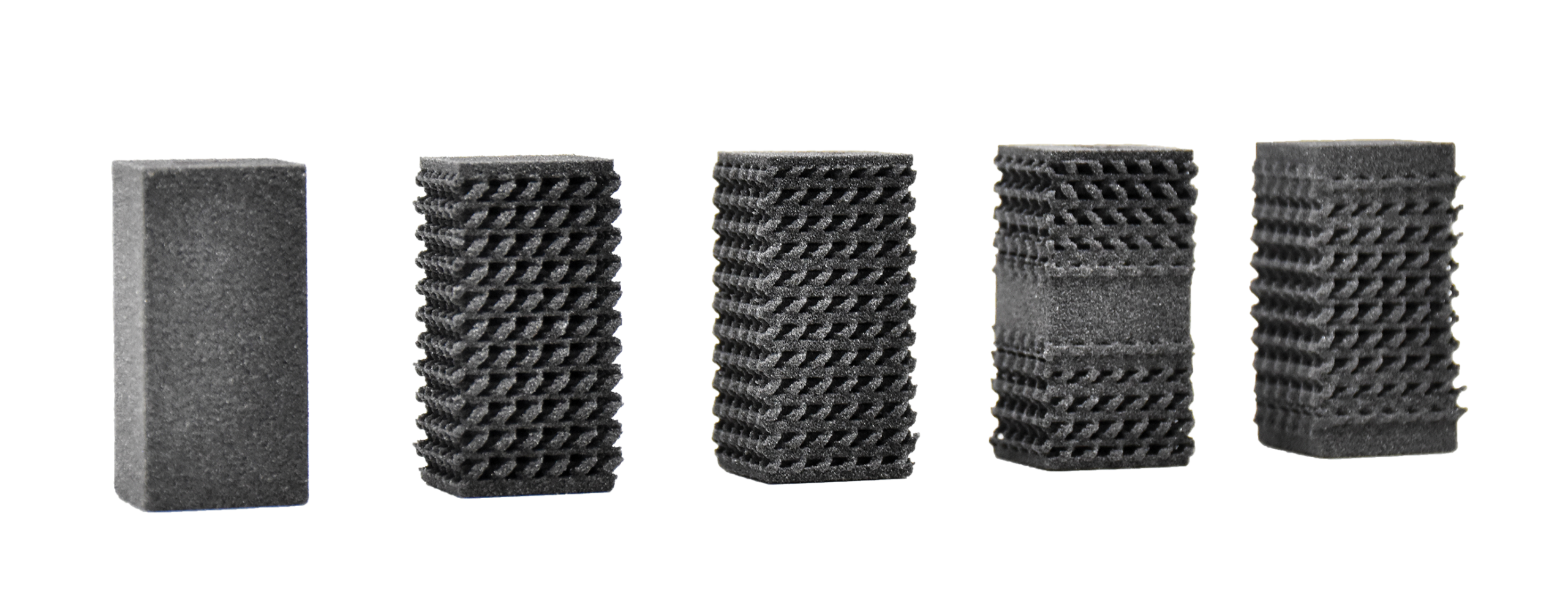
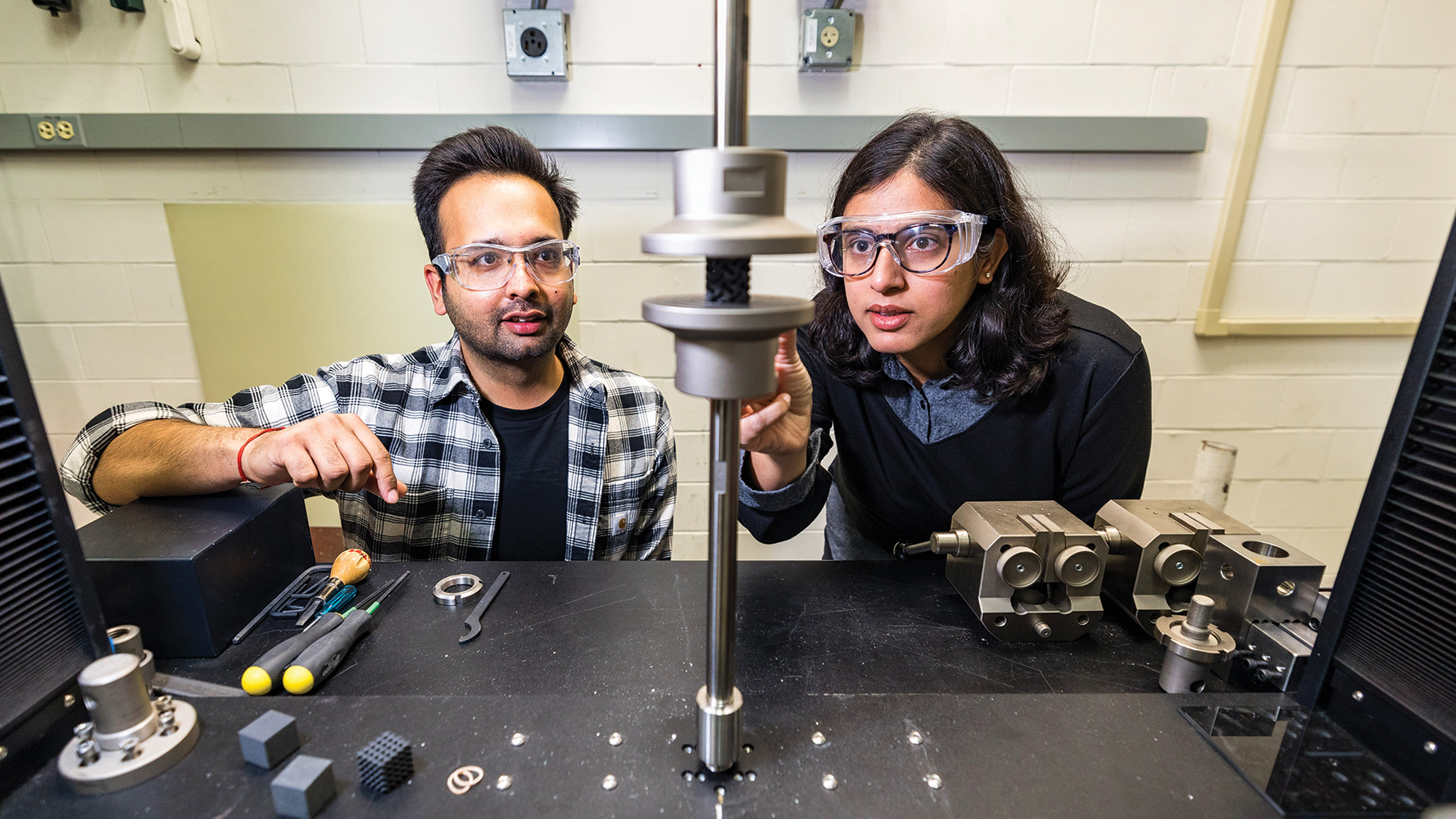

An aerospace engineer by training, Pavana Prabhakar describes herself as fundamentally a “mechanics person,” who looks at manufacturing through that lens.
“I like to understand how materials fail, how they evolve under different kinds of loads, accounting for the effects of manufacturing,” says Prabhakar, associate professor in the department of mechanical engineering at UW‑Madison.
Prabhakar directs the UW College of Engineering’s Manufacturing and Mechanics Lab, where she and a team of graduate researchers study composite materials — hybrid materials composed of two or more individual materials with distinct properties. “When they are combined in such a manner with internal architecture, we achieve materials with superior properties compared to that of the individual materials,” Prabhakar says.
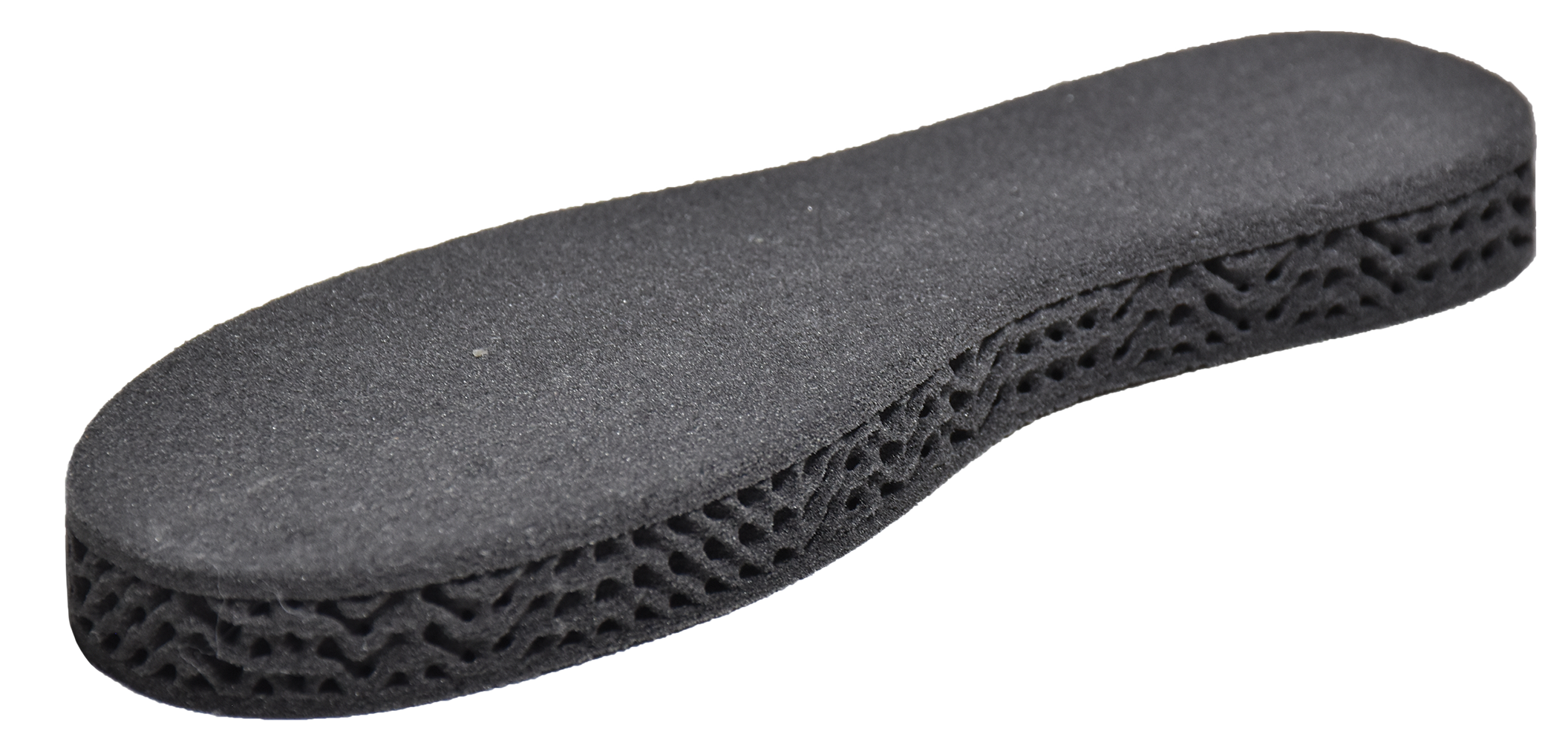
Through this research, Prabhakar and her team have recently developed a new technique that combines the additive manufacturing method of selective laser sintering (SLS) with glass microballoons and Thermoplastic Polyurethane polymer powder to create flexible syntactic foams, a type of sponge-like composite material used in everything from aircraft to athletic shoes.
The research, led by graduate student Hridyesh Tewani, was exploring ways to reduce the weight and increase energy-absorption properties in structures such as airplanes, marine vessels and automobiles that typically use polymer composites — materials made from fibers bound with resin — to keep them lightweight.
One effective method is using “sandwich composites,” which involves placing a lightweight core material between stiff composite facings, similar to the bread of sandwich. The focus of the research was on making core material that was more lightweight, flexible and energy-absorbing during impacts or collisions such as car crashes.
“We were looking at ways to improve these three different capabilities of this core material of a sandwich composite,” Prabhakar says. “That motivated us to ask what are some different ways we can use new manufacturing technology in some innovative ways to design these. And that’s how this all came about.”
Up until recently, most syntactic foams have been made via molding or casting, but utilizing the powder-based SLS technique has resulted in highly-customizable, sustainable cores that can be created with low-cost materials and tools.
“This process is key because usually if we want to manufacture syntactic foams, the structure of the material would be quite different if we were to use a different technique of manufacturing compared to using this SLS process,” Prabhakar says. “It’s also an easier approach to creating these syntactic forms compared to the liquid resin-based [method] of stereolithography.”
This method of creating 3D-printed synthetic foams has far-reaching implications for various industries, including defense, aerospace, marine, recreation and sports.
“The nice thing about using SLS is that you can combine these particles in different volumes … to create a suite of material or mechanical properties,” Prabhakar says. “It can range from shoe soles, helmet liners, flexible wings, underwater pipes, electrical insulation for wires — a range of applications like these.”
One of the key achievements of this approach is the level of tunability that can now be achieved.
“Using this fabrication technique that we have proposed, you can modulate the properties over a large range — from less stiff to high stiffness, less strength to high strength — by basically changing the ingredients,” she says. “That’s why we can touch upon a range of applications with this approach.”
“It just brings a new degree of freedom in your design in various applications,” Tewani adds.
The technology is currently being patented through the Wisconsin Alumni Research Foundation, which is seeking commercial partners interested in adopting the new method of producing syntactic foams.
Tewani says the process is scalable and could be integrated into an existing manufacturing workflow.
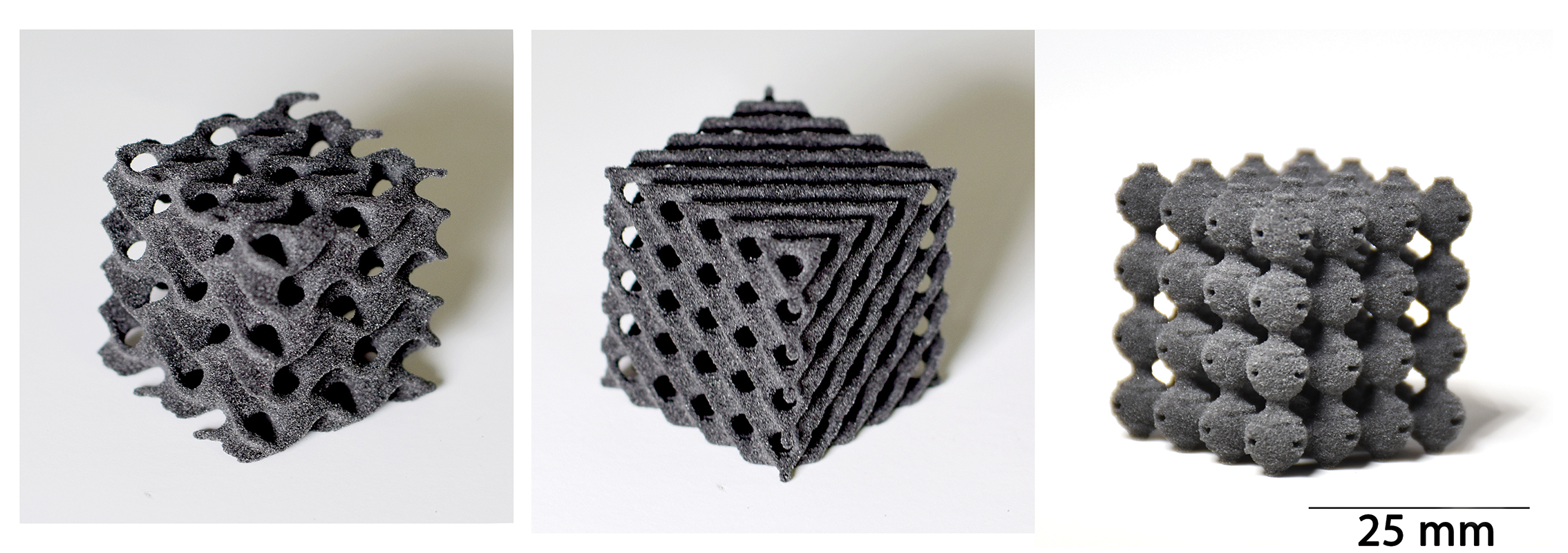
“Another advantage of 3D printing over the conventional technique is to achieve complex shapes and architectures without the need for new molds, additional processing or extra tooling,” he says.
Tewani and another researcher participated in the university’s Innovation to Market program, an eight‑week program for early-stage innovators, to explore the market viability of the technology.
“We conducted multiple customer discovery interviews with helmet manufacturers and consumers,” he says. “We received a positive response with interests and some [suggestions] for potential improvements.”
Prabhakar and her team are now conducting impact and fatigue studies to further test how the materials hold up when subjected to force over a period of time — whether that’s in helmets colliding on the sports field or the hull of a ship breaking ice in Arctic waters.
“Manufacturers seeking a solution for very flexible, energy absorbing and lightweight materials should definitely look into our innovation, because they can have all of these three aspects in one,” she says.
This technology isn’t just about improving existing materials, Prabhakar says — it’s about reimagining how lightweight structures are designed in the future.
“We are trying to create a paradigm shift in how we think about designing these future lightweight structures, and being at the forefront of this is what truly excites me about this work,” she says. “That’s where we want to take our work [going] forward.”