


Styling by Shalene Enz / Photographs by Shane Van Boxtel, Image Studios
Pete Bilski isn’t intimidated by much. The manufacturing industry executive has navigated countless tough situations — from plant shutdowns to contract negotiations to employee terminations — over his 40-year human resources career with manufacturers throughout the Midwest.
But after his wife, Michelle, was diagnosed with Alzheimer’s in 2007, Bilski’s resolve was tested in ways he couldn’t have imagined.
“I don’t think I was ever more frightened than that first day I had to take my wife to the hairdresser for a cut and a curl,” says Bilski, who was his wife’s primary caregiver during her 13-year battle with dementia.
A fish out of water, Bilski found himself unprepared to navigate the day-to-day demands of caring for his wife while continuing his career. “I’m a fairly patient person, but my patience was tested unlike ever before,” he says. “As caregivers, you’re just not prepared for that.”
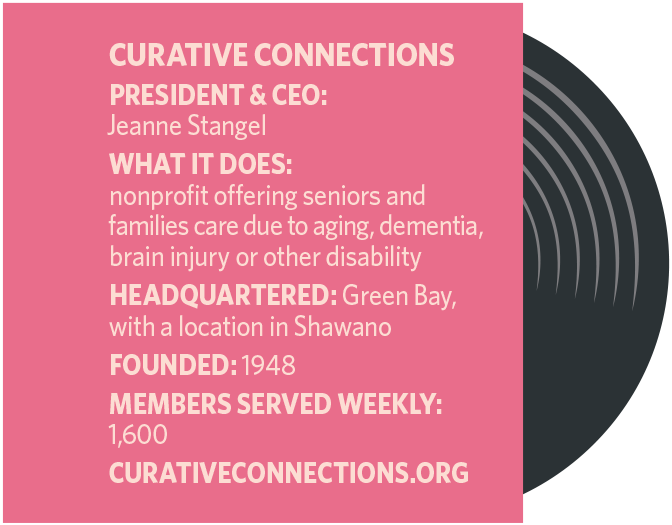
About four years after Michelle’s diagnosis, Bilski was referred to Curative Connections, a Green Bay nonprofit offering support for families with loved ones experiencing dementia, memory loss, cognitive disabilities and brain injuries.
Bilski’s eyes were opened to a new approach to memory care based on dignity, connection and maintaining independence.

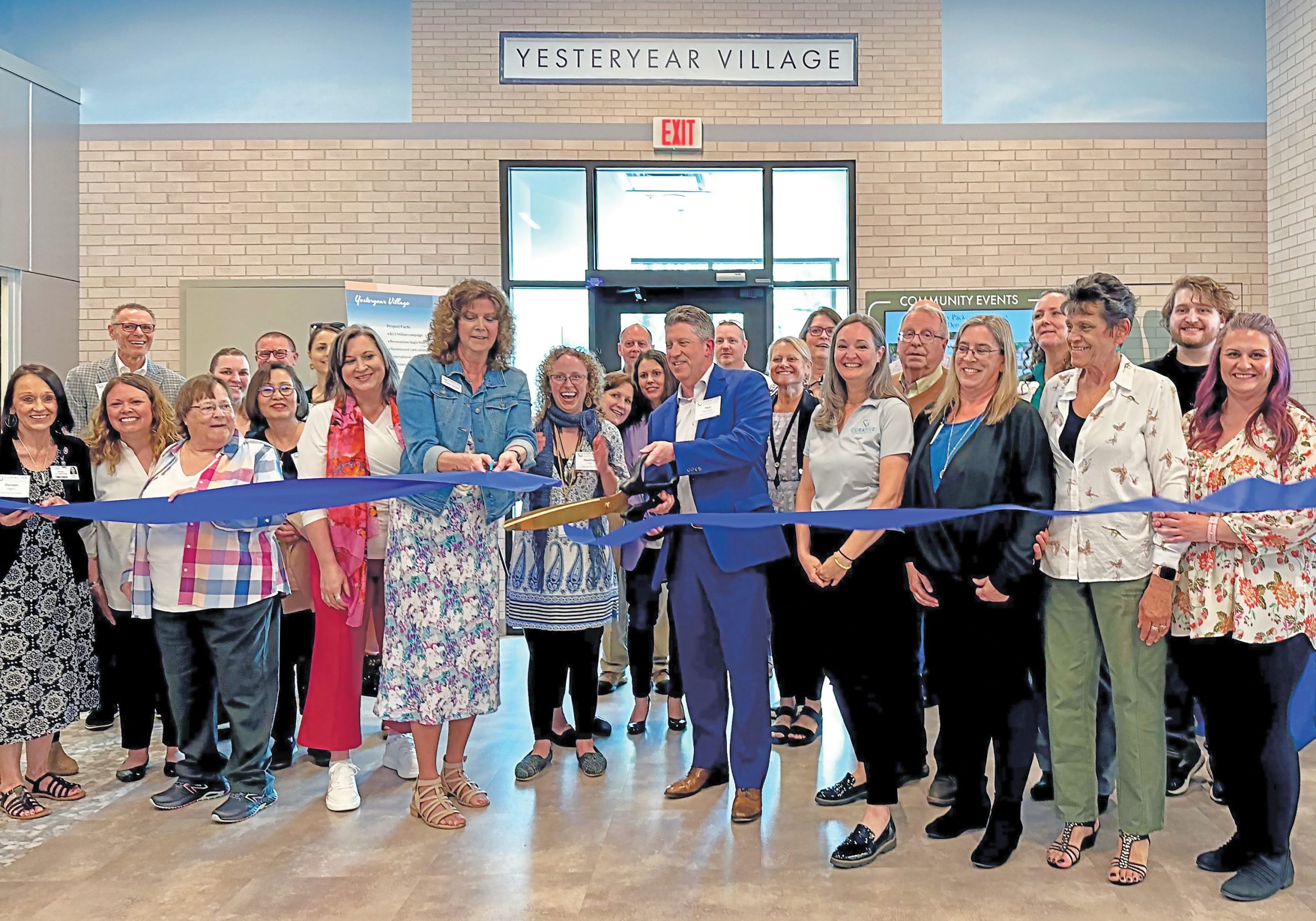
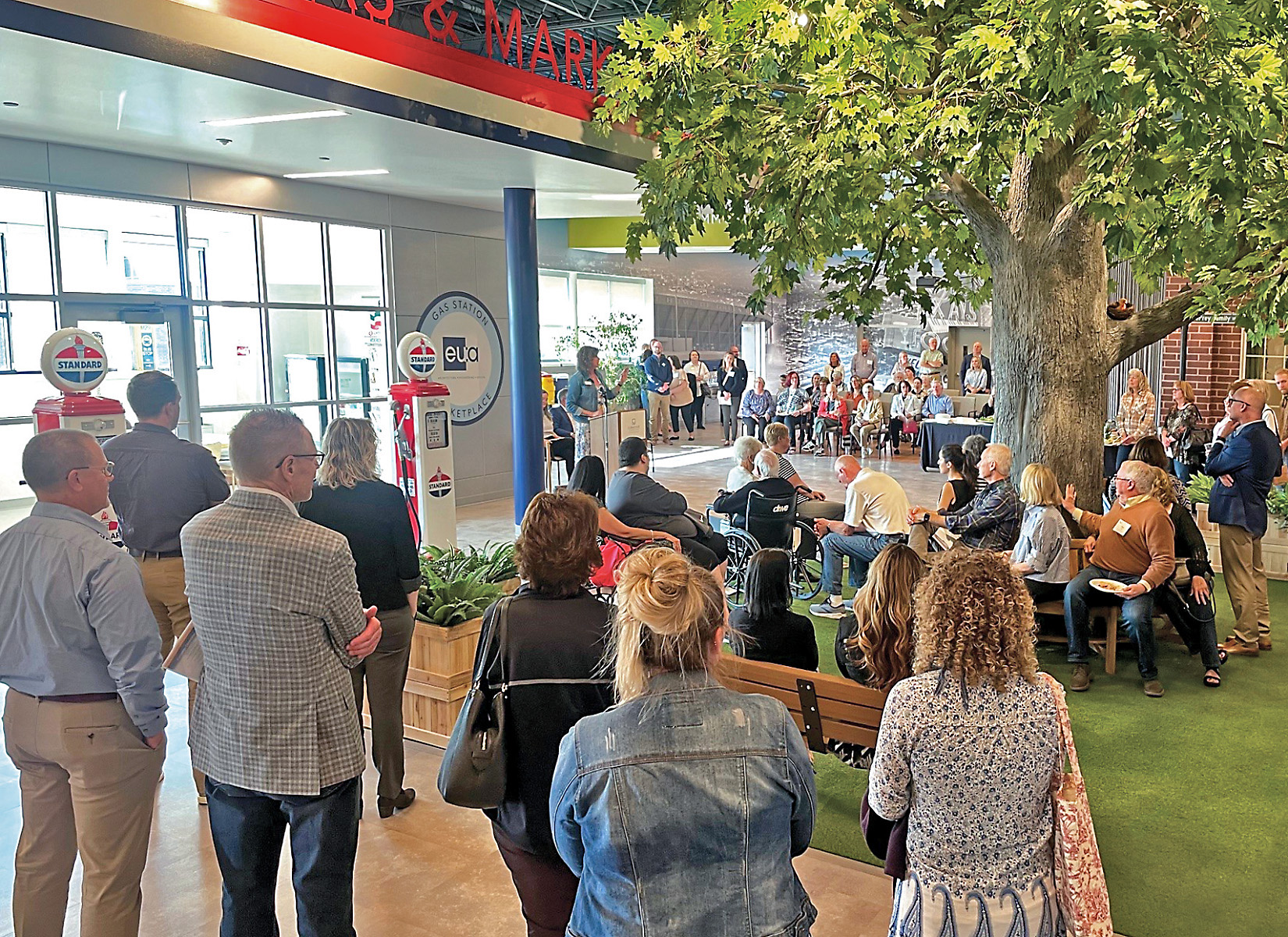
With a history dating back 77 years, Curative Connections debuted its newest evolution in care last year — Yesteryear Village, an innovative concept in reminiscent memory care. This interactive village at its westside location features settings from the past, including a 1960s diner, an old-fashioned gas station and a train car, where program participants (referred to as “members”) can be immersed in a familiar atmosphere. Yearyear Village offers care that aims to trigger memories from its members’ early years, reduce anxiety and encourage freedom of choice and social interaction.
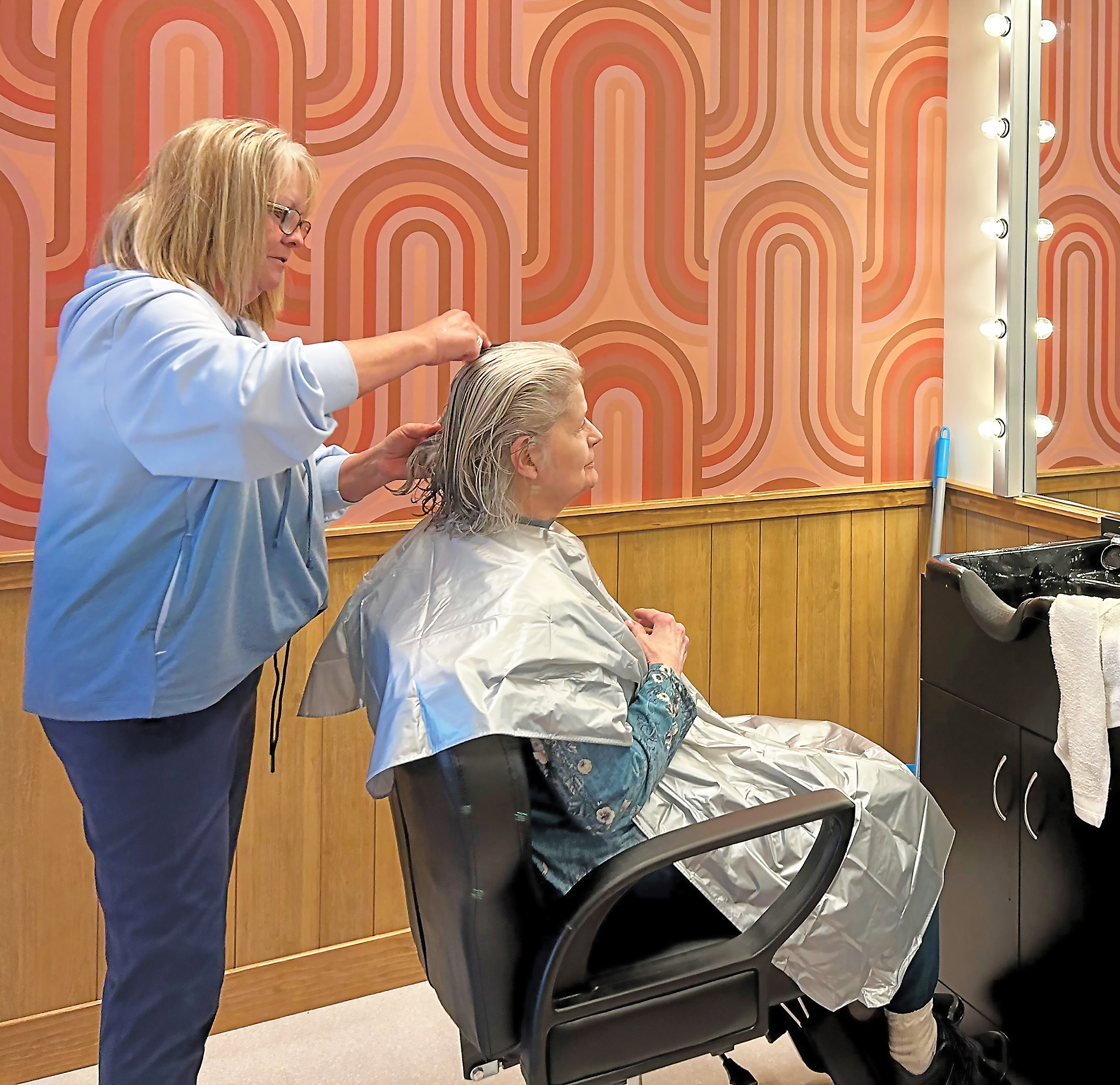
While Bilski and his wife weren’t able to experience Yesteryear Village personally, their experience helped shape the village, which also includes a hair salon — where members can receive services from staff — implemented at Bilski’s adamant recommendation.
Bilski says the safe and controlled environment allows members to move independently and exercise autonomy, validating their experiences and emotions by meeting them where they are.
“America is a culture of correction. We are always correcting people,” Bilski says. “With dementia patients, that doesn’t work. You have to go to their world. It took me too long, but Curative helped me discover that.”
A growing challenge
Inside Yesteryear Village on Green Bay’s westside on a slushy February morning, Curative’s President and CEO Jeanne Stangel can barely walk five feet without a member of the program wanting to chat. Several are baking pies in the diner and want Stangel to see the results of their efforts. One man wants to make sure Stangel knows snow is on the way and to plan travel accordingly. Another member is celebrating her birthday and Stangel is recruited to participate in her birthday song.
“When I think that I’m having a hard day, I get out of my office and I walk down to the program [area] to interact with people like this,” says Stangel, who joined the nonprofit in 2021. “That is why we are here, to make a day special for somebody else. Everybody deserves a good quality of life.”
Maintaining quality of life for individuals with dementia and their caregivers is a major challenge, especially as cases rise and the health care system struggles to keep up.
Curative Connections was founded in 1948 to rehabilitate individuals recovering from polio. Today Curative has two Green Bay locations and one location in Shawano, offering 13 programs around dementia and healthy aging, cognitive and life skills, and care partner support. Dementia and healthy aging services include early memory loss programming and adult day programming, of which Curative is Brown County’s only daytime provider for people with dementia.
Dementia cases in the U.S. are expected to rise significantly over the next several decades as a result of the aging population. In 2024, nearly 7 million Americans aged 65 and older were living with Alzheimer’s, and this number could exceed 12 million by mid-century.
Alzheimer’s is one form of dementia, but there are upwards of 130 different dementias currently identified, Stangel says. In 2021, there were 5,000 individuals over age 65 in Brown County experiencing some form of dementia. By 2040, that number is expected to increase by 105%.
“Of those 5,000 people in Brown County, we deal with about 3% of that population,” Stangel says. “How do we grow with people? Because obviously there’s a lot of need out there.”
Part of that growth involved reimagining the organization’s westside location. Stangel says research into the Yesteryear Village reminiscent care model began more than 10 years ago and was inspired by similar models in the Netherlands, California and Canada. Eight years of research went into planning the project, which revealed how the reminiscent care model reduced anxiety, confusion and agitation experienced by people with dementia.
The interactive care concept is meant to help recall memories from individuals’ earlier lives while offering essential respite care for family members.
“What I really love about this village concept is that it maintains the dignity of adulthood so much better,” says Allyson Crass, Curative’s life enrichment director of adult day services. “It offers all those normal adult activities, including going to the salon or hanging out at the diner. It’s really beautiful, and that’s something that isn’t going to be an experience in a traditional adult day setting.”
It takes a village
Paul Northway, president and CEO of American National Bank Fox Cities, has served on Curative’s board of directors for 14 years. His connection to the organization is a personal one, as he knows individuals who have received the breadth of Curative’s services: his mother-in-law who battled MS and dementia; a former coworker and teammate who experienced a brain injury as the result of a car accident; a classmate of his son’s born with cognitive disabilities.

“We all know those people — we all know a Rosie; we all know a Lee; we all know a Josh,” Northway says. “The need is easy to understand.”
Northway chaired the $3.5 million capital campaign that raised funds to transform the 14,000-square-foot Cloud Family Care Center into Yesteryear Village. The former post office building was purchased in 2006 and offered dementia-specific programs, but it would require substantial renovations to transition into interactive spaces envisioned by the Curative staff and planning committee.
“This has only been done once or twice around the country and in Canada, so it is groundbreaking relative to our area of the country, especially for Northeast Wisconsin,” Northway says. “When someone went out to tour the facility, we were darn near 100% on receiving a gift. Being able to bring people out for tours, that was key.”
The campaign launched in February 2022 with the goal of raising $3 million for the building renovation and $500,000 for an endowment.
“Within five months, we already reached $3.5 million,” Stangel says. “When we finished the campaign, we had raised $5.2 million. We were able then to start an endowment of $800,000 to support what we’re trying to do here.”
The success of the campaign spoke volumes to Stangel.
“To me, that was just affirmation that there is such a huge need for this,” she says.
Walking down memory lane
Today Yesteryear Village is the only reminiscent care adult day program of its kind in the Midwest, says Stangel, who hopes it can be used as a model for other care facilities nationwide.
Construction of the village began in spring 2023, with the environments meticulously designed to align with trends from the late 1960s and early ’70s — the era when today’s members have the strongest memories.
“The whole basis is to focus on when your memory was the sharpest, which is typically between 18 and 30 years old,” Stangel says. “We figured the average age of a person who is [receiving care], turned the clock back and then made it reflective of spaces that they would remember during that time. It takes away that anxiety of being in a strange place.”
Stangel says the environments will evolve as the population continues to age.
“In another 10 years, the diner might need to be a Starbucks coffee shop. The train car might need to be an airplane,” she says.
“We will look at different things as we work through the eras so it makes sense to the people who are here.”
Stangel’s favorite space is at the back of the building in the post office’s original loading dock; it has been transformed into an indoor “back porch,” complete with a swing and lined with windows overlooking an outdoor courtyard and garden, tended to by program members.
Aging individuals often lose the ability to be independent decision makers, but the beauty of Yesteryear Village, Stangel says, is it enables decision-making that is the core of a dignified, adult life.
“In a space like this, there are multiple things going on without it being overwhelming,” she says. “If today you’re just not into it and you want to go sit in the gas station and read a magazine, it gives you that independence to make your own decision in a safe space.”
In the auto garage, members can tinker with car parts and get under the hood of a 1965 Oldsmobile Delta 88 donated by the Automobile Gallery. It also offers other hands-on opportunities for mechanically-inclined members, Crass says.
“We bought a desk for our office off of Amazon. We have to put it together and, in typical programming, that would be something staff would be tasked with,” she says. “But this care model really opened our eyes to the fact that this is an activity in and of itself for our members. We’re doing it with the members instead of just doing it to get it done.”
This month, Curative Connections is celebrating the one-year anniversary of Yesteryear Village’s opening. Stangel recalls the opening day of the village in April 2024. A dementia group, which included a member who had been receiving care at Curative’s adult day center for about two months, was touring the space.
“She was still anxious when her husband would drop her off because she was worried he wasn’t going to come back and pick her up,” Stangel says. “The separation was always a hard transition.”
This day was no different. The member was anxiously awaiting her husband’s return, but this time Stangel took her on a walk through the new spaces of Yesteryear Village to ease her mind.
When they arrived at the passenger train car, everything changed. The member was no longer anxiously counting the seconds until her husband’s return. Instead, she was immersed in memories from her childhood.
“We walked in here and it was like she just became a different person,” Stangel recalls.
The member began telling Stangel how she used to take the train with her mother to visit family in Dallas. She remembered how the chairs would pull flat so they could sleep on the ride, and she recalled games of make believe she played on the way.
“She unlocked all kinds of good memories,” Stangel says. “Actually seeing what this space could do — that’s it. That’s exactly what we’re trying to accomplish.”
Caring for caregivers
Dementia takes a toll on the physical and financial health of the families it affects. According to the Alzheimer’s Association, in 2024 Alzheimer’s and other dementias cost the nation $360 billion. That cost is expected to reach nearly $1 trillion by 2050 as cases rise.
Yet more than 11 million Americans provide unpaid care for loved ones with dementia.
Crass says Curative offers caregivers a sense of balance between their personal needs and caring for their loved ones at a more economical cost than other types of facilities. Day programming is offered at both its eastside location and Yesteryear Village weekdays from 8 a.m. to 4:30 p.m. and costs $7 an hour for private pay. Medicaid and Family Care funds and scholarships can help offset costs for qualifying members.
“There’s this wonderful world between in-home care and long-term care facilities. On average, most people attend two to three days a week for four to six hours at a time,” Crass says. “A lot of people still don’t know that adult day care is an option, and it’s this really unfortunate missed opportunity.”
Supporting caregivers is an essential component to care, Stangel says. Part of Curative’s strategic plan is starting a monthly caregiver academy to connect caregivers on similar journeys and share resources.
“Everybody worries about the person that’s sick or the person that just had the stroke,” Stangel says, “but it’s the caregiver that declines in health.”
For caregivers like Bilski, that proved to be true.
“I discovered I needed help to do a better quality job, and if you want to keep your loved one home longer you’ve got to partner up with an entity like Curative,” he says. “I was able to maintain my wife at home longer by far than I could have if I was on 24/7.”
While the financial burden of dementia is staggering, the emotional and physical toll on caregivers is just as profound. Many caregivers struggle to balance their own well-being with the needs of their loved ones. That’s where support services come in, offering relief and resources that help caregivers sustain their roles without sacrificing their own health.
“Using Curative takes your mind off of it for a while,” Bilski says. “You don’t have to worry; that’s the big thing.”