
U.S. Energy, a U.S. Venture company, is a leader in renewable natural gas (RNG) development and distribution. Across its project network, U.S. Energy is converting waste from dairies, landfills, and wastewater treatment plants into RNG for transportation markets-serving as a cleaner fueling alternative. U.S. Energy is involved in more than 45 RNG projects, with 13 located in Wisconsin, featuring one landfill and twelve dairies.
WHAT IS RNG?
RNG is produced by capturing and converting methane from decomposing waste into clean, usable gas that is injected into existing natural gas pipelines and used as a transportation fuel or thermal energy source.
WHY RNG?
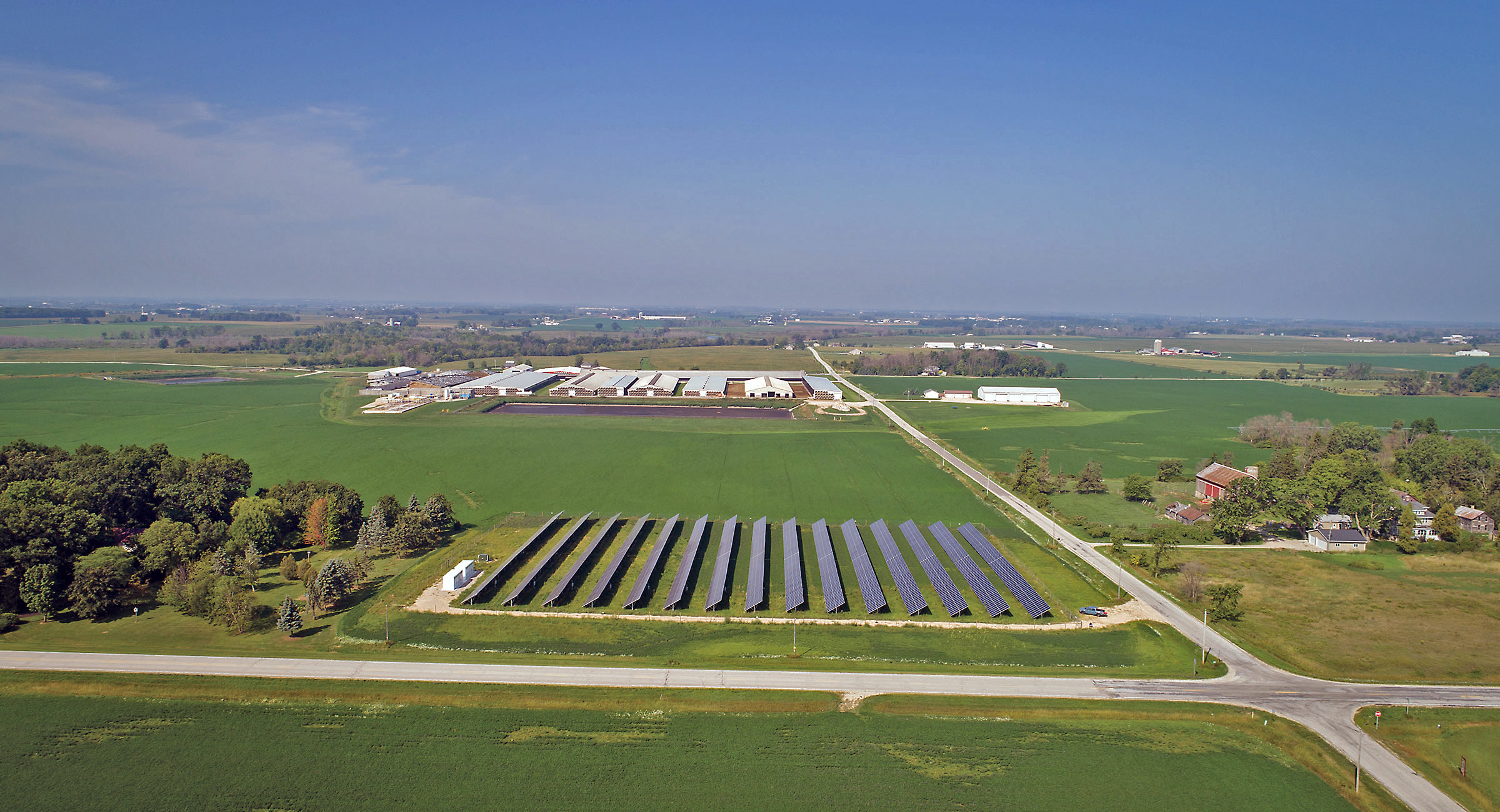
One of U.S. Energy’s RNG sites is at Dallmann East River Dairy in Brillion, WI. Annually, this site produces roughly 470,000 gallons of fuel for the transportation market. Last year, a solar microgrid was installed in partnership with EnTech Solutions, a division of Faith Technologies Incorporated (FTI), another Wisconsin-based organization. The microgrid provides renewable electricity to power the day-to-day digester operations and reduces the reliance on grid electricity, further reducing overall emissions at the site and improving the carbon intensity of fuel produced.
Additionally, onsite combined heat and power (CHP) allows for byproduct heat from natural gas to be diverted to the digester, reducing the boiler heat demands of the facility. The solar and CHP setup is also supported by onsite battery storage, allowing for electricity from both systems to be captured and stored for use during the night and on cloudy days. Excess electricity not used in operations or stored in the onsite batteries is sold back to the local grid.
The Dallmann renewable project launched in March 2023 and continues to reduce the facility’s reliance on grid electricity by over 50%. This initiative reflects U.S. Venture’s commitment to innovative solutions and operational improvements, aiming to replicate its success across the company.
The views and opinions expressed in this article are those of the author and do not necessarily reflect the official policy or position of Insight Publications.