
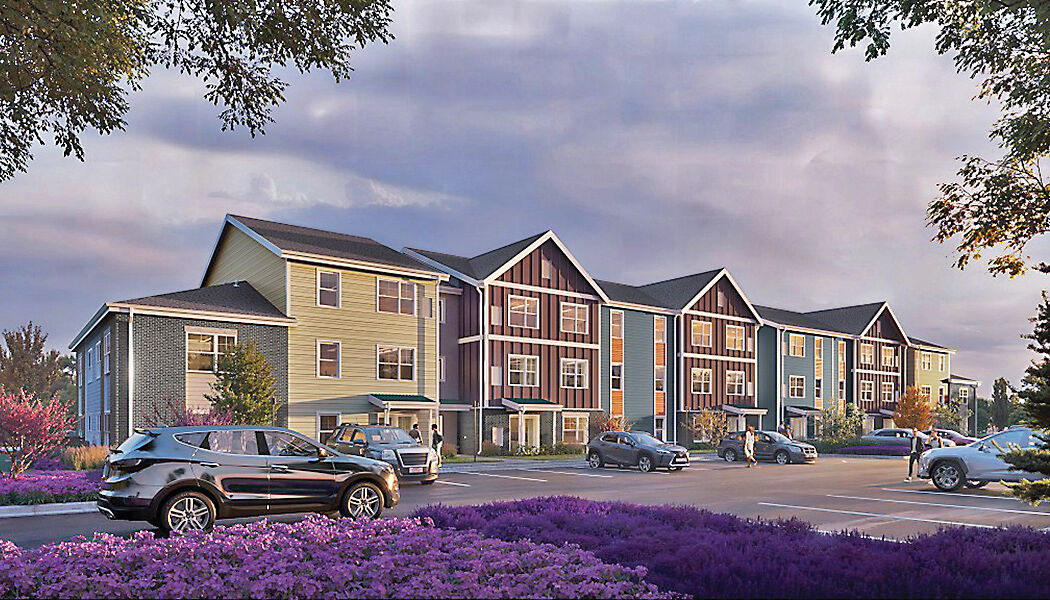
Like many cities throughout Wisconsin, Green Bay is working hard on increasing housing capacity, including affordable housing options to appeal to workers for which area industries are always on the lookout.
“The state in general is still very, very behind in what it needs in terms of housing inventory — all different types of housing,” says Lisa Jossart, vice president of economic development for the Greater Green Bay Chamber. “And we’re starting to see some good activity there.”
While interest rates and other factors pose challenges to developers, there are projects on the move in Green Bay, including the 8-story, mixed-use NOVA project in downtown Green Bay by New Land Enterprises. The project will include 268 units of multifamily apartments, townhomes, penthouses and commercial space on the ground floor.

“We’re doing our best to provide more incentives to developers to move projects forward,” says Matt Buchanan, deputy development director for the city of Green Bay.
One new project includes a mix of housing on 167 acres on the city’s northeast side, including single family, multifamily, duplexes, town homes and some commercial properties. The project, led by KOS Management, will provide some much-needed relief as it will include starter homes, Buchanan says.
“Communities that don’t have the housing available are the ones that are going to get left behind, honestly, because businesses are going to be investing where they can attract and retain a workforce,” Buchanan says.
JBS redevelopment project
On that front, the city is working with JBS Foods on a housing development aimed at helping the company attract and retain new workers. In 2021, JBS donated 26 acres of land between the Walmart Supercenter and the Salvation Army Kroc Community Center. JBS also gave the city a $500,000 grant to develop affordable housing on the site.
The city secured additional grants through the state and is nearing completion of a development agreement with Gorman & Company to build 95 units of affordable multifamily housing in the center of the site, Buchanan says.
“The real vision of this whole area was to provide a range of housing types to support a wide variety of people,” Buchanan says. The idea is to have apartments available for young workers, and there are also sites for town homes and larger multi-generational town homes.
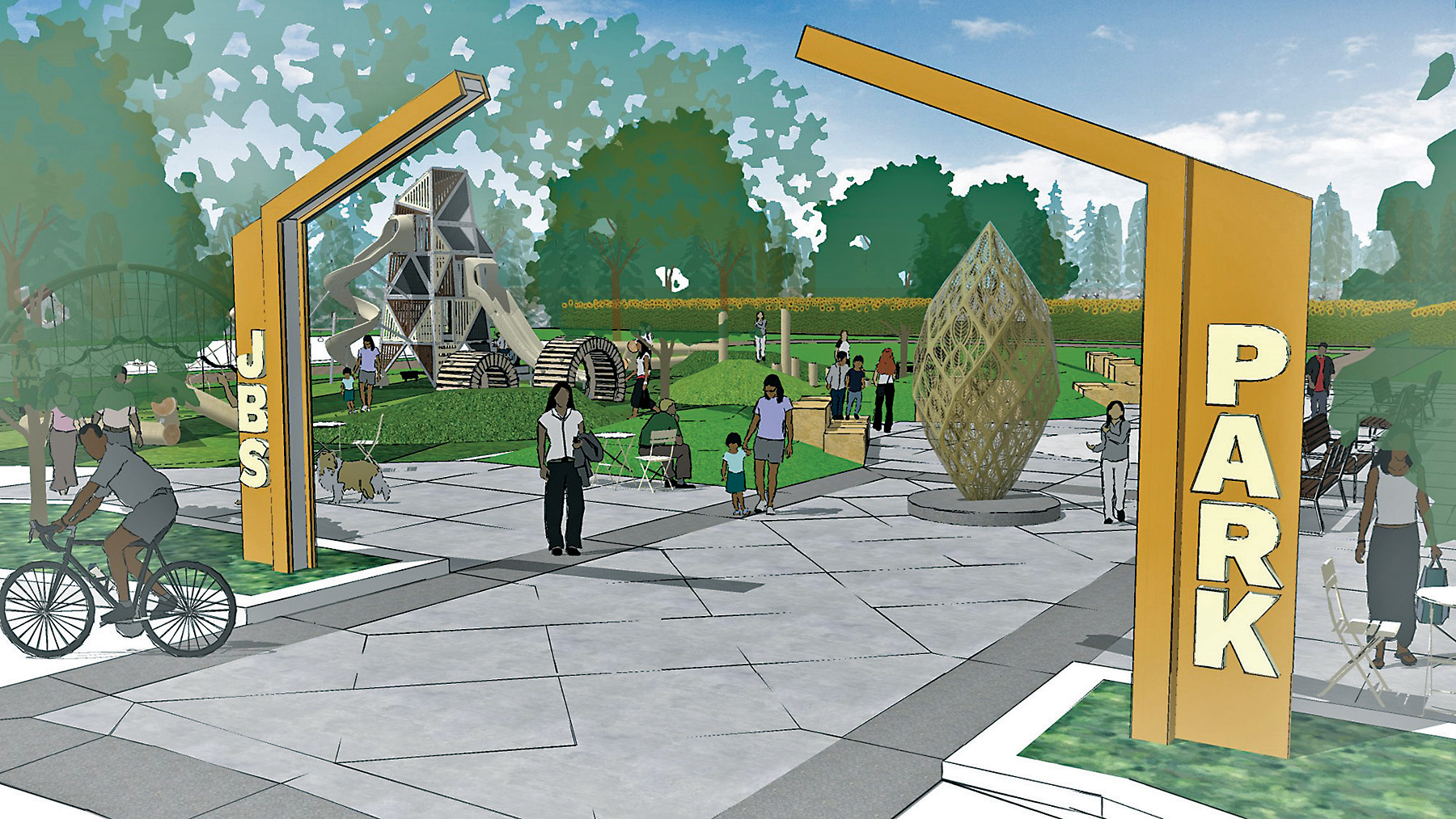
The site also will feature a new community park and an urban farm through partnership with the nonprofit Wello. Other collaborators include nonprofits NeighborWorks and Greater Green Bay Habitat for Humanity.
Community Land Trust
As a new tool to facilitate affordable housing, the city is establishing a Community Land Trust — the first in Green Bay. NeighborWorks is taking the lead on the program.
“What that does is it helps keep that home affordable in perpetuity,” Buchanan says. “So a low-income household would be able to purchase the home for a much more affordable price than it would be if it were a traditional situation. We would look to be using that tool for some of the single-family sites out here at JBS.”
The Community Land Trust is a tool that has been implemented in cities that are experiencing rapid growth, including in Door County, which also has struggled with affordable housing for its tourism industry workforce as land values continue to rise, Buchanan says.
The land trust helps create more affordable housing by locking in the price of the home within a certain range, says Jossart, who was part of the trust advisory group.
“The price is set and it’s kept that way so that it’s helping maintain an affordable housing inventory,” Jossart says. “It’s a great example of public, private, municipal, all kinds of people coming together to help shape it and talk about what would best serve the community.”
The coal pile
The city’s infamous coal pile, which has caused a long-term headache, seems to finally be reaching a resolultion. In May, a $15 million state grant was in danger of expiring because all parties hadn’t agreed on how to proceed, Jossart says. “The clock was ticking and it would’ve been tremendously unfortunate if the community wasn’t able to utilize those dollars,” Jossart says.
Now, the city will have space for additional development along the waterway, “which is precious and still underutilized,” Jossart says.
The city played an instrumental role brokering the deal between C. Reiss Coal and the Brown County Board of Supervisors, which manages the Port Authority. While specific terms are still in negotiation, the deal generally allows for the coal piles to be relocated up north near the Pulliam power plant site close to the mouth of the Fox River in the Bay of Green Bay. The grant is to be used for development of that new port site for C. Reiss’ coal storage operation.
Buchanan says consolidating the coal piles at the existing site eliminates the need for multiple locations and removes coal-related ship traffic from downtown, reducing bridge lifts and easing congestion.
“And then of course, it opens up 35 acres of riverfront land in our downtown for redevelopment,” he says.
The southern 20 to 25 acres of the property would be used for a clean, industrial port-oriented use; the 10 northern acres on that site would become available for a downtown-oriented use. “We really see the riverfront promenade at Shipyard being extended down further south to that site,” Buchanan says.
Shipyard redevelopment
Immediately to the north of the coal pile site, phase one of the city’s Shipyard project is underway, with the riverfront promenade in progress, including docks and kayak launch. Phase Two, a $10 million investment — with $5 million coming from the National Park Service — will include a dog park, biergarten and splash pad.
On the north side of this site, the city is working with Merge Urban Development to build 225 units of housing.