
By Carolyn Dunn
Warnings of baby boomer retirements draining the U.S. workforce have been sounding for years. Now couple that with an increase in early retirements brought on by the pandemic, and many companies have been hit with the inability to fill a large number of open positions. But in Northeast Wisconsin businesses are trying to turn this around by tapping into a new pool of job candidates: those same retirees. Retirees like Terry Anderson of Menasha are stepping back into the workforce, and employers are happy to have them.
In the spring of 2021, Anderson announced he would be retiring from Secura Insurance in Neenah at the end of the year. He had plans to travel, take up new hobbies, volunteer and close out his career as a Secura senior applications administrator. Fast forward to today, and Anderson has time to enjoy the best aspects of retirement, except he isn’t fully retired.
“Very soon after I made my announcement I was asked to stay on in a part-time capacity,” Anderson says. “By continuing to work 20 hours a week I’m able to pass on my knowledge of our systems and more slowly hand over my responsibilities. It’s been a good transition into full retirement.”
Anderson works from home two and a half days a week and says being able to work remotely was a big consideration for him. He says he is grateful for the extra income and is pleased with what his team is able to accomplish.
“I’ve been told that I’m someone who quietly leads and is able to get things done,” Anderson says.
Secura Director of Human Resources Sam Benjamin reiterates that characterization.
“Retirees like Terry have such a wealth of knowledge,” he says. “They carry a deep insight of our technical systems and are able to come in and be up to speed in five minutes.”
Benjamin says Secura works to retain retirees on a case-by-case basis, particularly in areas with more complex systems. He says these employees are great mentors with pride in the business and are willing to help newer employees by passing on what they know.
Be flexible
Jay Stephany, certification director for the Wisconsin Society for Human Resource Management and HR generalist at Network Health in Menasha, says from manufacturing to the service industry, companies are having trouble finding candidates and therefore adjusting their recruitment strategies.
“This has led many employers to look at retirees. We are asking them when they are able to work and how does that fit into their retirement,” he says. “Employers have to be more flexible in order to bring on retirees, but it’s a good idea because here is a group with a great work ethic, institutional knowledge, and are reliable and flexible.”
At Network Health, Stephany says that coming out of the pandemic their succession planning has included having conversations with employees close to retirement to get an idea of their plans upfront. This way, he says, the organization knows what to expect down the road and has a chance to work with employees to retain their institutional knowledge and transition into retirement.
Pass it on
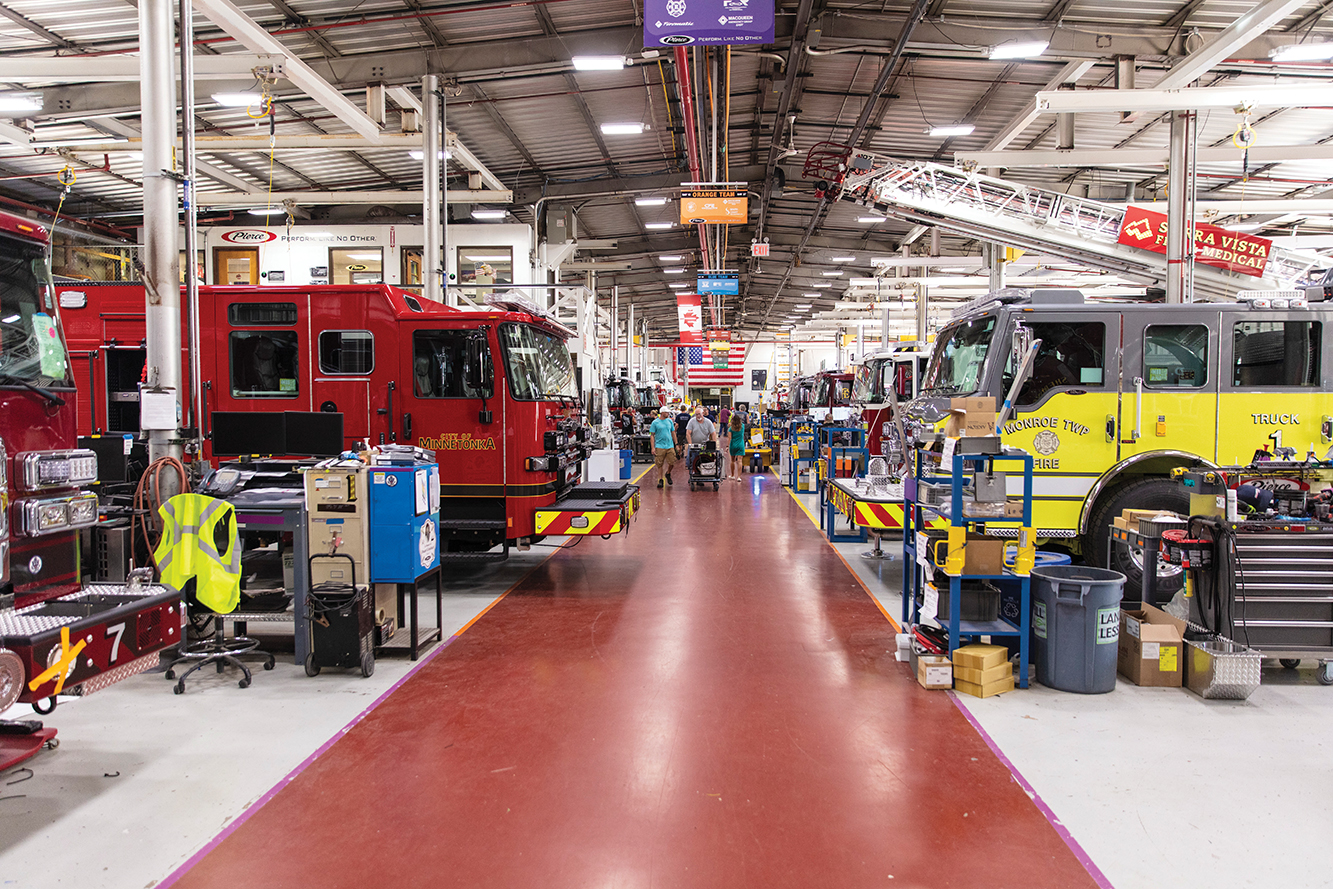
In the last year, Oshkosh’s Pierce Manufacturing has taken its succession planning a step further and established a formal program to retain retirees in key areas. HR Manager Amber Hebbe says that Pierce has begun offering retirees the opportunity to return to the manufacturer as part-time contractors.
“Some of our retirees are attracted to the freedom and flexibility of a part-time schedule,” she says, “and are interested in acting as mentors on the floor.”
Hebbe says Pierce’s human resources team worked with the operations leadership team to review a list of retirees and identify which were go-to subject matter experts and great team members. She says the seven part-time contractors Pierce has brought back so far partner with existing team members and focus on training and knowledge sharing.
“There is more we can do in this area, and we are reviewing our overall retirement options. We will continue to evaluate allowing team members to slowly phase out,” she says. “They are a valued group of individuals that we want to retain.”