

Plastic infuses modern life — from clothing to cars to packaging. It is so ubiquitous that you probably had some at lunch today.
“People are recovering plasticizers in people’s brains and testicles and arteries, so there’s no doubt that humans are ingesting a significant amount of this,” says Gregory Kleinheinz, director of the Environmental Research and Innovation Center at the University of Wisconsin Oshkosh.
While questions remain about the health implications of human plastic ingestion, there has been increasing focus on reducing plastics entering the environment, particularly surface and groundwater — an effort that includes the Council of the Great Lakes Region and the lab led by Kleinheinz.
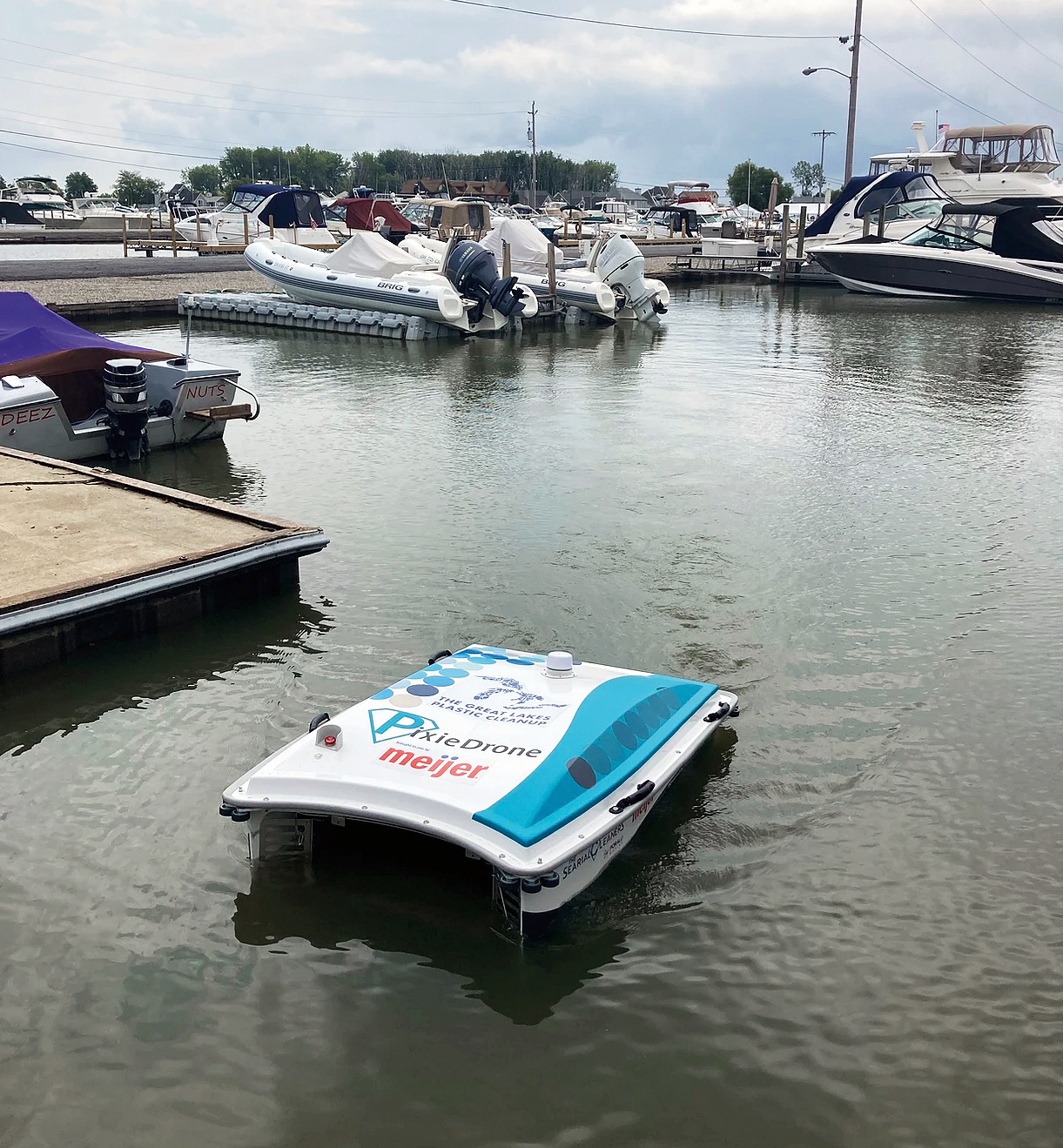
Meijer, a retailer headquartered in Grand Rapids, Michigan with stores in Wisconsin, has helped fund robotic technology for the Great Lakes Plastic Cleanup, which collects and categorizes waste found on beaches and near shore waters.
“The macro debris is being collected and characterized so we can determine what it is because we realize that macro debris ends up turning into microparticles in the water, sand and sediment,” Kleinheinz says.
Collection efforts include using BeBots and Pixie Drones. The Pixies skim debris out of the water, while BeBots comb beaches. UWO students operate them as well as a “trash boat” that collects larger materials such as tires.
“We’re training students here with hands‑on applied learning with real world projects and lessons,” Kleinheinz says.
It’s estimated that 22 million pounds of debris enter the Great Lakes each year and more than 80% of that is plastics, says Ally Walker of the Council for the Great Lakes Region.
“With surface water you don’t have to be Columbo to figure out what type of plastic inputs we have,” Kleinheinz says. “Just look at the number of single use bags, straws, water bottles and all these things that end up in the environment at large. They do break down. For example, water bottles break down to fragments and then plastic particles and then eventually to microplastics.”
He adds that even the clothing we wear, which often contains nylon and polyester, can contribute to microplastics.
“One of the take‑home messages is you can sample almost any water source, whether it’s groundwater or surface water, and you’ll probably find microplastics,” Kleinheinz says.
Though treatment might be cost effective in some cases, Kleinheinz says it often comes down to people’s comfort levels. There is no guidance from the Food and Drug Administration or other federal or state agencies about acceptable or harmful levels.
Kleinheinz says the lab he oversees often works with businesses that seek information about how their products and packaging will break down. They also work with businesses that have significant water inputs and want to have precise water quality data.
Aiming for no microplastics in water is probably not practical since it is so prevalent, Kleinheinz says.
In addition to the problem of plastics’ sheer volume, the systems in place do not typically treat or remove plastics. For example, storm water in Wisconsin almost always flows directly back into the environment unfiltered.
There have been efforts to install gutter bins, which collect trash in stormwater systems and otherwise prevent infiltration. Many larger Great Lakes public beaches have regular maintenance efforts to pick and remove debris.
In Wisconsin, The Great Lakes Water Coalition partners have used BeBots, Pixies, gutter bins and other interception techniques from Kenosha to Door County.
The Great Lakes Plastic Cleanup has removed more than 245,000 pounds of debris since 2020.
“The more we can intercept, the less we find other places,” Kleinheinz says.