
*Photograph by Shane Van Boxtel, Image Studios
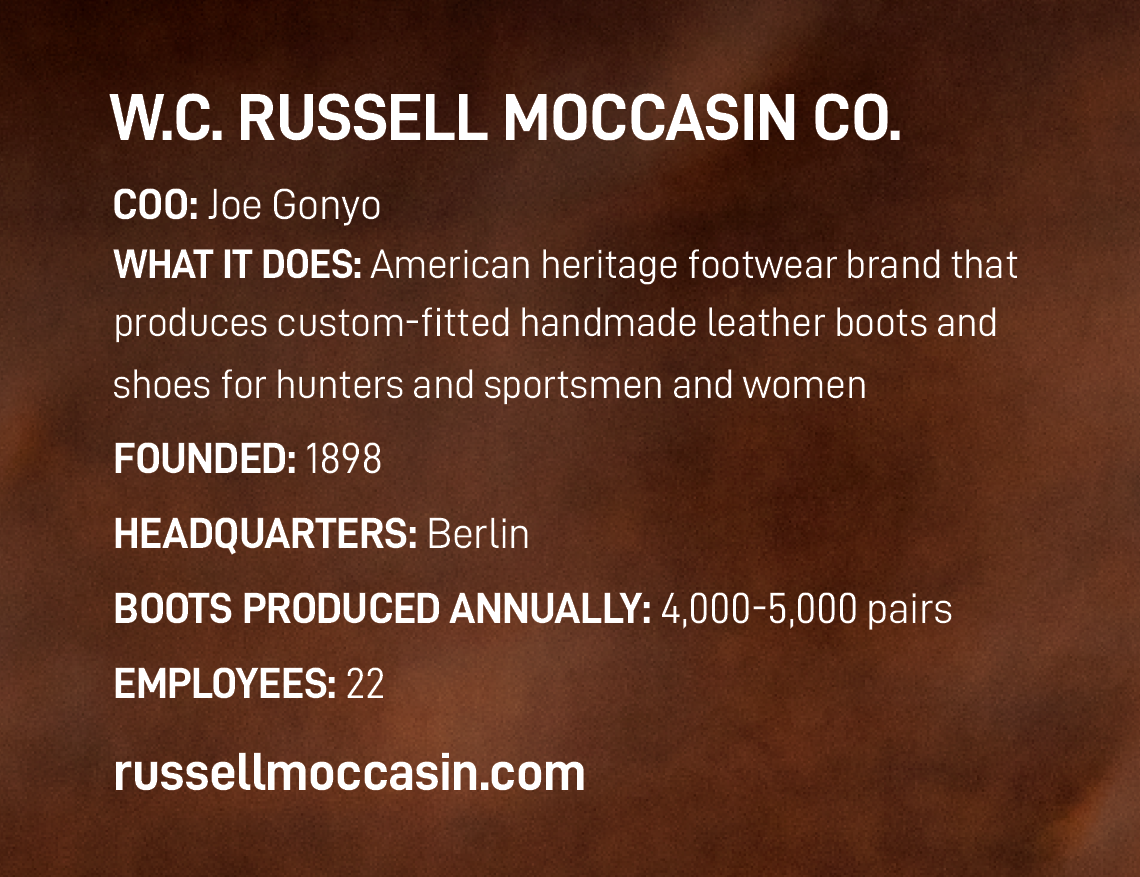
On a quiet street in a quiet Wisconsin town sits an ivy-covered building that’s anything but quiet.
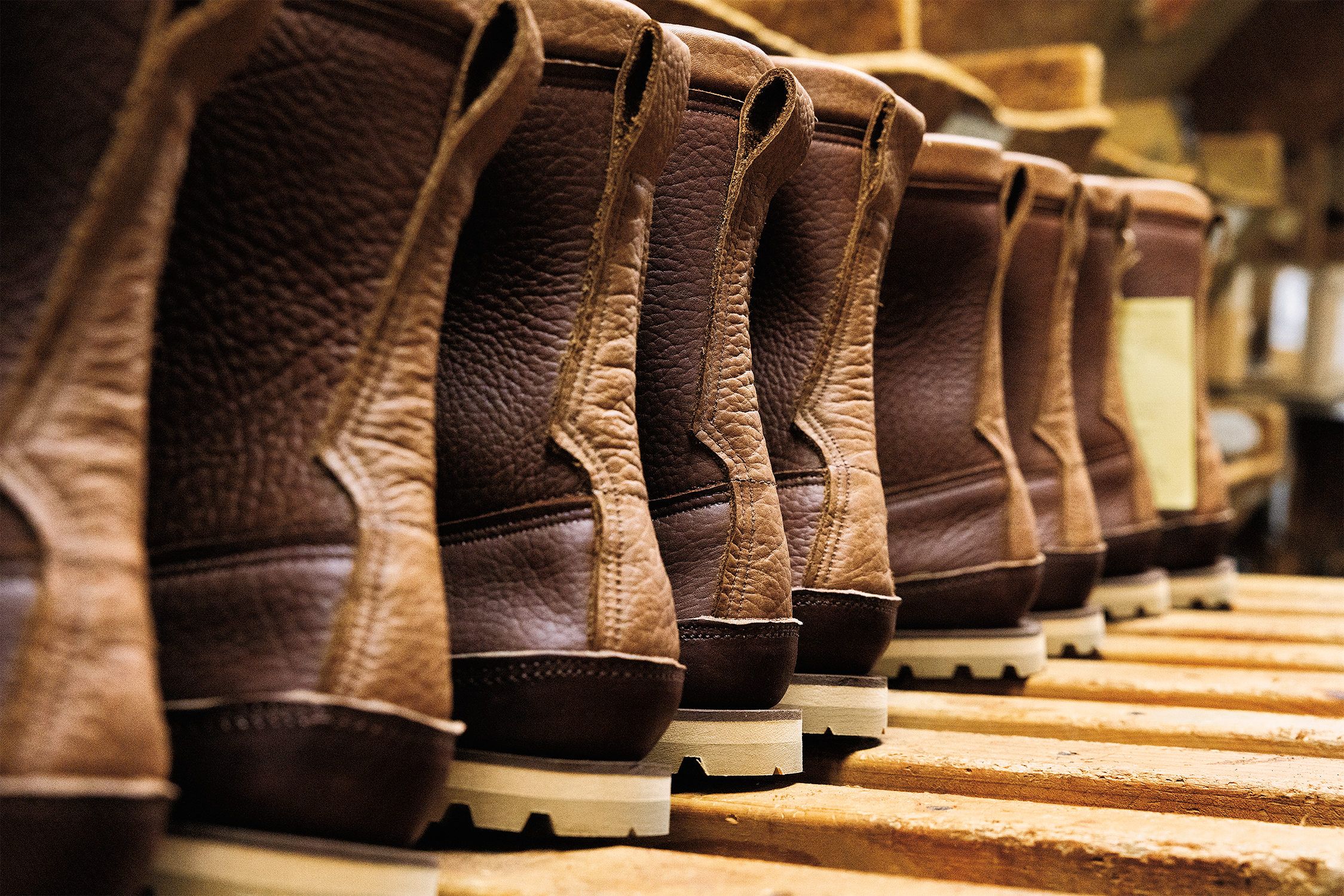
The clangor of hammers and the whir of sewing machines emanate from W.C. Russell Moccasin Company in Berlin, as the craftsmen within handmake custom-fitted leather footwear for a diverse clientele the world over — including game hunters from the company’s birthplace in Green Lake County and hipsters as far away as Japan.
The sounds and smells (even outside the building, the air hangs heavy with the smoky scent of rich leather) beckon a bygone era, a time when one-off production wasn’t just the preferred way — it was the only way.
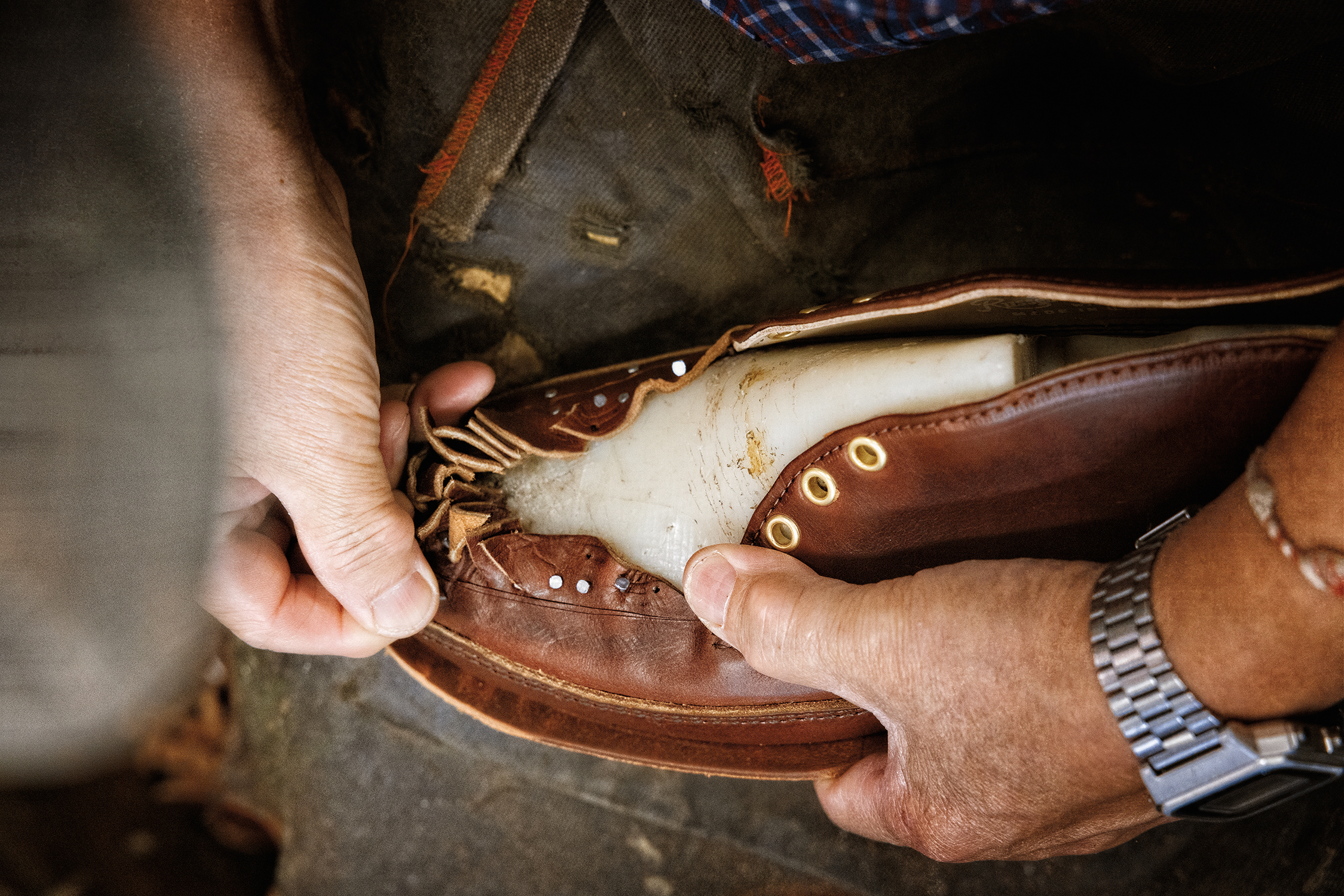
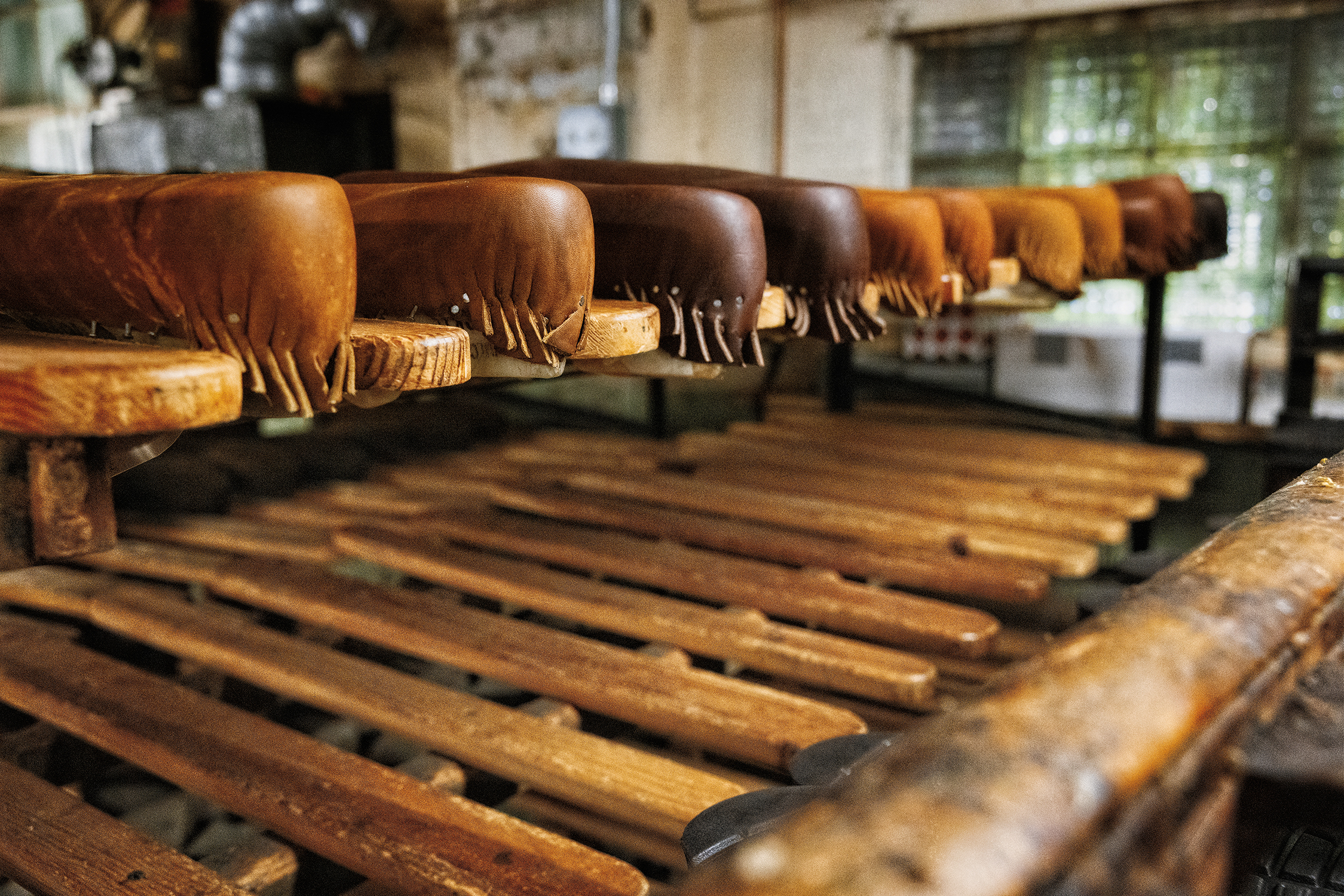
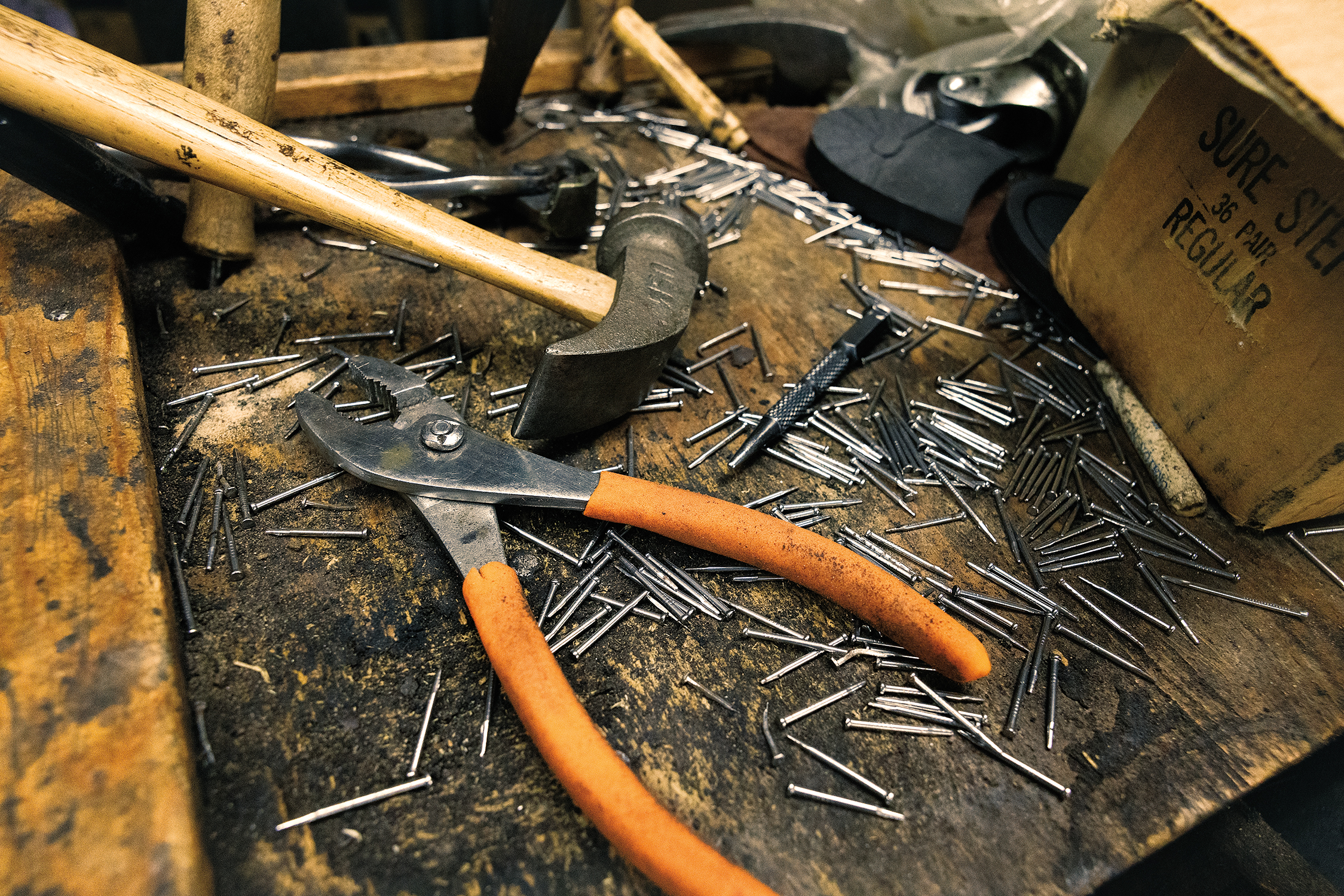
Despite having access to modern-day technology and techniques, boots and shoes at Russell Moccasin are still made the way they have been since the company’s founding in 1898, says Chief Operating Officer Joe Gonyo. Every boot is hand lasted, hand cut and hand sewn to the exact measurements of the customer’s foot, taken either in person at trade shows or the Berlin factory showroom, or submitted in the mail as a hand-drawn tracing.
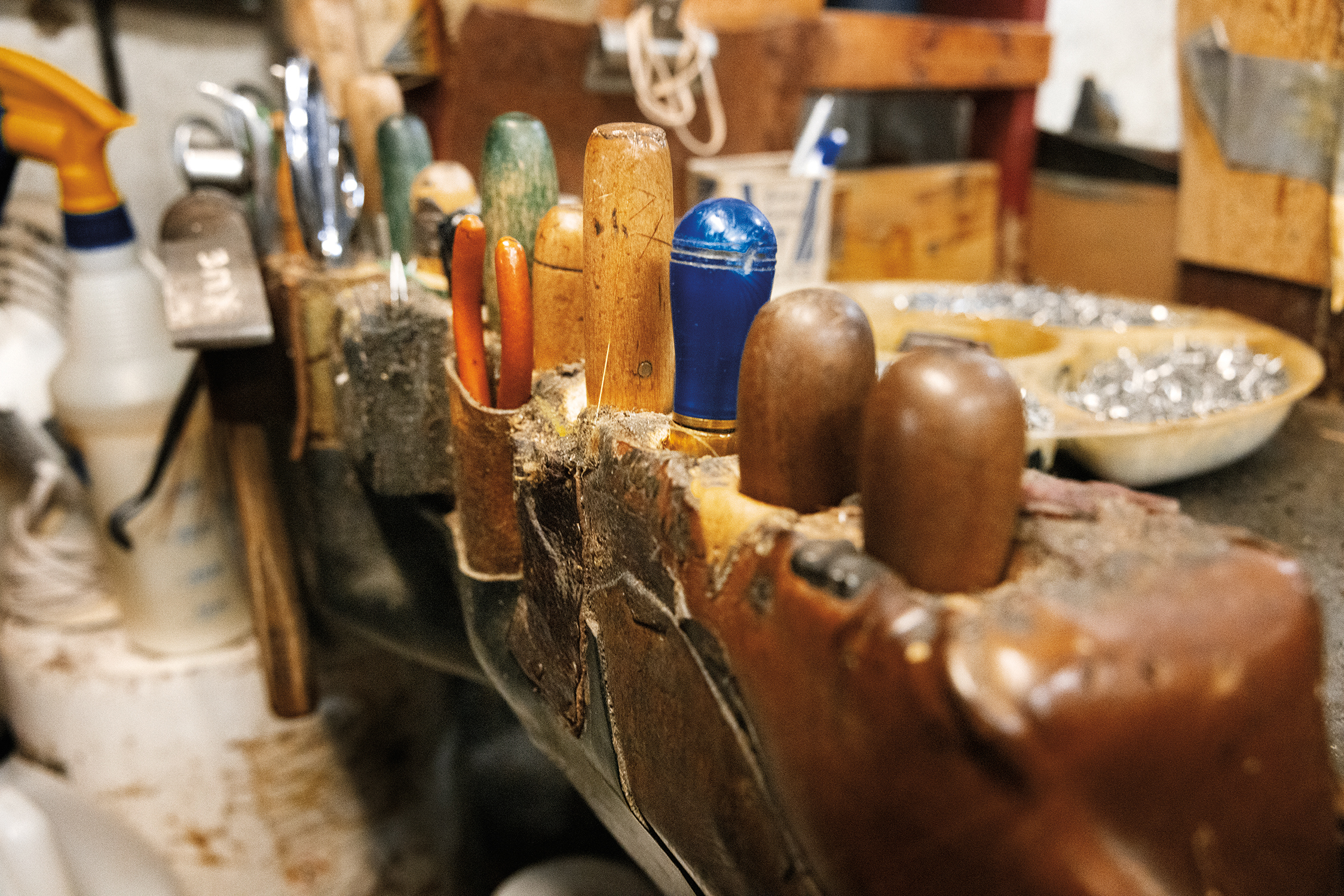
And it’s not only the methods that are traditional. In some cases, the machines and tools used in the footwear’s construction — like Gonyo’s 1880s folding ruler he uses to measure customers’ foot tracings — are just as vintage.
This kind of bespoke craftsmanship flies against the instant gratification culture of overnight shipping consumers have come to expect. Russell Moccasins take time. Current custom orders are being quoted out 12 months.
“I’ve thought a lot about it and there just isn’t a way to speed this up,” says Gonyo, who grew up sweeping floors at his family’s glove factory in Berlin. “They don’t make machines for a lot of the things we do.”
Despite its fondness for tradition, Russell Moccasin still has a few tricks up its sleeve. In August the company sold to two new owners, marking the third major transfer in Russell ownership and a new era for the 124-year-old company.
Luke Kolbie, founder of Kingfisher Leatherworks in Birmingham, Alabama, and Joe Julian, president and owner of Julian & Sons in Heber Springs, Arkansas, became the new owners of Russell Moccasin on Aug. 16. Gonyo remains a 10% shareholder.
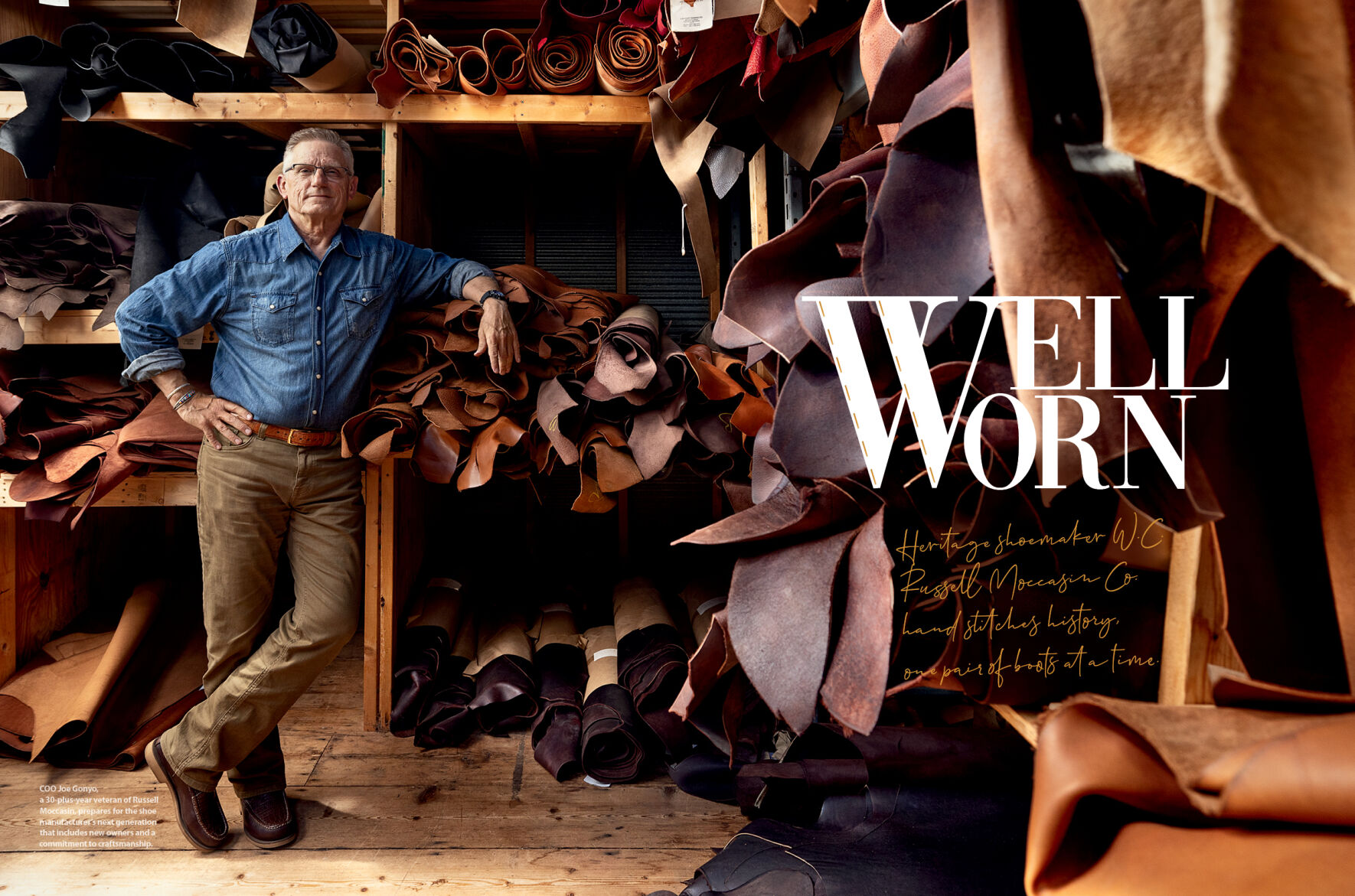
“For me personally, it rejuvenates me. I’m fired back up,” the 30-plus-year Russell Moccasin veteran says. “There’s going to be changes; to say there isn’t would be foolish, but the new owners aren’t missing the point of the history of Russell Moccasin. They aren’t changing what its history stands for.”
Traditions over trends
Russell Moccasin came to life in Berlin along the banks of the Fox River — once a main highway for French fur traders. From the mid-1860s to the 1990s the city was hailed as “the fur and leather city” for its abundance of businesses devoted to the industries.
Charles Russell, a Civil War veteran, moved his family to Berlin after the war and began to learn leatherworking from J.P. Luther, who is credited as the father of Berlin’s booming leather industry. Charles Russell’s sons, William and Frank, got involved in the leather industry and eventually ran their businesses. William bought The Wright Shoe Co. in 1898 and decided hunting boots would be the focus of the newly formed W.C. Russell Moccasin Co.
An avid hunter and outdoorsman, Bill Gustin joined the company as a traveling salesman and, following William’s death, purchased the W.C. Russell Moccasin Company in 1928.
Gustin ran Russell Moccasin for 55 years and was joined in the business by his son-in-law, Ralph “Lefty” Fabricius, in 1956. Up until this August, Lefty, now 92 years old, ran the business with Gonyo and Lefty’s two children, Bill and Suzie.
“My family carried the Russell Moccasin legacy for 94 years,” says Suzie Fabricius, who served as vice president of marketing and sales. “To say there’s only been two owners in 124 years, that speaks for itself.”
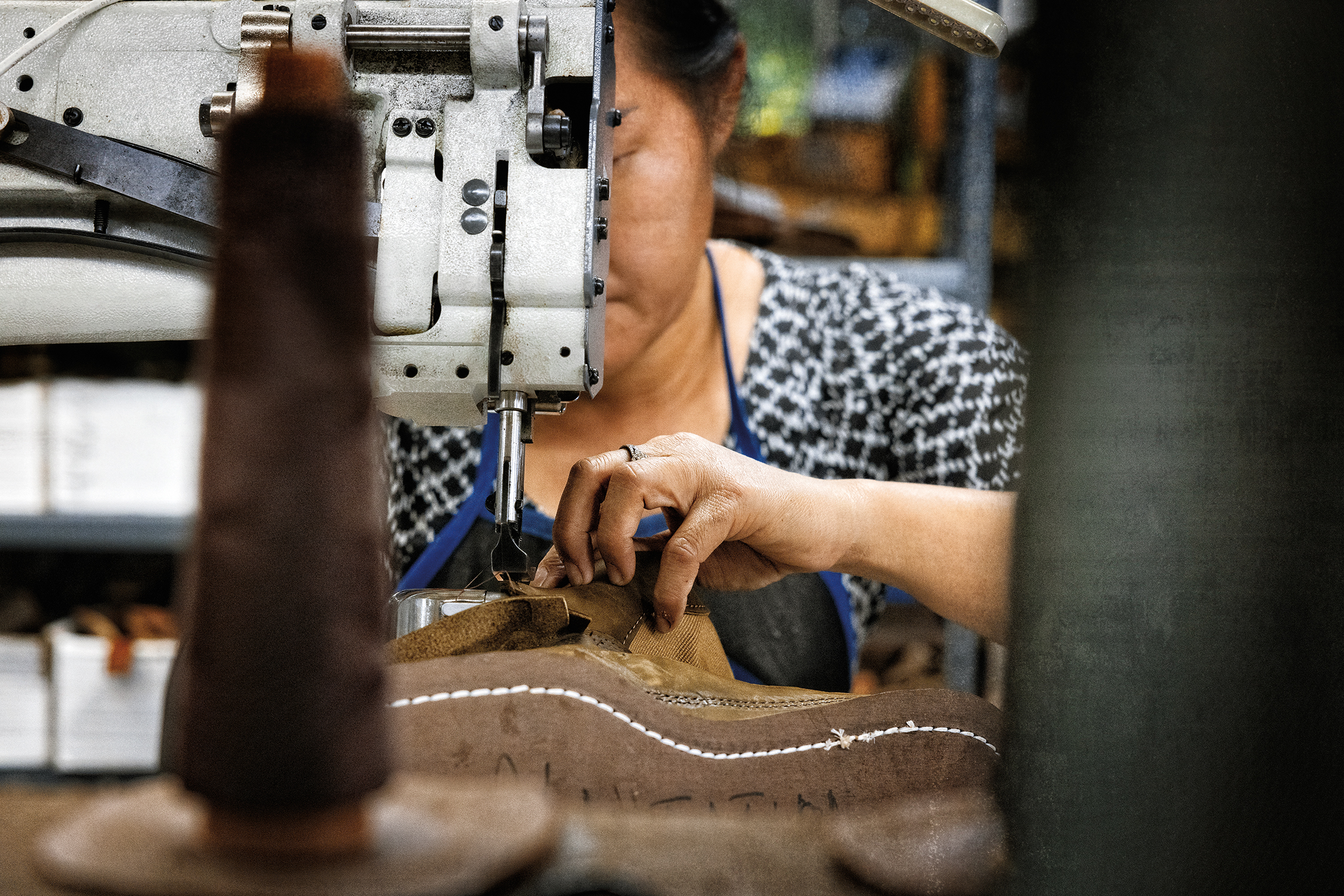
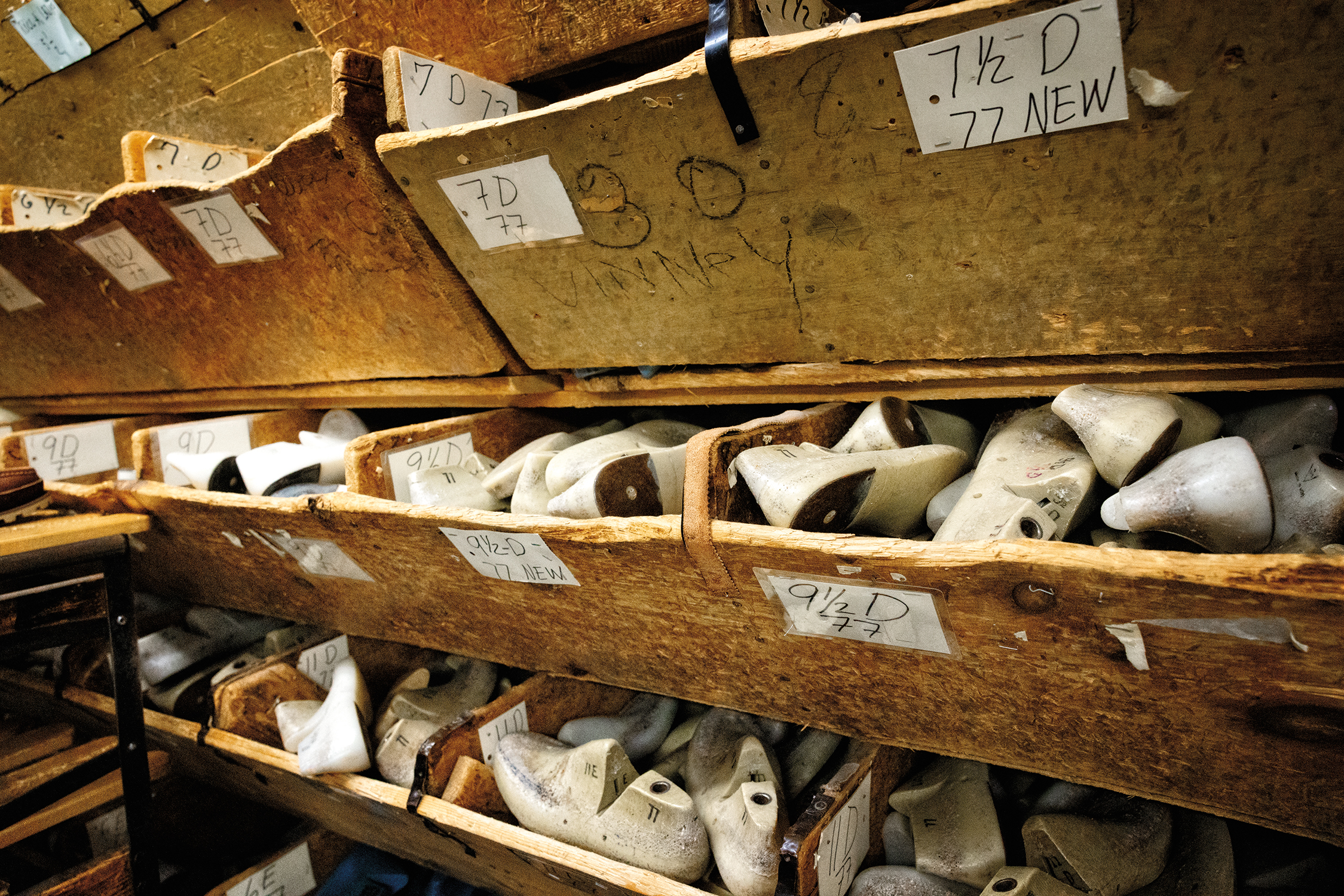
Each pair of Russell boots and shoes is a testament to the company’s legacy. Every pair is hand lasted, which means the leather is stretched over a form called a “last” and built out from there.
“It’s all aesthetic. Each stitch is measured by eye. With moccasin construction, the leather wraps underneath and all around your foot,” Gonyo says. “Your foot is cradled like a hammock in the leather, be it a shoe or boot or loafer.”
Perhaps this commitment to comfort and quality is why, for discerning outdoorsmen and women, owning a pair of iconic Russells has the same pomp as carrying a Chanel bag or driving a Porsche. The shoes have been favored by U.S. presidents, kings, dignitaries and celebrities. Presidents George H. W. Bush and George W. Bush; General Herbert Norman Schwarzkopf Jr.; and King Edward VII have all been customers.

Russell Moccasin footwear is as storied as it is celebrated. It was a pair of Russell Bird Shooters that carried Earl Shaffer through all 2,190 miles of the Appalachian Trail in 1948, making him the first person to complete the trek. The boots now reside at The Smithsonian National Museum of American History. Harrison Ford, who attended nearby Ripon College, is a Russell Moccasin fan and even wore them in some of his films.
Texas is Russell Moccasin’s largest market, with Alabama, California, Georgia and, predictably, Wisconsin rounding out the top five states in number of sales. But Russell is a global icon, and not just for outdoorsmen. Fashion-conscious consumers in Japan have historically been strong customers.
“The Japanese will do Chukkas in different colors; they like a little more wacky look,” Gonyo says.
Bobbie Erdmann, a City of Berlin alderperson and former mayor, says Russell Moccasin’s history in Berlin, in many ways, has helped shape the community.
“Its longevity in the community is something we need to point to with pride,” Erdmann says. “It isn’t often you can boast that you have a community of leather artisans, and these aren’t pictures on a wall. These are living art pieces that people wear every day.”
And just like a fine piece of art, a pair of Russells is an investment. The best-selling Chukka, a hybrid between a sport oxford and a regular boot, starts at about $350. Russell’s signature South 40 Bird Shooters cost close to $700, and a premium pair of alligator boots will set you back about $2,000.
“It’s going to cost you,” Erdmann says, “but you won’t have to buy them again. They last for as long as you do.”
Conservation through craftsmanship
One of the hallmarks of Russell Moccasin footwear is its durability. In 1910, one of Russell’s master craftsmen, Teofil Luzinski, invented the overlap seam in which the toe piece overlaps the vamp and is hand sewn together with a double-lock stitch.
“Each stitch is locked into itself, so if you break a stitch it won’t unravel like if you break a stitch on a shirt,” says Gonyo, who has seen boots as old as 50 years come through the company’s repair department for resoling.
In the current fast fashion landscape the idea of an heirloom shoe is a bit perplexing, but Erdmann can confirm this as fact. Her husband, Lee, owned two pairs of Russells: a hunting boot and a pair of Chukkas. These boots accompanied Lee as he traversed waterways from the Boundary Waters region to 170 miles of the Yukon River.
“My husband passed away at the beginning of this year. He and our youngest son, Terry, wear the same size shoes, so guess where they are,” Erdmann says. “Terry’s got his dad’s boots.”
Luke Kolbie, who serves as Russell Moccasin’s new CEO, is himself a fourth-generation Russell Moccasin wearer. His great-grandfather owned a pair of boots that his grandfather still wears today. Kolbie once brought the boots into Russell for repairs and Lefty aged them at over 70 years old.
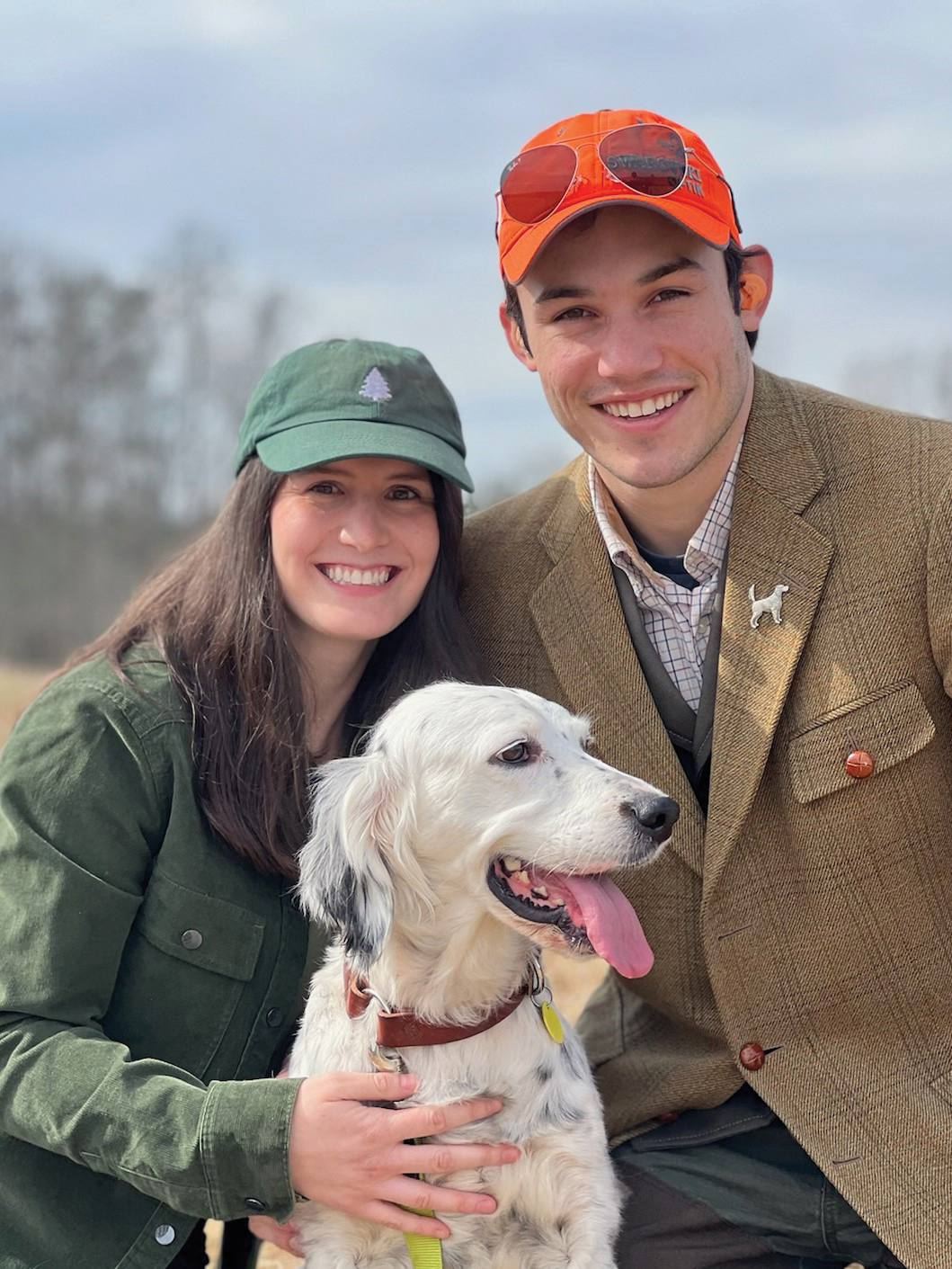
“That’s unheard of in a pair of shoes: to still be used after 70 years of constant use,” Kolbie says. “That kind of history is one of the reasons I was really interested in the company.”
Conservation through craftsmanship is a philosophy that has been guiding Kolbie since he founded his first business, Kingfisher Leatherworks, in 2011. Kingfisher specializes in handmade leather cases, bags and belts which are made by a team of four craftsmen in Illinois.
“A lot of how we treat our natural resources is viewed as making something that we can recycle or is biodegradable, or solving the problem once we have the problem,” Kolbie says. “Conservation through craftsmanship focuses on the front end. When you design a product, it’s designed so it can be repaired; it doesn’t have a planned obsolescence.”
An appreciation for finely crafted, sustainable products has growing cachet among young consumers, which is good news for companies like Russell Moccasin. Earlier this year, a First Insight and Baker Retailing Center at the Wharton School of the University of Pennsylvania report found that about three-quarters of Generation Z consumers favor sustainability over brand name, and nearly 90% are willing to pay up to 10% more for sustainable products.
And at only 23 years old, Kolbie can confidently speak to what the TikTok generation might find appealing about a pair of $700 boots cobbled by hand in Berlin, Wisconsin.
“It starts in small details,” Kolbie says. “You have to design it so the things people never notice are the things that add that longevity to the product.”
A new era
Style, substance and a streamlined approach will rule W.C. Russell Moccasin’s new era under Kolbie’s leadership.
Kolbie will be leading the overall business direction, vendor relations and scheduling trade shows. Gonyo remains COO, managing employees and overseeing day-to-day production. Russell’s second new owner, Joe Julian, will be less involved in daily operations, Kolbie says, but will offer guidance on employee training and development.
Suzie Fabricius says the Russell Moccasin team has known Kolbie and Julian for years through their interaction at industry events like the Southeastern Wildlife Exposition, where the business owners originally met.
“Luke reminds me of my grandfather who bought the business in 1928. He’s a young Bill Gustin. He’s super smart and an old soul,” Fabricius says. “He’s the perfect person to take over the Russell legacy.”
While many aspects of Russell will continue in its established tradition, Kolbie says there is room to create more efficiency within the business, especially in its custom end. Currently, Russell operates three ends to the business. Its dealer end, which Gonyo estimates is 45% of the business, delivers standard size products to retailers. The custom end, at 55% of the business, is the largest. The repair end makes up a small portion.
The ability to customize orders is a huge part of the Russell experience. Customers with very large or small feet, extra wide or narrow calves, high insteps and bunions have all found refuge in Russell Moccasin shoes fitted precisely to their unique needs. Kolbie says the custom end will remain a large part of the business, but he does plan to streamline offerings for greater efficiency.
Right now, Russell offers upwards of 120 different shoe models, in about 50 different leathers and 20 different soles, with various other customization options.
“If you do the math on that, there are infinite possibilities. By limiting those and choosing the best for different applications, we can provide customers more clarity on why they might want different things,” he says. “Also by cutting down on the overlap, we can cut down on the backlog of orders.”
Another area of focus in Russell’s new era will be developing a future workforce. Labor shortages take a unique toll on Russell Moccasin, which depends on highly-skilled craftspeople trained in specific techniques. It typically takes Russell bootmakers between six months and a year of experience before they are consistently creating sellable product. In other words, Russell’s investment in its employees is huge.
“This is not just skilled work; this is [art],” Kolbie says. “When you get to the level of our bootmakers you are a master at something. We want to make it a worthwhile occupation for those doing that.”
Investing in national recruitment, training and employee development with mentorships and apprenticeships is the way Kolbie plans to do that.
“Expectations about the workplace change over time,” Kolbie says. “To an extent, to get the best talent, Russell has to change a little bit to attract those folks.”
Two things that won’t be changing? The company’s location and handcrafted production.
“I don’t want to ever move the company out of Berlin, Wisconsin. Once you do that, you lose a heritage and history that can’t be replaced by whatever you’re gaining by going somewhere else,” Kolbie says. “We are committed to maintaining Russell and making sure that it won’t lose its identity like so many brands have.”
Because of the business’ sale, things for Gonyo personally look a little different, too. Despite planning an imminent retirement, the infusion of young blood into the business has made him rethink his plans.
“I’m excited about being at work. I can see the change,” he says. “I called my wife and asked, ‘Honey, do you mind if I work a little longer?’ and she said ‘Sure, I know you love the company.’”
Turns out, he isn’t the only one.
“This isn’t just an investment for [new owners] Luke and Joe,” Gonyo says. “It’s the love of having a company with this kind of heritage.”