
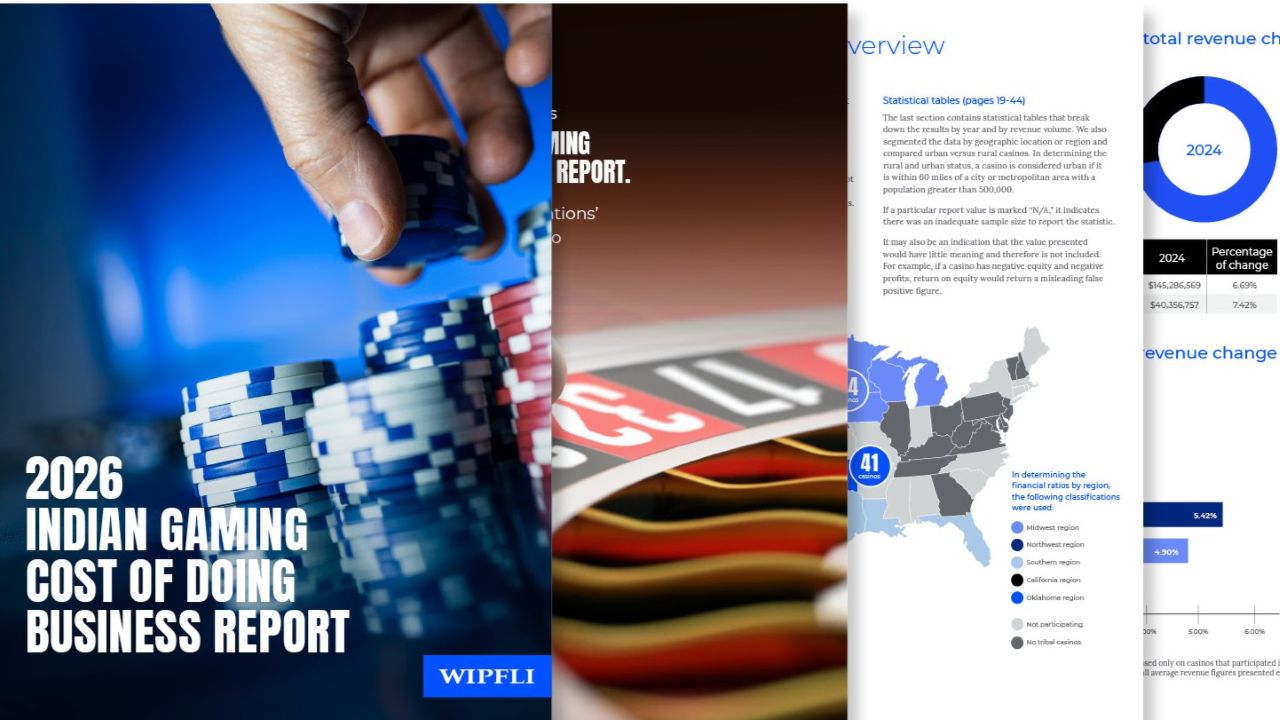

Tribal casinos generated strong revenue growth in 2025, with average casino revenue increasing by $14 million, or 16%, year over year.
However, rising operating costs and ongoing inflationary pressures limited profitability gains, according to Wipfli’s 28th Annual Indian Gaming Cost of Doing Business Report.
Based on survey responses from 113 tribal casinos across 18 states, the report found that average operating expense margins increased from 73.59% to 74.50% of revenue, contributing to a decline in average net profit margins from 26.12% to 24.50%.
Despite margin compression, tribal gaming operations continued to outperform many sectors of the hospitality and entertainment industry. The report found that approximately 25 cents of every revenue dollar remains available to support tribal government programs, community services, infrastructure investments and economic development initiatives.
The report identified several key trends shaping tribal gaming performance:
- Gaming revenue continued to grow, driven by strong customer demand and slot machine performance.
- Operating costs increased, putting pressure on profitability despite higher revenues.
- Performance gaps widened between urban and rural properties and among top-performing casinos.
- Marketing investments became more efficient, aided by data analytics and emerging AI capabilities.
- Balance sheets remained healthy, allowing many tribal casinos to continue reinvesting in their operations and communities.
The report also highlights several issues expected to influence the future of tribal gaming, including unregulated prediction markets, pressure on discretionary spending, strategic capital reinvestment decisions and the ongoing importance of balancing technology investments with high-touch guest experiences.