

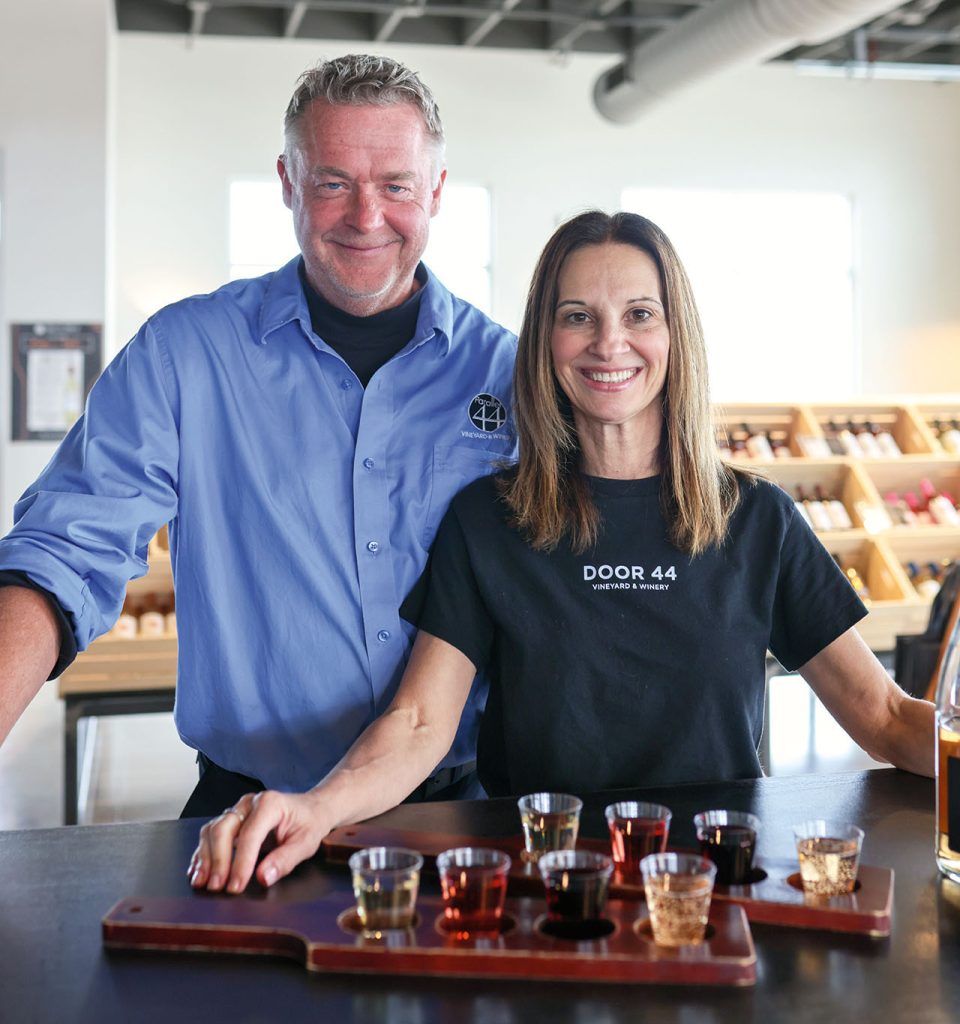
In the wine world, sometimes frustration can lead to an unexpected style or brand of wine, says Steve Johnson, co‑owner of Parallel 44 Vineyard and Winery.
It happened during 2009 when Johnson and his wife and co‑owner Maria Milano were developing their third vintage. The cooler‑than‑average summer meant the Frontenac grapes harvested that year were just a bit under‑ripe.
“I wanted to use that Frontenac,” Johnson says. “We were growing to make a deeper, bolder red, and I just knew that with the lack of heat I wasn’t going to be able to do that.”
A bit of research turned up a story about Zinfandel in the 1970s in California during another relatively cool summer, he says. “Zinfandel growers were like, ‘well, it’s a lost year, but let’s pretend it’s like a white grape,’” meaning it was fermented slowly, leaving some residual sugar, and pressed lightly to give it a pink hue. The rosé White Zinfandel eventually became the No. 1 style of wine in America for about 10 years, Johnson says. He decided to try it with the Frontenac.
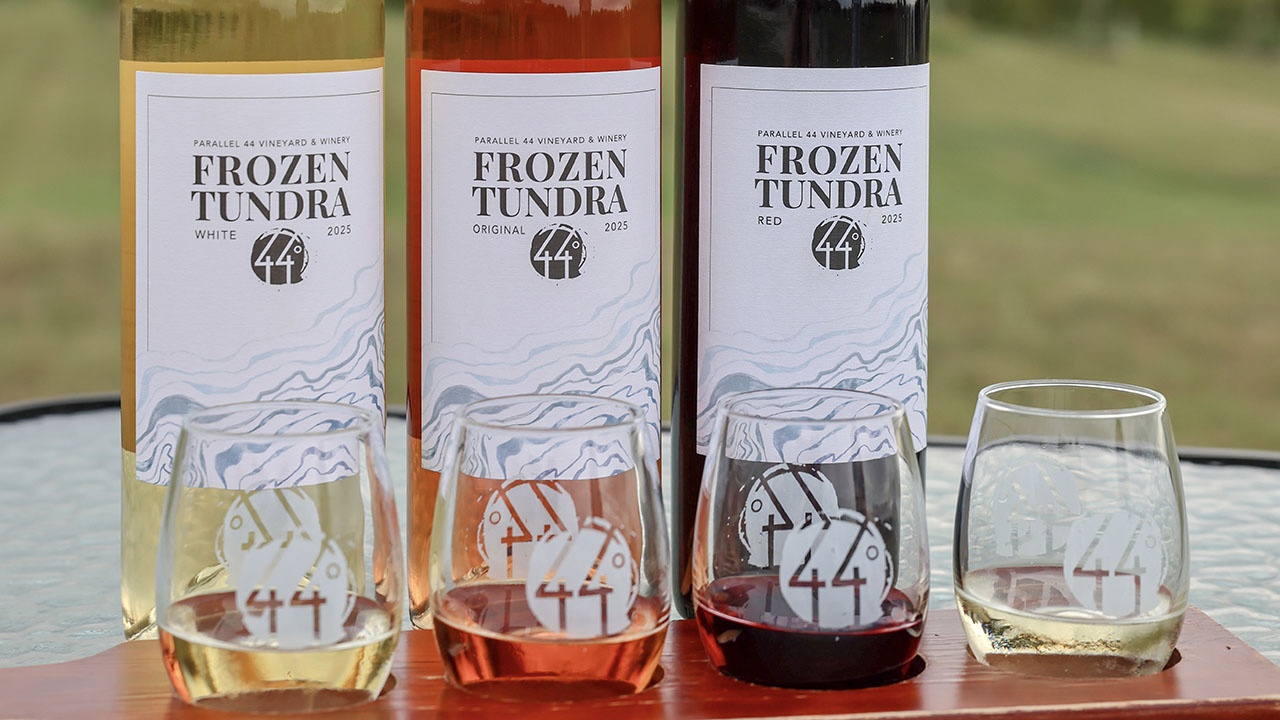
“I didn’t know what to expect, other than when I came back the day after I started fermentation, I smelled what I thought was strawberry shortcake being made in the office,” says Johnson, who learned that slightly underripe red varietals tend to make the best rosé wines. The new sweet/tart wine needed a name that evoked a sense of place, and “if we ever had a nationwide audience, if I said the word ‘Frozen Tundra,’ everyone would know what I’m talking about,” Johnson says.
 In its first year of production, Parallel 44 made 2,500 bottles of Frozen Tundra Rosé; the winery now produces about 50,000 bottles of all three varieties of the wine, including red and white versions. All three have won awards, including the semi‑sweet Frozen Tundra Red, which was one of only 33 out of 900 international wines to receive a Platinum medal in The Winemaker Challenges in San Diego in 2019. The Frozen Tundra White is now the winery’s most popular and best‑selling white wine.
“What I thought was first just sort of a lost year turned into wine that I think kind of got us on the map,” Johnson says.
Frozen Tundra wines are fully grown in Wisconsin, with Parallel 44 working with seven growers across the state.
“The reality is that we’re in a relatively cool climate when it comes to wine growing, which leads to grapes that have lower sugars … So Mother Nature was kind of teaching me what is going to be the best representation of this area,” Johnson says.
While Parallel 44 aspires to expand beyond the borders of the state, that’s still on the horizon. “We actually have taken it down to several wine shops in Chicago, and the proprietors there loved it … but they said it’s tough territory to sell what’s viewed as a Packer product in Chicagoland,” Johnson says.
The winery now produces about 30 different wines, including the Frozen Tundra, for about 120,000 bottles in total.
Parallel 44’s first vine went in the ground May 1, 2005, with the winery opening in May 2007, and its current facility opening in 2019.
The company name was inspired by an article about Bordeaux and Tuscany wines that noted that geographic location is key to quality wine, particularly the area between the 43rd and 45th parallels.
“I ran to my son’s room and looked at the globe, and saw 44 actually runs through Green Bay,” Johnson says. “So I said, ‘Let’s call it Parallel 44. We’ll make different wines than [Bordeaux and Tuscany], but it will evoke a sense of place, which is what wine is all about.”
On the web: 44wineries.com