

Jerry Miller had spent the last decade working on electrification projects for the U.S. Navy. Four years ago, he was brought to U.S. Energy, a division of U.S. Venture, to diversify the company’s electrification portfolio.
There, he developed an idea for a portable, off‑grid electric vehicle charging solution that could sidestep the utility delays, capacity constraints and infrastructure costs that have slowed EV adoption across the country.
“I mean, I thought it was a good idea,” Miller says. “My dog also thought it was a good idea.”
That idea led to the creation of Volt Vault, which has been growing its fanbase since its 2024 launch.
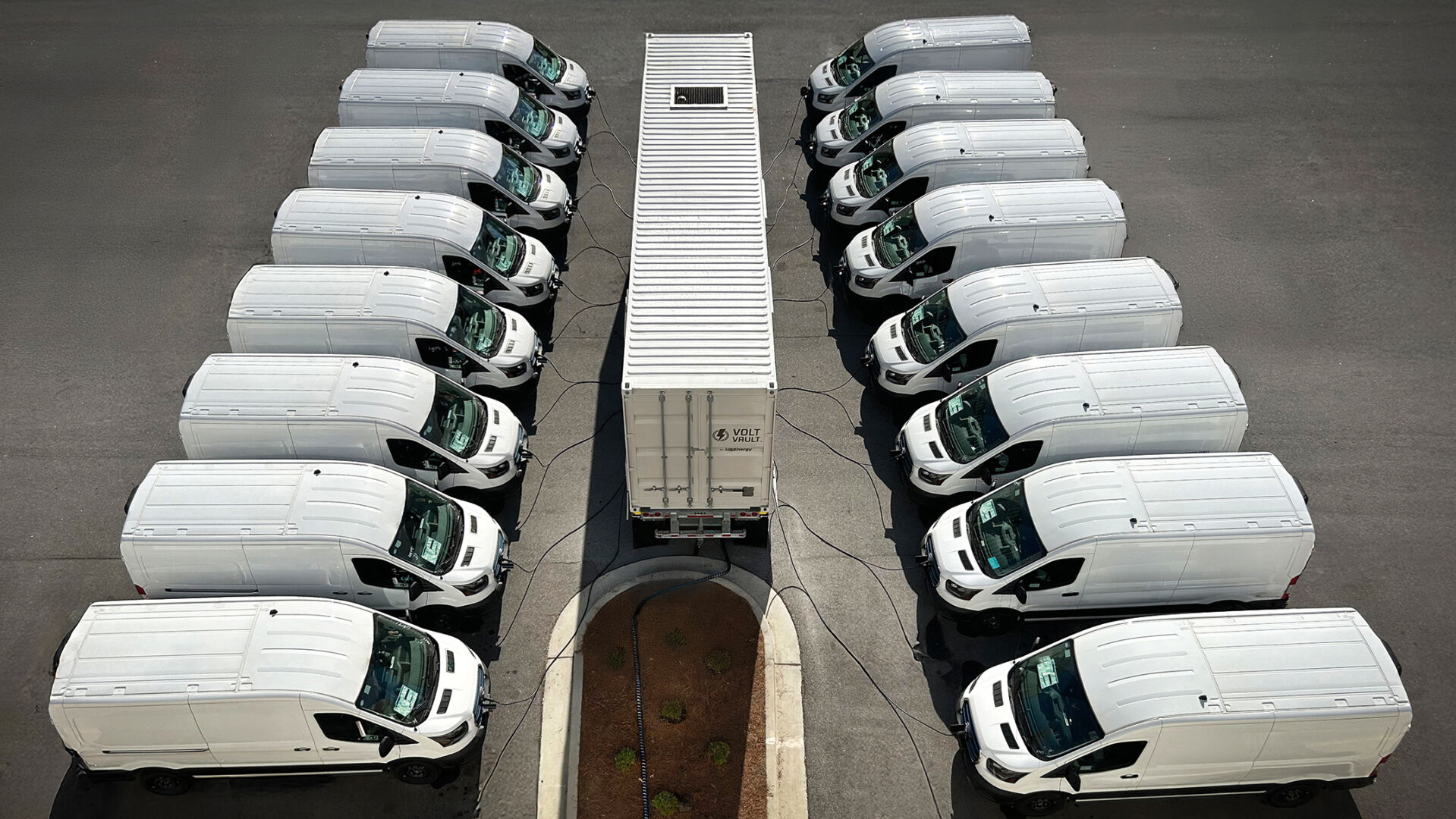
Housed within a 40‑foot shipping container, the self‑contained, patent‑pending EV charging units contain natural gas‑powered generators that power onboard Level 2 and Level 3 charging ports without reliance on the electrical grid.
“We didn’t invent a generator. We didn’t invent how to charge an electric vehicle. What we did was marry those things together into a machine that solves a lot of problems in combination,” says Miller, who today is director of electrification business development at U.S. Energy.
Customers include last mile delivery fleets — probably Volt Vault’s top market so far, says Miller — as well as municipal fleets and rural customers struggling with electricity access. For example, Miller’s team installed a fast‑charging unit in the middle of a field at a remote Indiana army base. Volt Vault can also serve as a backup for fleets that already have grid power.
Electrifying a commercial parking lot can take two to three years, but Volt Vault can be deployed in as little as four months.
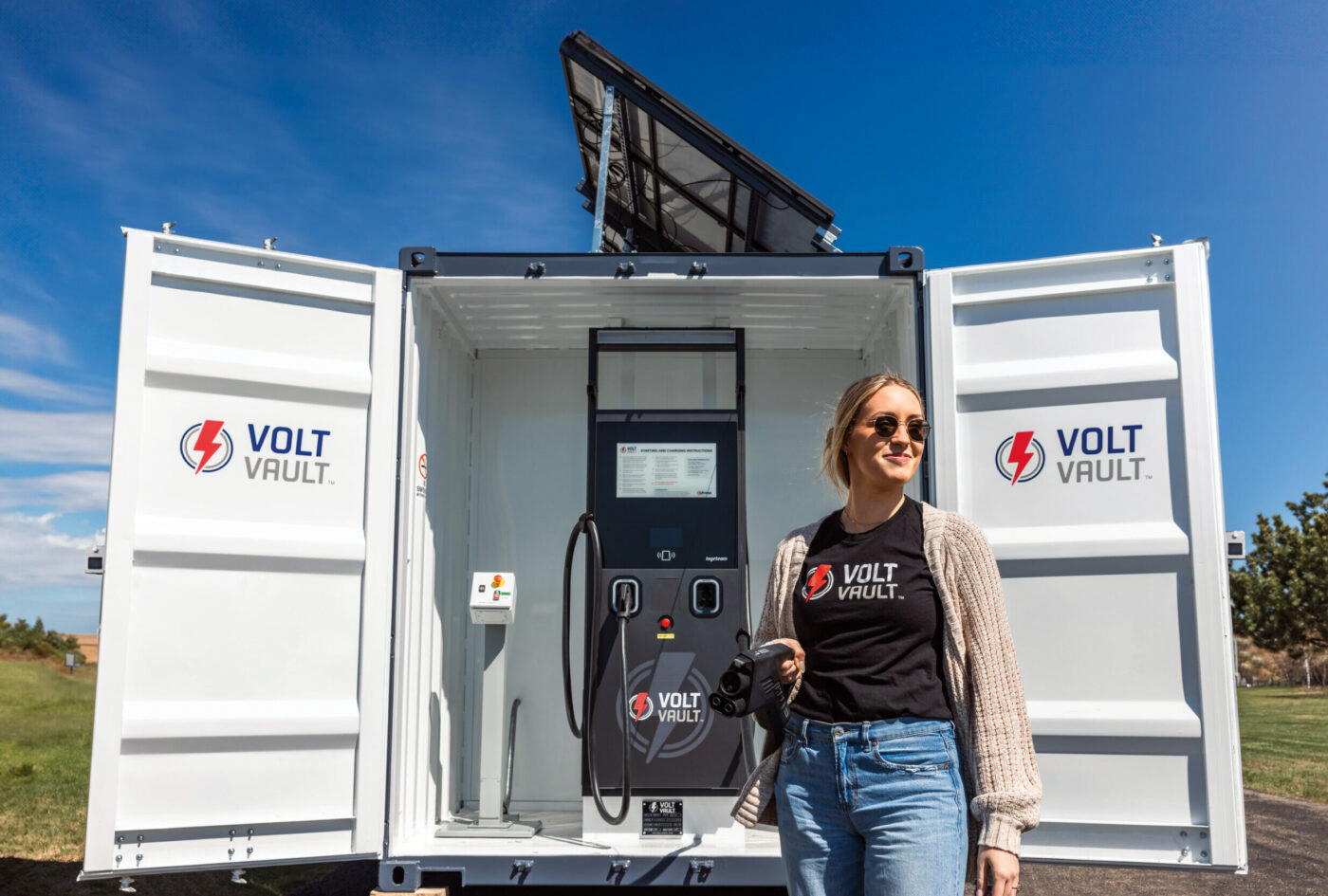
“If you lease your property, one of the last things you want to do is dump hundreds of thousands of dollars into it for electric vehicle infrastructure,” Miller says. “If you have a mobile way to do it, you can bring that infrastructure with you as your business expands.”
To date, more than 40 Volt Vault units have been sold and are operating across more than a dozen states. One of the first units sold went to Golden State Logistics, a California port operator, which has cut its EV charging costs by 60%, Miller says.
Volt Vault is manufactured at American Custom Metal Fabricating in Green Bay, where three to four units a month are being produced.
“We take a lot of pride that [Volt Vault] was invented, designed and built in Wisconsin,” Miller says. “Most of our suppliers are in Wisconsin.”
Four versions are currently for sale with four more currently in development, including a smaller “Volt Vault Lite” that can be towed by a pickup truck.
The different versions offer fuel variation as well, Miller says.
“All of our units can run off natural gas, which is convenient because it’s really abundant, and a lot of buildings are already plumbed with it, and certainly cities are organized around natural gas pipelines,” he says. “But other versions can run off propane, which is nice for remote areas or areas in the South that don’t have natural gas infrastructure.”
Miller says while the broader EV charging market has temporarily slowed, it is fundamentally on a strong upward path, with major OEMs releasing next‑generation vehicles with faster charging and longer range.
“I like to remind people that the electric vehicles we see today are the worst ones we’re ever going to see. They’re just going to get better and better,” he says. “And we are really, really well positioned to capitalize on that expansion.”
On the web: us‑energy.com
“We didn’t invent a generator. We didn’t invent how to charge an electric vehicle. What we did was marry those things together into a machine that solves a lot of problems in combination.”
– Jerry Miller