

By Cheryl Hentz
Many employers once thought employees needed to be in the office, fearing workers would take advantage of the situation and wouldn’t be as productive. But when the COVID-19 pandemic hit, businesses were forced to change course quickly. Since then, they’ve learned most employees are as productive, if not more so, working from home.
Even with millions of employees now working from home — either part- or full-time — challenges for employers remain. Among them are how to master communication between employees and their supervisors, creating opportunities for remote employees to feel connected, dealing with employees’ social isolation and home distractions, and helping employees unplug at the end of the day.
Jackie Peterson is the state director for the Wisconsin State Council Society of Human Resource Management, but she is also an operating unit HR manager for food and beverage manufacturer Pactiv Evergreen. In that role, she works primarily from home and supervises six full-time employees.
Remote workers should have a designated workspace, which can help eliminate as many distractions as possible, she says. They also should follow a set work schedule and create boundaries, so people know when they are working and when they are not.
“It’s important to have a startup time and a shutdown time so you’re on a regular work schedule. When you’re working from home it’s often easy to just keep right on working, but you have to be able to walk away from it at the end of the workday,” Peterson says.
Remote working environments also have created the need for specialized software and hardware. Joe Malcore, senior account manager with Camera Corner Connecting Point, says companies are transitioning away from desktop computers and moving toward laptops to provide flexibility whether working in the office, from home or a combination of both.
“Docking stations have given people working from home the ability to plug in their laptops and, if they have multiple screens, they can have the same experience working from home as if in the office,” he says, adding that having a quality webcam is important because of the remote meetings.
Security is critical in remote working situations, Malcore adds. With employees going from a safer workplace environment to a home network, it can create more security issues for a company, especially since some employees use their work laptops for personal reasons.
To work securely from home, employees should use strong passwords on work devices, use virtual private networks, install strong antivirus software on their computers and use multifactor authentication, Malcore says.
Set up for success
Strategic transportation solutions provider Breakthrough had been planning for remote working arrangements for years, and the pandemic only hastened the endeavor. The company’s new headquarters at the U.S. Venture Center in Green Bay is the culmination of those efforts.
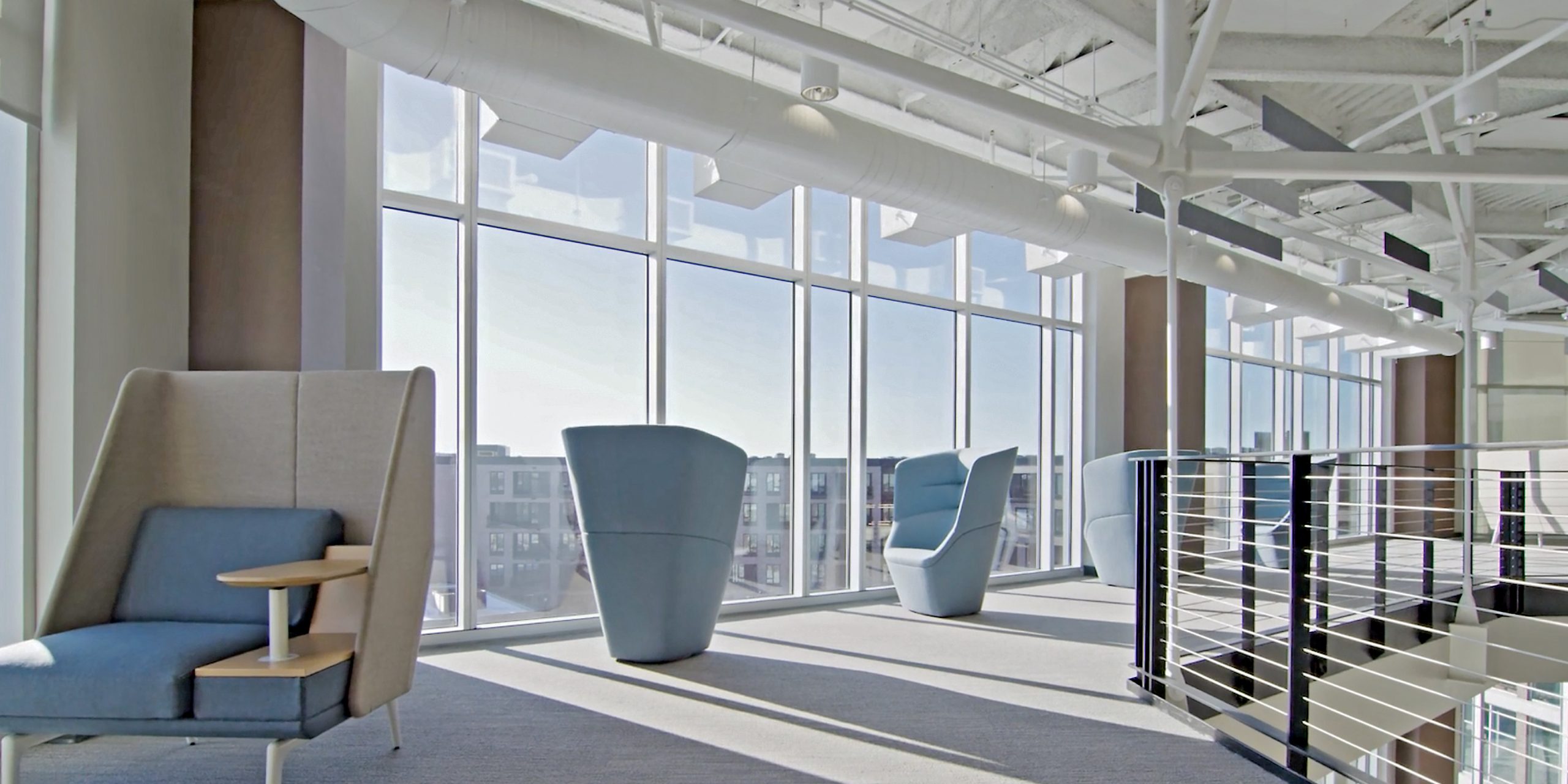
Known as the Breakthrough Collaboration Hub, employees can “work for their day,” says Director of Marketing Erin Blaha. “Some days it may make sense for someone to work from home, but if they choose to come into the office, we have the space set up in a way that is very flexible.”
The office is set up in neighborhoods, and each team throughout the company has its own. These spaces have unassigned seating, so when an employee comes into the office they head to their neighborhood and can then choose whatever desk they want to call “home” for that day. The idea is for team members to move about the building and work in whatever spot is most comfortable or best set up for whatever task they’re doing at that moment.
Breakthrough has many remote employees throughout the country. As the company has grown its remote workforce, it has devised ways to make those employees feel just as included as team members working onsite. With the new technology and office space, many employees are working in the office. But that technology also allows the remote workers to feel included and a part of the team.
“We don’t want them to feel like they’re off on an island by themselves. They’re part of the Breakthrough team, and it’s important that they’re able to engage just as much as somebody who is physically present,” Blaha says. “Having the office set up in a way that [accomplishes that for everyone] was really important to us.”