
By Sharon Verbeten
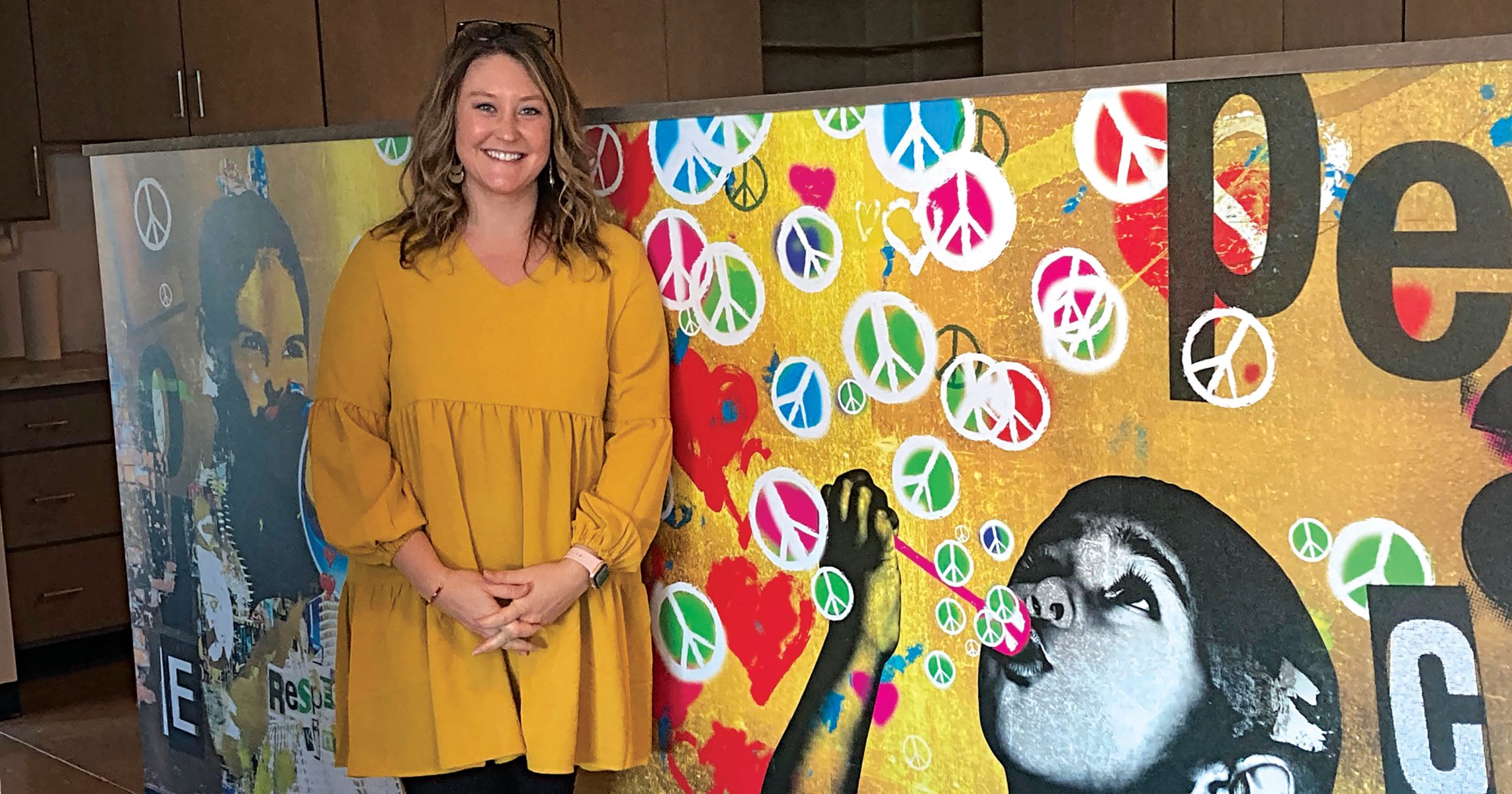
While the pandemic has highlighted disparities in many communities, one Green Bay-area nonprofit is working to address and alleviate such concerns: Wello, formerly Live54218, partners across sectors on health and well-being issues.
Executive Director Natalie Bomstad says that when the organization was founded in 2010, health initiatives, gardening and healthy eating were hot topics. So, the Greater Green Bay Chamber engaged a team from several community sectors on exactly those topics, leading to the creation of an organization with the sole purpose of advancing community health and well-being.
“The chamber was a great partner from the beginning,” says Bomstad, who has a degree in public health administration. She says bringing together diverse stakeholders helped reinforce the importance of equity and justice in the organization’s work.
“Our mission is to co-create community conditions that are fair and just to drive high levels of (physical and mental) health and well-being for all,” she says.
What does well-being look like for people in Brown County? Bomstad says it’s not just about examining racial and socioeconomic factors; it’s also environmental factors such as access to healthy food and recreational activities.
The most successful communities have their own ways of measuring well-being, Bomstad says. In 2019 Wello implemented the World Health Organization’s metrics, providing the organization a local data set with which to work.
Part of addressing equity is creating strong relationships, Bomstad says, and that’s where Wello excels. “We try to meet people where they’re at,” she says. “We really try to be a resource and bridge some gaps.”
For example, Bomstad notes that when COVID-19 shutdowns started in 2020, the Latinx community was hit especially hard. Through a partnership with Wello and organic farming group Seasonal Harvest, Green Bay-based Hispanic resource center Casa Alba was able to help 40 to 60 families who may have otherwise struggled.
“Many of the people with whom we work were tremendously impacted by the pandemic. Accessing healthy food was difficult … and a significant number of people were not eligible for many of the benefits being offered across the nation,” says Sister Melanie Maczka, executive director of Casa Alba.
“Natalie and her team researched and found a way to receive ‘pandemic bucks’ to give families the opportunity to purchase fresh produce from the farmers markets.”
Wello also teamed with Seasonal Harvest to provide fresh produce to schools — helping both local farmers and students.
“The impact to schools has been huge,” says Seasonal Harvest owner Sheri Howard. “Because of grants … we took the local food sales in schools from $9,000 in 2020 to $195,000 in 2021. We offered kid-friendly produce, and it just took off.”
Bomstad realizes the issues surrounding health and well-being are part of a long game, so Wello and its partners tackle issues little by little.
“It’s really listening. It’s forming those relationships and trust,” she says. “A lot of our work is how do we wrap around those organizations and our community as a whole … and not lose sight of the broader goal?”
That, Bomstad says, is the heart of what Wello does. “We look at policy and environmental change. How can we put in place mechanisms to fundamentally shift some of these outcomes? How do we go from intent to impact? We see that, we acknowledge that; now what can we do about it?”
wello.org